

Tattoo removal creams are widely advertised as a painless, inexpensive way to fade unwanted ink at home. The claims can sound convincing, particularly when a product is presented alongside dramatic before and after photographs. The evidence is far less persuasive.
No topical cream has been shown to remove tattoo pigment safely and reliably. The US Food and Drug Administration has not approved tattoo removal creams or do-it-yourself removal kits, and says it is not aware of evidence showing that these products are safe or effective. Some can irritate or injure the skin without meaningfully changing the tattoo beneath it.1
Creams cannot reach most tattoo pigment
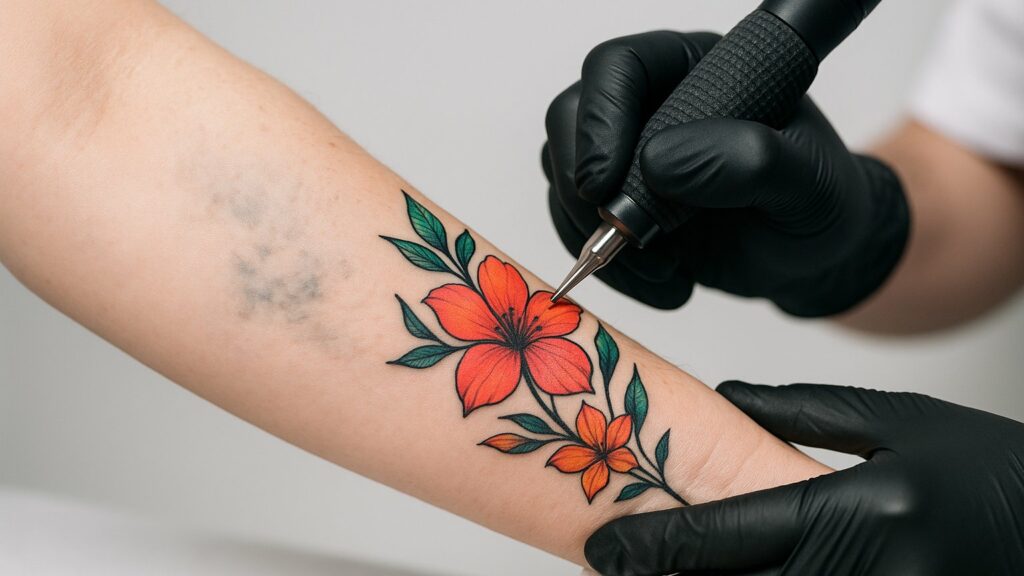
A permanent tattoo is created by placing pigment below the skin's outer layer, mainly within the dermis. That depth is precisely why the design remains visible after the surface has healed. Ordinary skincare products are applied to the epidermis and do not travel deeply enough to remove the embedded particles.
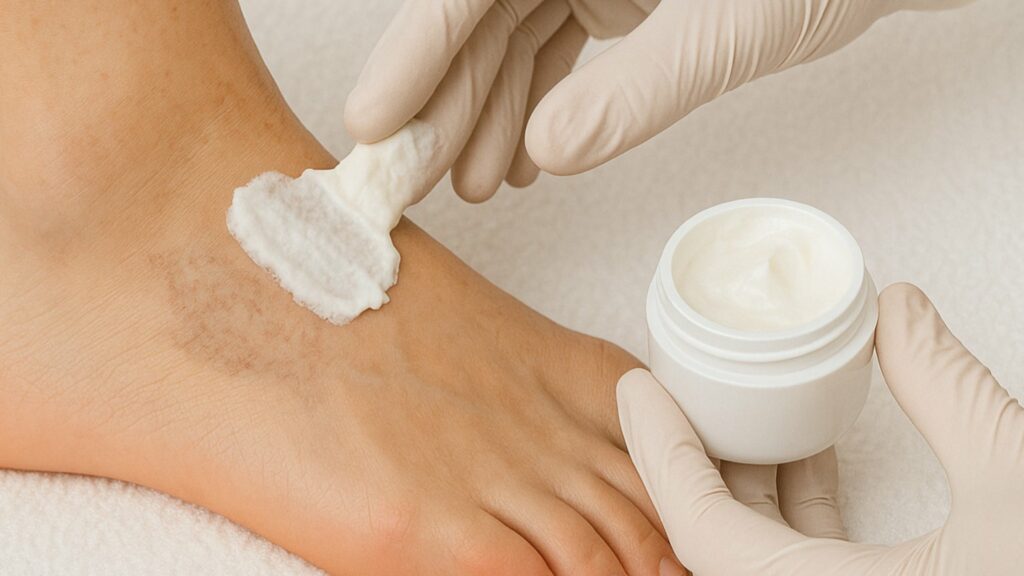
Products sold as tattoo removers may contain retinoids, bleaching ingredients or chemical exfoliants. These can affect the surface of the skin. They might cause peeling, dryness or a temporary change in the surrounding skin tone, which can make a tattoo appear slightly duller. That is not the same as removing its ink.
Fading the skin is not fading the tattooA tattoo may look less distinct when the skin becomes inflamed, dry or lighter in colour. Once the irritation settles, the pigment is usually still present at its original depth.
The risks are more substantial than the marketing suggests
The word "cream" can make a product sound gentle. In practice, some formulas rely on strong acids or peeling agents. The FDA warns that tattoo removal creams and kits may cause rashes, burns and scars.1 Dermatologists have also warned that acid-containing home kits have caused permanent skin injuries.2
Other possible problems include prolonged redness, blistering, infection and areas of lighter or darker pigmentation. Trying to scrub, sand or chemically peel a tattoo creates the same basic problem: the surface is damaged before the treatment reaches the deeper ink. A scar may then sit over a tattoo that is still visible.
Stop using the product if the area becomes painful, swollen, blistered or broken. If you think it has caused a chemical burn, NHS guidance is to get medical help promptly and rinse the area with plenty of cool or lukewarm running water. A severe reaction, discharge, increasing pain or feeling unwell also needs urgent medical advice.4
Why professional laser treatment works differently
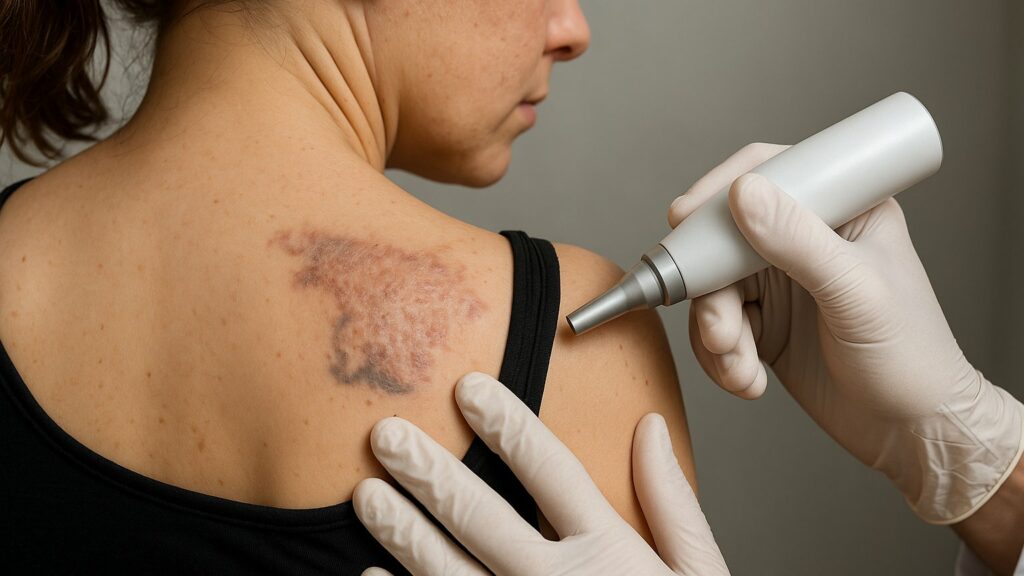
Laser tattoo removal does not try to dissolve ink from the surface. Carefully selected laser energy passes through the skin and is absorbed by particular pigment colours. The energy breaks larger ink particles into smaller fragments, allowing the body's immune system to clear them gradually. This is why treatment takes place across several spaced sessions rather than in one aggressive appointment.3
The following video shows the treatment acting directly on a dark tattoo. It helps explain why a surface cream and a pigment-targeting laser are not comparable approaches.
Results still vary. Ink colour, depth, density, tattoo age, layering, skin characteristics and the client's immune response can all affect how readily a tattoo fades. Black and dark blue pigments are generally easier to treat than colours such as green, red and yellow. Complete removal cannot be guaranteed, and careful assessment matters before treatment begins.1
For a clearer explanation of the process, read how tattoos are removed using lasers. The guide to tattoo removal effectiveness also explains why the number of sessions and final result can differ considerably between clients.
Before buying a removal cream
- Look past photographs and testimonials. They do not establish that a product removed pigment rather than irritating or lightening the skin.
- Check the ingredient list. Avoid applying strong acids or unverified peeling products to a tattoo at home.
- Ask for a professional assessment. A trained practitioner can discuss likely fading, suitable wavelengths, session spacing and risks.
- Be cautious with guarantees. No credible method can promise complete removal for every tattoo.
Do not trade an unwanted tattoo for damaged skin
Tattoo removal creams do not offer a credible substitute for professional treatment. At best, they may alter the skin's surface and create the impression of mild fading. At worst, they can cause burns, pigment changes and permanent scarring while leaving much of the tattoo intact.
If removal or significant fading is the goal, arrange a consultation with a suitably trained professional. A measured treatment plan may take longer than an online cream promises, but it is based on the depth, colour and behaviour of the ink rather than damage to the skin above it.