
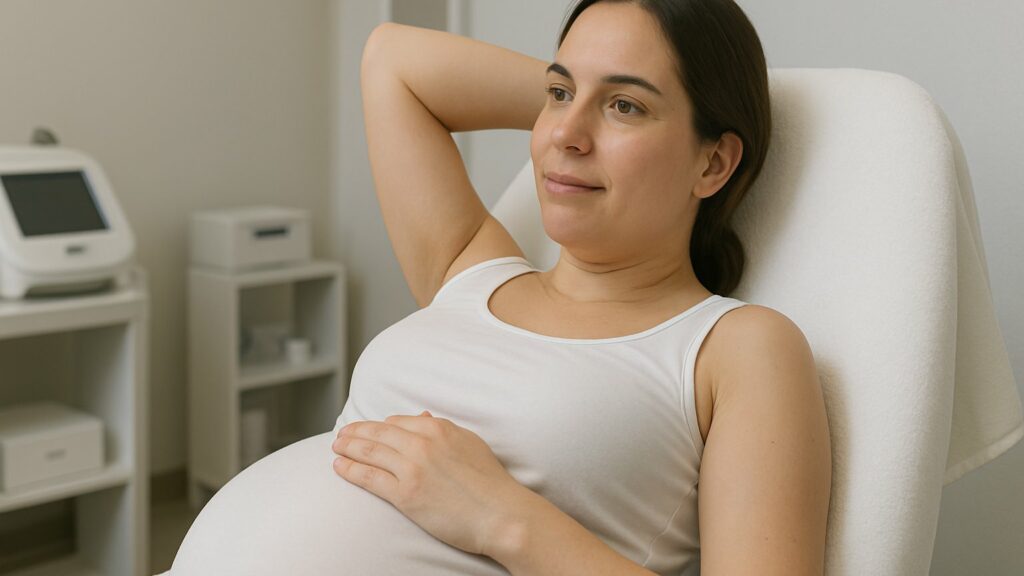
Laser hair removal should usually be paused during pregnancy. This advice is based on caution rather than evidence that the treatment harms an unborn baby. Pregnancy-specific safety studies have not been carried out, so there is not enough reliable information to confirm that cosmetic laser hair removal is safe during this period.
There is another practical concern. Pregnancy can change hair growth, skin sensitivity and pigmentation, making both the treatment response and the final result less predictable. Waiting until after the pregnancy gives the practitioner a more stable basis for assessing your skin and planning the remaining sessions.
The straightforward recommendation Tell your clinic as soon as you know or suspect that you are pregnant. Further laser hair removal appointments should normally be postponed until after the birth and reviewed through a fresh consultation.
Why is laser hair removal avoided during pregnancy?
The main issue is the lack of direct research. The American College of Obstetricians and Gynecologists states that there are no studies establishing the safety of laser hair removal during pregnancy. It also notes that pregnant skin can be more vulnerable to burning and scarring.1:contentReference[oaicite:0]{index=0}
Laser hair removal works by directing light energy towards pigment within the hair follicle. The treatment is localised to the skin, and there is no established evidence showing that a properly delivered cosmetic treatment reaches or damages the foetus. That does not prove safety, though. Pregnant people are rarely included in elective cosmetic trials, leaving a gap that cannot sensibly be filled with assumptions.
A wider systematic review examined reports involving different medical laser treatments in 380 pregnant women. It found no clear evidence of significant harm to the foetus, but the treatments varied considerably and were often medically necessary rather than cosmetic. These findings cannot confirm that elective laser hair removal is risk-free.2:contentReference[oaicite:1]{index=1}
A separate review of cosmetic procedures recommended limiting hair removal during pregnancy to temporary methods instead of permanent procedures. With no urgent medical benefit to continuing a laser course, postponement is the more cautious choice.3:contentReference[oaicite:2]{index=2}
Pregnancy can make treatment less predictable
Hormonal changes can alter the way hair grows. Some people notice thicker or faster growth on the face, stomach or other areas that were not previously troublesome. These changes may be temporary, so treating them during pregnancy could mean targeting hair that would have reduced naturally later.
The skin can also become more reactive. Pregnancy may bring increased sensitivity, dryness, melasma or other areas of hyperpigmentation. The American Academy of Dermatology advises that hormonal changes during pregnancy can cause both sensitive skin and changes in skin colour.4:contentReference[oaicite:3]{index=3}
Laser settings are selected after considering factors such as skin tone, hair colour, hair thickness and the treatment area. If pigmentation or sensitivity is fluctuating, the skin response can be harder to judge. This may increase the chance of irritation, burns or unwanted pigment changes, even where earlier sessions were comfortable.
More general information about assessment, patch testing and treatment suitability is available in the guide to laser hair removal safety for different skin types.
What if you become pregnant during a course?
Contact the clinic before your next appointment. A responsible practitioner should record the pregnancy and pause the course rather than treating a different body area or reducing the settings in an attempt to continue.
The break may change the timing of your treatment plan, but it does not erase the reduction already achieved. Hair follicles respond during particular stages of their growth cycle, so courses already involve intervals between sessions. Once treatment is appropriate again, the clinic can assess regrowth and create a revised schedule.
If you received a session before realising you were pregnant, try not to panic. An accidental treatment does not mean that harm has occurred. Tell your midwife, GP or obstetric team what treatment you had, the date and the area involved. Contact the clinic as well, particularly if you experienced blistering, a burn or an unusual skin reaction.
Temporary hair removal options during pregnancy
- Shaving or trimming: Usually the simplest options, although reaching some areas may become awkward later in pregnancy.
- Waxing or sugaring: Possible where the skin is healthy, but heightened sensitivity may make treatment more uncomfortable than usual.
- Threading or tweezing: Practical for small facial areas, provided the skin is not inflamed or unusually sensitive.
Take care with any new cream, wax or topical product. Pregnancy can change how the skin reacts, so read the manufacturer's instructions and seek medical advice if you are uncertain about an ingredient.
When can laser hair removal restart?
Arrange a new consultation after the birth rather than automatically returning to the previous settings. Your practitioner should review changes in hair growth, pigmentation, medication, healing and general health. A new patch test may also be required.
Breastfeeding policies vary between clinics because evidence remains limited, and hormonal changes may continue for a while after delivery. Tell the practitioner if you are breastfeeding and discuss any concerns with your GP, midwife or dermatologist. Waiting until your skin and hair growth have become more settled may produce a clearer, more dependable treatment plan.
Pregnancy is a temporary interruption rather than the end of a laser hair removal course. Pausing an elective treatment is the sensible approach when safety evidence is incomplete and the skin itself is changing.
Sources
- American College of Obstetricians and Gynecologists, guidance on hair removal and pregnancy
- Utilization of Laser Therapy During Pregnancy: A Systematic Review
- International Journal of Women's Dermatology, review of cosmetic procedures during pregnancy and lactation
- American Academy of Dermatology, pregnancy-related skin and hair changes