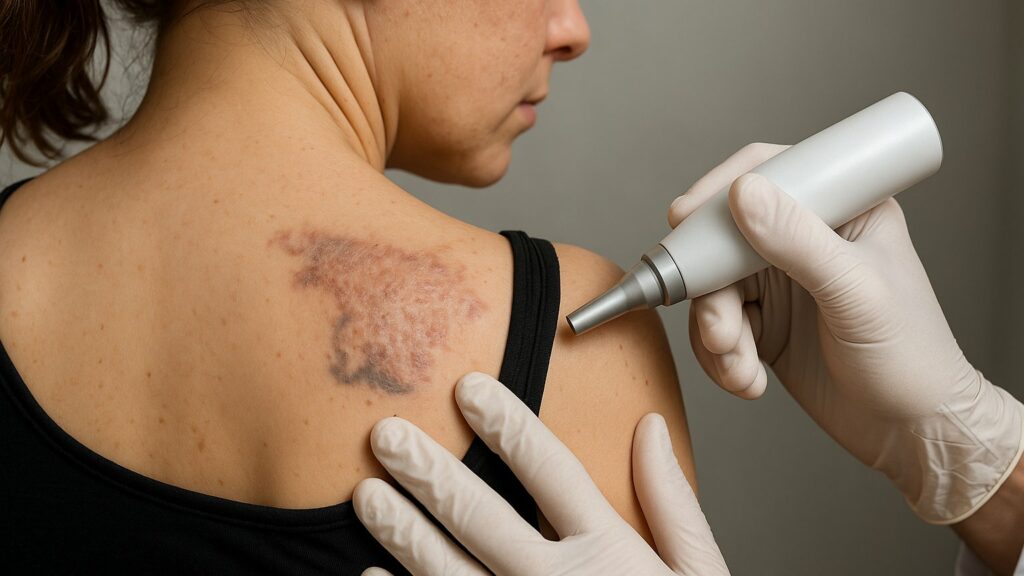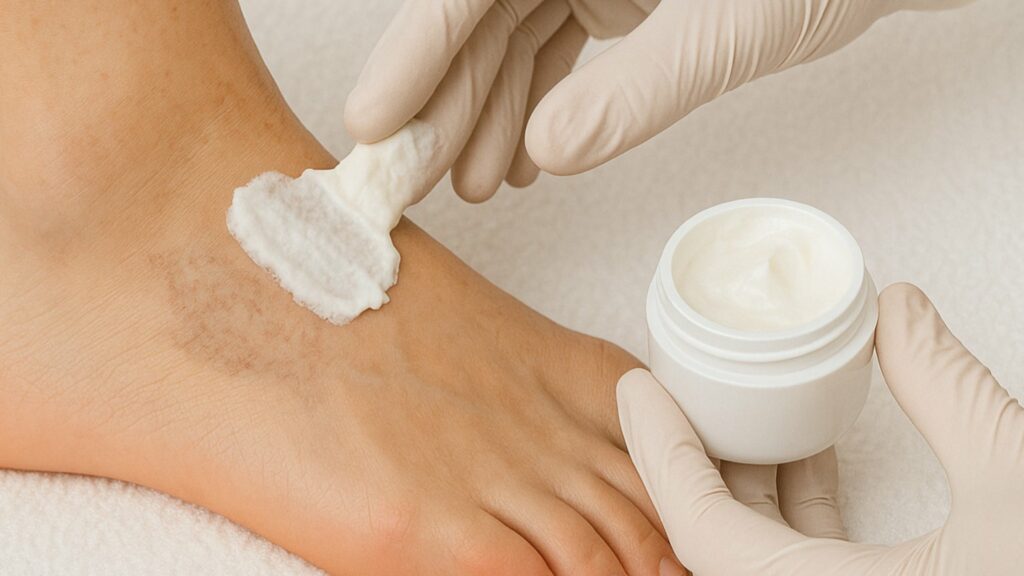

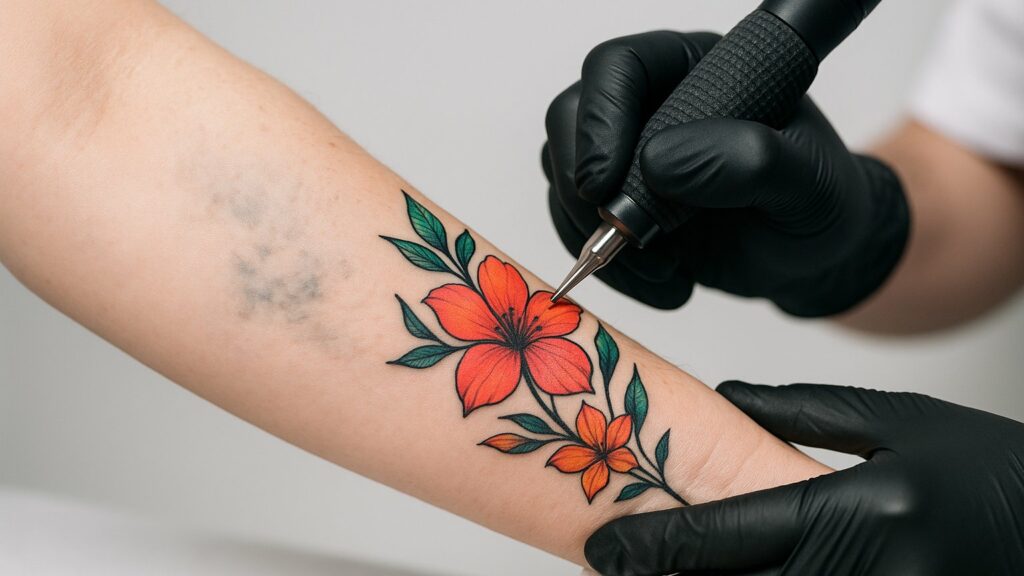
Yes, you can tattoo over an area that has been treated with laser tattoo removal. The important part is not whether every trace of the old ink has disappeared. It is whether the skin has healed fully, the remaining pigment suits the new design and both practitioners agree that the area is ready.
For many people, laser removal is used to fade a tattoo rather than erase it completely. Reducing the density of the old ink gives a tattoo artist more freedom with colour, detail and placement. A heavy black design may need several sessions before a lighter cover-up becomes realistic, while a small or already faded tattoo may need less treatment.
The practical answer Wait until the treated skin has returned to its normal colour, texture and comfort. The laser practitioner should assess the healing, while the tattoo artist should confirm that the remaining ink is light enough for the proposed design.
How long should you wait?
There is no single waiting period that suits every person. As a practical guide, allow at least six to eight weeks after the final laser session before considering a new tattoo. Some clinics and tattoo artists prefer a longer gap, particularly after an intensive treatment course or where the skin has been slow to settle.1:contentReference[oaicite:0]{index=0}
The calendar is only one part of the decision. The area should have returned to its normal colour and texture, with no blistering, scabbing, swelling, tenderness, heat or broken skin. NHS laser aftercare guidance stresses that treated skin should be protected until it has fully healed, while pigment fragments continue to be cleared by the body over several weeks.23:contentReference[oaicite:1]{index=1}
Tattooing too early creates avoidable problems. A fresh tattoo repeatedly punctures the skin, so an area that is still inflamed or fragile may heal poorly. Ink can also settle unevenly if the surface is scarred, raised or unusually thin.
What should the skin look and feel like?
Before booking the tattoo, check the treated area in good light and compare it with the surrounding skin. Healthy, settled skin should feel flexible rather than tight. It should not be shiny, sore, flaky or raised.
Changes in pigmentation need more caution. Laser treatment can sometimes leave an area temporarily lighter or darker than the surrounding skin. A tattoo may disguise some colour difference, but it does not correct the underlying change. If the discolouration is still developing, it is sensible to wait and ask a qualified practitioner or dermatologist for advice.
Scar tissue does not always rule out a new tattoo, although it can make the result less predictable. It may take ink differently, and the tattooing process may feel different. An experienced tattoo artist should assess the texture in person rather than relying on a photograph. Further information about this risk is available in the guide to scarring after laser tattoo removal.
Do you need complete tattoo removal first?
Usually, no. A cover-up often needs fading, not total clearance. The amount of removal depends on the old tattoo and the planned replacement.
Dark, dense areas may show through pale colours. Thick outlines can restrict fine detail. Residual red, orange or blue pigment may also influence the finished colour. Bring clear photographs of the tattoo at each stage to the artist who will create the cover-up. They can tell you when enough pigment has lifted and whether the new design needs stronger shading, a larger footprint or different colours.
This is also a good point to stop laser sessions. Continuing treatment after the artist already has a workable base may add cost and healing time without improving the cover-up.
Plan the laser work and new tattoo together
The strongest results usually come from communication between the laser practitioner and tattoo artist. The laser practitioner can explain how the area has responded, whether any pigment or texture changes remain and when the skin appears stable. The tattoo artist can decide how much fading is needed for the design.
The following video shows laser tattoo removal in action. It helps explain why the treated area needs time to settle after each session. You can also read more about how laser tattoo removal breaks down ink.
After the final laser appointment, follow the aftercare instructions carefully. Keep the area clean, avoid picking scabs or blisters, protect it from friction and sun exposure, and report signs of infection or an unusual reaction.
Before getting the new tattoo
- Confirm complete healing. There should be no soreness, swelling, scabbing, blistering or broken skin.
- Check the texture. Raised, tight, shiny or fragile skin needs more time and may require specialist advice.
- Review the remaining pigment. The tattoo artist should decide whether the old ink has faded enough for the planned colours and detail.
- Share the treatment history. Tell the artist when the final laser session took place and how the skin responded.
A new tattoo is reasonable once the skin is fully healed and professionally assessed. Do not rush the last stage. A few extra weeks can give the artist a more reliable surface and give the new design a better chance of healing evenly.