
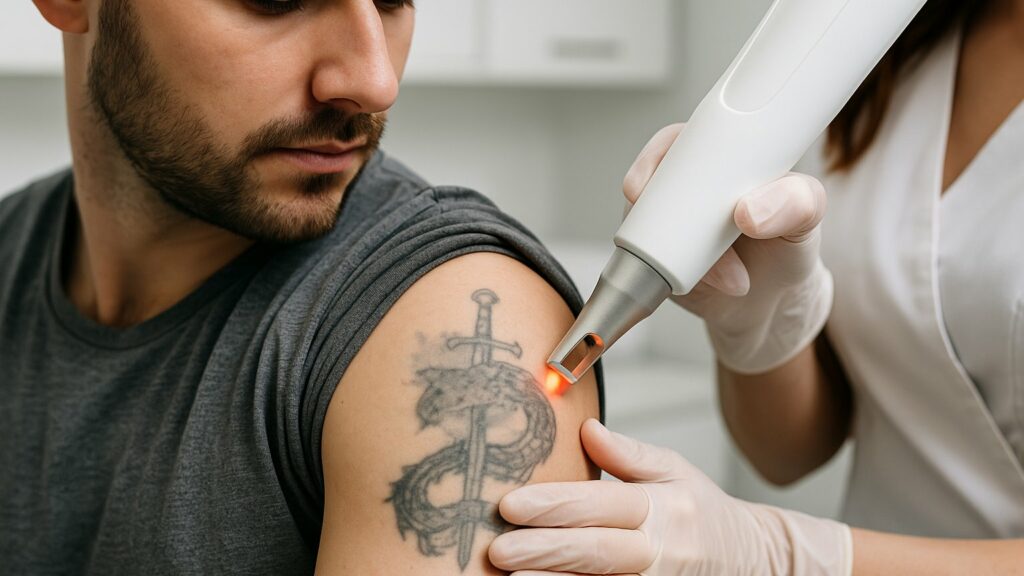
Most professional laser treatments fade tattoos by sixty to ninety five percent, sometimes more, though full clearance is not guaranteed across every colour or skin type. Results vary with ink chemistry, density, skin tone, device quality, session spacing and aftercare. Here is a straight, practical guide to what tends to fade and why.
Yellow, white and some bright pastels may never clear fully. That remains a known limitation noted by WebMD.
How lasers lift ink
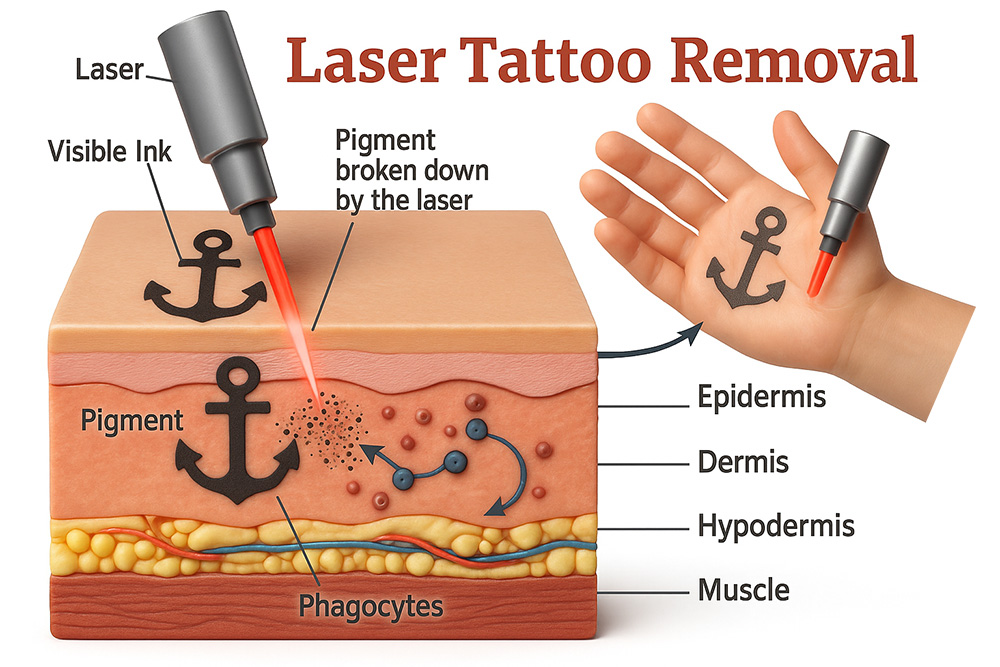
Q switched lasers deliver extremely short pulses that tattoo ink absorbs readily. That energy creates a photoacoustic effect which breaks the pigment into smaller fragments, then your immune system clears that debris between sessions. Black pigment at 1064 nanometres usually responds best. Reds often respond at 532 nanometres. Greens and blues can be more stubborn and may need additional sessions. A concise explainer of the mechanism appears in JAMA Dermatology.01. Typical fading by stage
| Milestone | Typical fade range | Notes |
|---|---|---|
| After 1 to 2 sessions | 10 to 30 percent | Shading often softens first. Outlines can look sharper by contrast. |
| After 3 to 4 sessions | 30 to 60 percent | Patches of natural skin tone begin to show through and darker fills start to break up. |
| After 6 sessions | 60 to 80 percent | This is a common point where many black tattoos are ready for a cover up. |
| After 8 to 12 sessions | 80 to 95 percent | Dense outlines and certain colours can still leave a faint shadow. |
What increases the odds of a stronger fade
- Colour and chemistry: Black usually clears fastest. Reds often fade well. Blues and greens are less predictable and may need extra sessions.
- Density and layering: Professional, layered tattoos and cover ups hold more pigment per square centimetre, so they take longer.
- Tattoo age and depth: Older, sun softened ink often lifts more readily than fresh, dense work.
- Location and circulation: Areas on the upper body often clear more quickly than hands or ankles.
- Device and operator: High energy, stable Q switched Nd:YAG systems with the right spot sizes and clear clinical endpoints tend to give steadier progress.
- Spacing and aftercare: Six to eight week gaps are common so the body has time to clear fragmented ink. Good aftercare helps keep progress on track.
02. What full removal really means
- Clinical reality: Full clearance is possible for many black line tattoos, though some colours can leave a faint trace behind.
- Skin type matters: Darker skin tones are usually treated more cautiously to protect natural pigment. That can extend the course, though modern Nd:YAG at 1064 nanometres is widely used for safer treatment on deeper tones.
- Scarring risk today: Low when treatment and aftercare are handled properly. Temporary redness, swelling or blistering can happen and usually settles, as reflected in the NHS guidance.
Cover up readiness versus total clearance
Not everyone wants a completely blank canvas. Many tattoo artists ask for sixty to eighty percent fading so a new design can sit more cleanly. That often cuts time and cost compared with chasing every last trace of the original. If a cover up is the goal, mention it during consultation so the treatment plan can be shaped around that.03. Session planning that works
- Start with a patch test: this helps confirm how your skin and ink respond and guides the settings.
- Book spaced sessions: six to eight weeks is a sensible rhythm for most areas. Dense colour work can benefit from longer gaps.
- Follow aftercare: keep the area clean and dry in the early days, avoid heat and sun and stick to simple emollients only.
Devices that consistently deliver fade
For reliable clearance across black and most colours, clinics often favour Q switched Nd:YAG systems with both 1064 and 532 nanometres. Our Nu Tatouage Plus offers high pulse energy, dual shot counters and low running costs, which helps clinics keep pricing competitive for clients. Add the Cryo 6 for extra comfort during treatment.- See it live: prefer a closer look. Book a demo in Coventry or virtually.
- Spec and finance: request packs and ROI sheets via request details.
- Learn the process: read our full explainer on how laser tattoo removal works.
Quick answers
- How much will mine fade: black single colour tattoos often reach eighty to ninety five percent with a full course. Multicolour, dense or layered work can land closer to the sixty to eighty five percent range.
- How many sessions: six to twelve is typical. Some pastels need more and proper spacing matters for both clearance and skin recovery.
- Will it scar: scarring is uncommon with modern Q switched systems and trained practitioners, especially when aftercare is followed properly.
04. The smart way to set expectations
- Be specific: decide whether you want full removal or cover up fading and say so at consultation.
- Stay consistent: keep to your session plan and follow aftercare closely to avoid delays.
- Choose proven tech: dual wavelength Nd:YAG with strong pulse energy can improve fading and reduce unnecessary repeat passes.