How Painful is Laser Hair Removal? Top Tips to Remain Comfortable
Using your style guide and source draft: Still wondering whether laser hair removal hurts? It is one of the most common questions clients ask, and for good reason. Nobody wants smoother skin if the trade-off is a treatment…
By Dr Majid ZarandouzPublished 1 August 2022Updated 8 May 20264 min read
In this guide
Using your style guide and source draft:
Still wondering whether laser hair removal hurts? It is one of the most common questions clients ask, and for good reason. Nobody wants smoother skin if the trade-off is a treatment they dread. With modern cooling systems such as the British Institute of Lasers patented SuperCool™ technology, the experience can feel far calmer than most people expect. Below, you will find what treatment usually feels like, the side effects people may notice and a few practical ways to make sessions more comfortable.
How Much Does Laser Hair Removal Hurt?
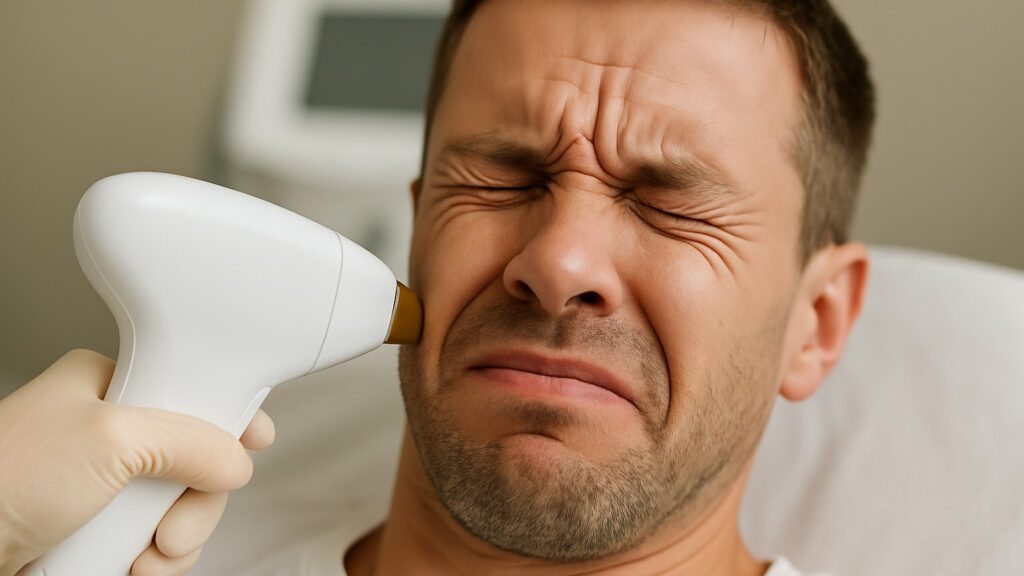
Most people describe laser hair removal as a quick flick or a light elastic band snap that lasts a second in each area. Some barely react at all. Any mild warmth or tenderness usually settles within hours, and common side effects often ease within 2 to 3 days (Wikipedia: Laser Hair Removal). Good technology matters here, and so does the person carrying out the treatment.
Old-Design Systems: Older machines could run hotter on the skin, which made treatment feel pricklier than it needed to.
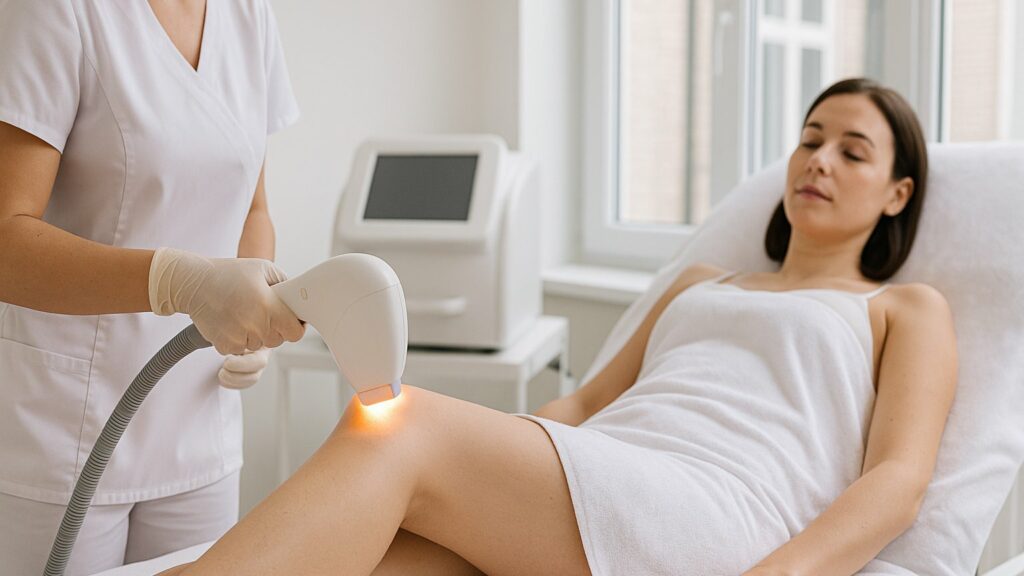
British Institute of Lasers SuperCool™ Tech:Cools the handpiece tip as it pulses, helping calm the skin while the laser works. For many clients, that changes the feel of the whole session.
Why SuperCool™ Technology Matters for Comfort and Results
The benefit of SuperCool™ cooling (used on the Nu TriLaze Plus, Nu TriLaze Lite, and Nu eRays Plus machines) is fairly simple. While the skin stays cooler at the surface, practitioners can treat more comfortably and with more confidence. That helps keep sessions easier to tolerate without compromising on clinical performance.
Intelligent contact cooling: Cools the treatment area at the point of contact for comfort and skin protection.
Optimised treatment outcomes: Gives clinicians more freedom to use effective settings without pushing discomfort too far.
Less risk, less interruption: Less need for constant pauses or extra soothing afterwards, so clients can get on with the rest of the day.
Who Feels It Most? Session Zone, Skin Tone, and Sensitivity
Pain sensitivity varies from person to person, but it also changes by treatment area, hair density and skin type:
Area
Average Sensation
Comfort Enhancers
Upper lip, bikini, underarms
Sharper flick, because nerve endings are denser
SuperCool™, ice after, distraction
Legs, arms, back
Mild warmth or tingling, fades quickly
Topical gels, relaxed breathing, SuperCool™
Fine, fair skin
Often less noticeable
Always patch test first
Thicker, darker hair or skin
More noticeable warmth, still manageable
Request extra cooling or slower passes
Anyone who feels especially anxious about discomfort can ask their clinic about numbing options, though many people do not need them.
01. Five Top Tips for a Smoother, More Comfortable Laser Session
Schedule sensibly: Try not to book around your menstrual cycle or when you are run down. Sensitivity can be higher at those times.
Prep your skin: Shave closely the night before. Clean, hair-free skin helps treatment feel smoother and avoids singeing above the surface.
Speak with your practitioner: Share any worries or tell them if certain areas feel more sensitive. A good practitioner will adjust settings and cooling as they go.
Enjoy SuperCool™ Technology: Ask whether your clinic uses this patented system from the British Institute of Lasers. Cooling makes a real difference.
Follow aftercare: Use fragrance-free moisturisers and avoid hot baths or saunas for 48 hours. A cool compress can help if the skin still feels warm or tingly.
02. Can Your Laser Prove It Will Hurt Less?
All the flagship lasers from the British Institute of Lasers carry SuperCool™. Compared with older IPL or basic laser models, the difference in comfort is noticeable. That is why many clinicians across the UK prefer multi-laser systems with active cooling for busy clinics, salons and mobile settings.
Free demonstrations: See the difference for yourself before you invest, request a demo.
Low cost per session: The technology helps clinics deliver a more comfortable treatment experience without pushing prices up unnecessarily.
When to Call Your Practitioner
Typical short term effects include redness, mild swelling or an itching sensation. With current cooling technology and trained practitioners, more serious problems such as burns are uncommon (Laser Club). Still, if discomfort is getting worse, or has not eased within 48 hours, contact your practitioner for advice.
Laser hair removal does not need to feel harsh. With SuperCool™ Technology, available only through the British Institute of Lasers, clinics can offer treatment that feels more comfortable while still delivering strong results. For product details, finance options or a closer look at the machines, connect with us directly or browse all laser hair removal machines here.
Majid holds a PhD in organic chemistry and has been working with laser systems for decades. His career began in the mid-1990s, when he started researching and developing laser-based technologies for medical and cosmetic applications. Over the years, he has combined scientific expertise with practical engineering to design machines that are effective, durable, and straightforward to use in real clinic settings. As director of the British Institute of Lasers, Majid continues to focus on producing equipment that meets professional standards while remaining accessible to businesses of all sizes.