


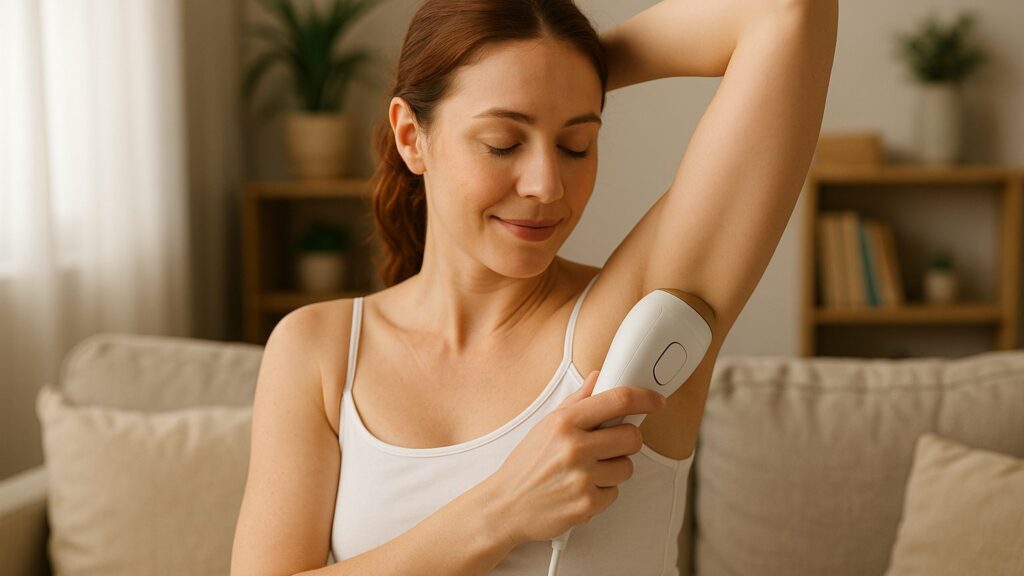
At-home hair removal devices can reduce regrowth, particularly where dark hair contrasts with lighter skin. They are convenient and cheaper than a professional course, but many products advertised as "home laser" devices are actually intense pulsed light, or IPL.
Expect gradual thinning, repeated treatment and later maintenance. Hair colour, skin tone, device quality and careful use matter more than the glossy photograph on the box.
They make most sense for suitable skin and hair combinations, smaller budgets and people willing to follow a repeated treatment schedule. They are a weaker fit where the hair is very light, the skin is deeply pigmented, the area is difficult to see or a medical skin concern needs assessment first.
Most home machines use IPL rather than a true laser
A laser produces a more specific wavelength of light. IPL uses a broader range of wavelengths from a flashlamp. Both rely on pigment in the hair absorbing light and converting it into heat, which can disrupt the follicle and slow future growth. Home equipment is designed with lower energy and built-in safeguards so an untrained person can use it.
That lower output is part of the trade-off. It improves accessibility and may reduce the chance of severe misuse, but it also means more frequent sessions, slower change and a greater dependence on consistent technique. The phrase "permanent hair removal" should be treated carefully. A more realistic expectation is long-term hair reduction with periodic top-ups.
| Point of comparison | At-home IPL or laser | Professional clinic treatment |
|---|---|---|
| Energy and adjustment | Lower output, fewer settings and automated safety limits. | Higher output with settings selected for the person's skin, hair and treatment area. |
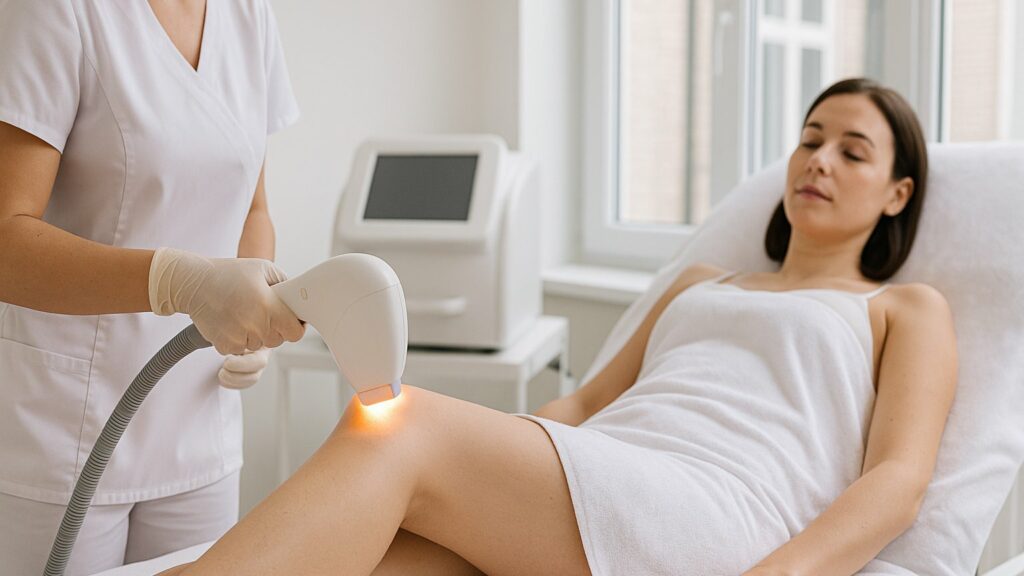
| Assessment | The user interprets the instructions and decides whether treatment is suitable. | Consultation, skin assessment, contraindication checks and patch testing form part of the process. |
| Likely pace | Gradual reduction with frequent use and ongoing maintenance. | Usually faster reduction, though several appointments are still needed. |
| Best use case | Convenient maintenance or modest reduction in a suitable user. | More tailored treatment, difficult areas, darker skin tones or stronger reduction goals. |
The evidence says they can work, but results are device-specific
A small 2023 PLOS One study compared six underarm treatments with a professional diode laser and a home-use light device. The professional system achieved roughly 85% to 88% reduction, while the home device produced about 46% to 52%. The study involved only 15 women and short follow-up, so it should not be treated as a universal performance figure. It does illustrate the usual practical difference: a home device may reduce hair, but often at a slower rate. 1
Home devices differ in wavelength range, energy, cooling, sensors and schedules. Real-world results may be weaker when sessions are missed, coverage is patchy or the device is poorly matched to the user.
Hair colour and skin tone set the limits
More likely to respond well
- Dark, coarse hair with enough pigment to absorb the light.
- Skin tones listed as suitable by the manufacturer.
- Areas that can be reached and covered evenly.
- Users willing to treat on schedule for several months.
Less likely to respond well
- White, grey, very pale blonde or some red hair.
- Very fine hair with little pigment.
- Tanned skin or a skin tone outside the device's stated range.
- Hormonal hair growth where the underlying cause remains active.
North Bristol NHS Trust notes that laser treatment does not work on white or blonde hair and that side-effect risks increase with naturally dark or tanned skin. Even professional equipment cannot make pigment-poor hair respond normally. 3
Consistency matters more than intensity chasing
The following video shows a typical handheld IPL device being used at home. It is included to illustrate positioning and the repetitive nature of treatment, not to recommend a particular product.
Do not answer slow progress by exceeding the instructions. Overlapping flashes, treating tanned skin or using the device too often can increase irritation. Hair follicles are not all active together, so repeated sessions are needed.
Five checks before the first flash
- Confirm the device suits your skin tone and hair colour.Use the manufacturer's chart rather than assuming a high setting will overcome poor suitability.
- Read every contraindication.Medication, photosensitivity, active skin conditions, tattoos, suspicious lesions and pregnancy warnings should not be ignored.
- Patch test first.Use a small area and wait for the period stated in the instructions before treating more skin.
- Prepare the skin correctly.Shave if directed, remove cosmetics and self-tan, and avoid treatment over broken or inflamed skin.
- Stop if the reaction is more than mild and temporary.Blistering, marked pain, persistent colour change or eye symptoms need appropriate medical advice.
The MHRA's professional guidance covers the safe use of lasers and IPL because these systems deliver optical radiation capable of causing harm when controls are poor. A consumer device is lower powered, but it still deserves careful use. 4
Professional treatment may be the better route when...
Your skin tone sits near or outside the device's limit, facial hair may have an underlying cause, the area is difficult to see, or you have experienced burns or pigment changes before.
A consultation adds assessment, patch testing and setting selection. Read more about IPL versus laser hair removal and professional treatment effectiveness.
Useful for reduction, not a guaranteed replacement for clinic treatment
An at-home device can be sensible for the right person. Choose a reputable product with clear instructions and safety sensors, follow the schedule and judge progress over months. Professional treatment remains stronger where safety, speed, adjustability or difficult skin and hair combinations matter most.