Buying Laser Hair and Tattoo Removal Machines from China – Everything You Need to Know
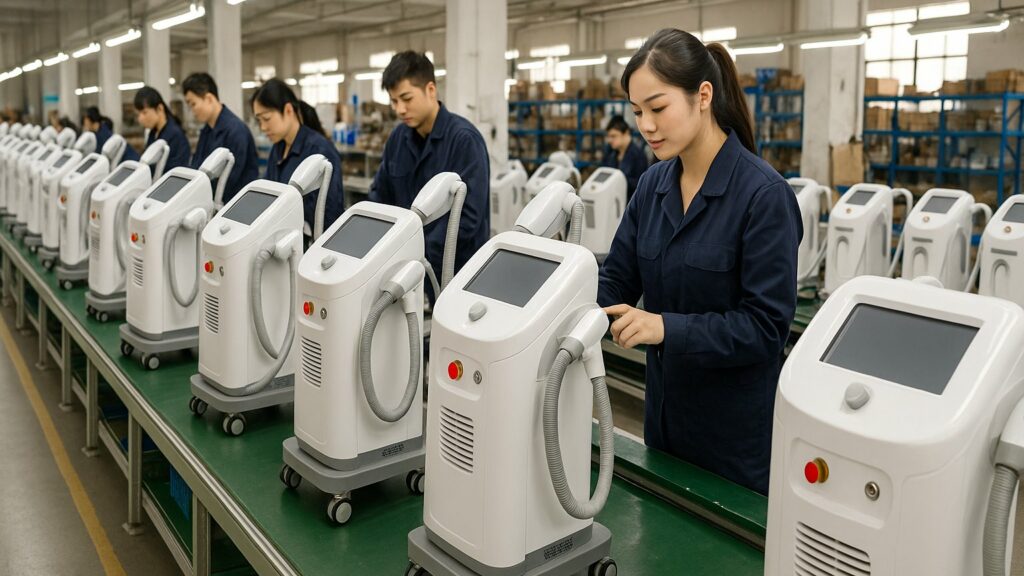
Ordering everyday goods from overseas feels routine now. Shirts, gadgets, stationery. Once a machine is sending high intensity light into skin, the standard for caution changes. Cheap laser hair removal and tattoo removal machines from China can look…
By Dr Majid ZarandouzPublished 24 October 2021Updated 8 May 20265 min read
In this guide
Ordering everyday goods from overseas feels routine now. Shirts, gadgets, stationery. Once a machine is sending high intensity light into skin, the standard for caution changes. Cheap laser hair removal and tattoo removal machines from China can look appealing on price, but the hidden risks can swallow the saving very quickly. If you want equipment that protects clients, satisfies local checks and stays in service, read this before sending any money.
Buying Laser Hair and Tattoo Removal Machines from China: Everything You Need to Know
There are reputable manufacturers in China. There are also plenty of resellers moving rebranded machines with glossy claims and very little behind them. A low sticker price often points to cheaper components, inconsistent quality control, weak aftercare and certificates that do not hold up with UK insurers or local authorities. If a price looks irresistible, check the paperwork, check the support and check the engineering.
01. Why are some machines so cheap?
Component choices: Power supplies, flash lamps, cooling blocks and optics vary massively in quality. Budget parts can drift in output and wear out far sooner.
Light on quality control: Fewer end line checks usually mean wider swings in energy delivery. That affects both safety and treatment results.
Documentation gaps: User manuals and service guides are often thin or vague. That makes training slower and troubleshooting harder.
Hidden costs: Shipping, import duty, VAT, spare parts, repairs and downtime can stack up fast on top of the headline price.
Demand for laser treatments is rising sharply in the UK. Laser hair removal was reported as the most popular aesthetic service in 2024 by Rare Consulting. Clinics that grow in that market tend to do it with reliable, compliant equipment and responsive support, not bargain machines that fail when the diary is full.
02. Certificates and claims: trust, then verify
Spec inflation: Spot sizes, fluence and pulse widths are sometimes overstated. If a device does not deliver the stated energy, results slip and risk goes up.
Questionable approvals: Logos for CE Medical or FDA can be dropped into brochures far too easily. Ask for verifiable documentation and certificate numbers that insurers will actually accept. Read our guide on FDA and CE.
Traceability: Make sure serial numbers, batch records and service logs exist. Insurers and councils often ask for them.
Risk snapshot
Possible issue
What it can mean
Inflated or incorrect energy specs
Uneven results and greater risk of adverse events
Fake or unverifiable approvals
Insurance refusal, registration problems and possible enforcement action
Poor manuals and safety design
Training delays, operator error and client injury exposure
03. Aftercare and parts: the quiet killer of margins
Repairs and spares: Cross border returns are slow and expensive. Parts can be delayed for weeks. Sessions get cancelled and revenue slips.
No local engineers: Independent UK engineers are often wary of unfamiliar brands. That can leave you with an expensive machine doing nothing.
Downtime maths: Even a short outage can wipe out the initial saving. Multiply missed bookings by your average treatment value and it starts to hurt.
04. UK rules, insurance and you
Licensing in England: A new scheme for non surgical cosmetic procedures is being introduced. Licensing, qualifications and indemnity all sit within that direction of travel, as outlined on GOV.UK.
Insurance acceptance: Policies commonly expect genuine CE Medical or FDA evidence. If you cannot prove compliance, cover may not follow.
Local procedures: Many clinics appoint a Laser Protection Adviser and Supervisor for safety governance. We offer an LPA service to make that process simpler.
If your device is not clearly and provably compliant, you may struggle to insure it or register it, which puts the business itself in a difficult position.
05. The real cost: bargain import versus supported device
Line item
Low price import
Certified device with UK support
Purchase price
Lower
Higher, with proven documentation
Insurance acceptance
Uncertain
Far easier with proper evidence
Downtime exposure
High, with slow returns and parts delays
Lower, with fast repair or swap options
Training and certification
Minimal or remote only
Structured training included
Resale value
Weak
Stronger with paperwork
Client retention
Unreliable outcomes can drive churn
Consistent results support growth
The UK devices market is growing, with improvements in targeting and cooling helping comfort and safety, according to Future Market Insights. Clinics tend to benefit most from that demand when they choose dependable, supported platforms.
06. What to look for instead
Proven approvals: Only consider machines with FDA and CE Medical certificates that insurers recognise.
Transparent specs: Independent evidence for wavelength, fluence, pulse width, cooling and shot life.
Local support: Engineers in the UK, quick access to parts and a warranty that works in real life.
Training and records: Core of Knowledge, device training and certificates that support insurance and local checks.
Safety governance: LPA guidance, risk assessments and treatment protocols that protect your team.
07. A British option with proof, training, and rapid backup
We focus on certified systems and long term support. Explore our three in one Nu TriLaze Plus, the flexible Nu TriLaze Lite and the precise Nu eRays Plus for hair reduction across skin types I to VI. For tattoos and pigmentation work, the Nu Tatouage Plus offers reliable clearance with Q switched Nd:YAG at 1064 and 532 nanometres.
Every device includes training, certification support, lifetime support and our twenty four hour UK swap guarantee if a unit cannot be repaired quickly. See all laser hair removal machines.
08. See the tech, check the numbers, then choose
Book a demo: Try the interface, check the cooling and test the spot sizes. Book a demo.
Get clear finance info: We will talk through costs, payments and likely returns. Request details.
Useful reads for planning and operations: how much a good machine should cost, benefits of investing and tattoo removal pricing. For wider market context, the UK aesthetics sector continues to grow, with non invasive treatments driving demand, according to PolicyBee.
Short version, buy once and buy right. Clients trust you with their skin and their time. Choose equipment that is safe to insure, straightforward to register and quick to service. It makes more sense on the spreadsheet and in the diary.
Majid holds a PhD in organic chemistry and has been working with laser systems for decades. His career began in the mid-1990s, when he started researching and developing laser-based technologies for medical and cosmetic applications. Over the years, he has combined scientific expertise with practical engineering to design machines that are effective, durable, and straightforward to use in real clinic settings. As director of the British Institute of Lasers, Majid continues to focus on producing equipment that meets professional standards while remaining accessible to businesses of all sizes.
Buying & Renting MachinesLaser Hair Removal
From the Knowledge Hub
Continue planning your laser service.
Explore more guidance on professional equipment, clinic planning, training and practical business decisions.