


Six sessions of laser hair removal can produce a clear and satisfying reduction in hair growth, but they are not enough for every person or every treatment area. Some clients are ready to move into occasional maintenance after session six. Others still have active patches that need two or more carefully spaced appointments.
The better question is whether your course has reached the result you agreed with your practitioner. Hair density, colour, hormones, treatment area and appointment timing all affect that answer.
What six sessions usually mean Six appointments are a useful review point, rather than a guaranteed finishing line. Expect reduced density, slower regrowth and finer remaining hair. Complete clearance should not be promised.
The laser cannot treat every hair in one visit
Laser energy targets pigment in the hair and converts it into heat, damaging the follicle while limiting unnecessary exposure to the surrounding skin. Treatment is most useful when a hair is actively growing and connected to the structures that support its growth.
Only a proportion of hairs are in that active phase during any one appointment. The rest may be resting or transitioning. Spacing the sessions allows different groups of hairs to enter a treatable stage. Mayo Clinic notes that most people need several treatments and may later need follow-up appointments to maintain their results.1
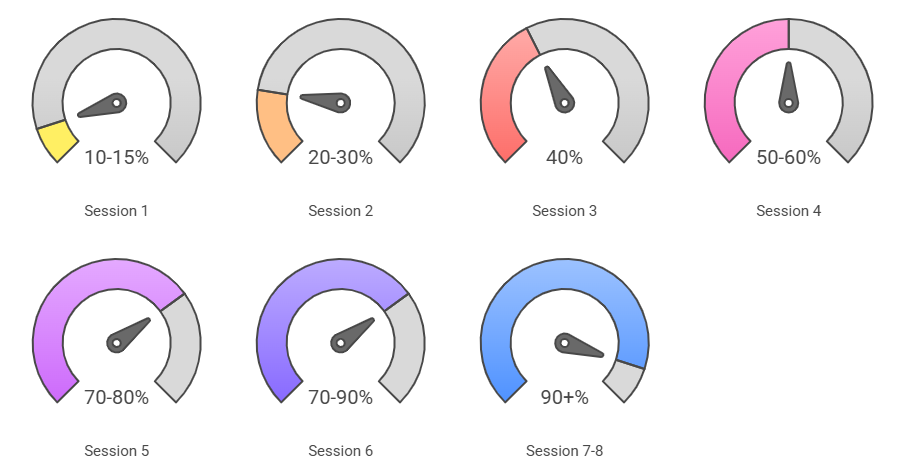
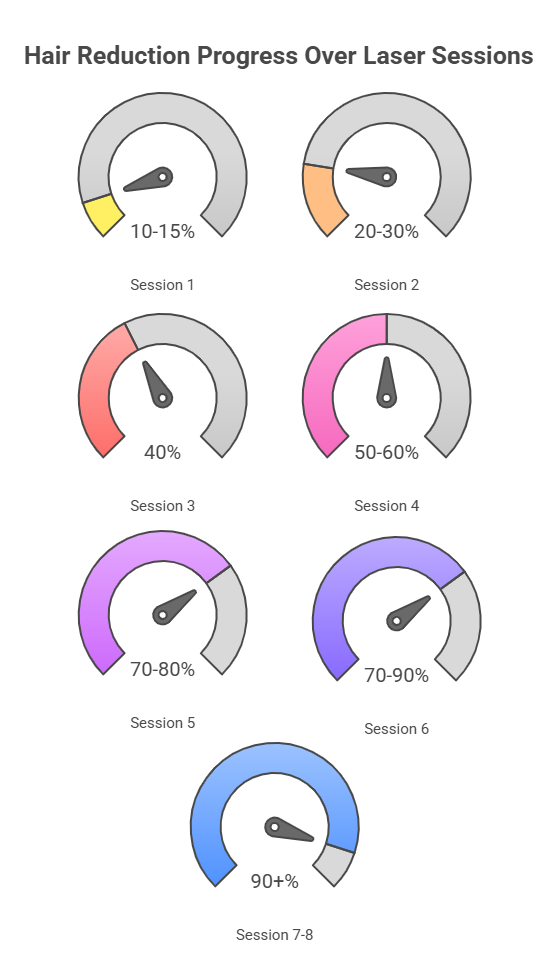
The visual guide below shows how progress can build across a course. Its figures are useful illustrations, not promises for an individual client.
What affects whether six sessions are enough?
- Hair colour and thickness: Dark, coarse hair usually provides a clearer target because it contains more pigment. Grey and white hair generally respond poorly.
- Treatment area: Underarms and lower legs may progress differently from the face, neck, back or chest.
- Hormonal influence: Polycystic ovary syndrome, menopause and other hormonal changes can encourage continuing or new growth.
- Session timing: Appointments that are too close together may repeatedly miss hairs that have not entered active growth.
- Equipment and settings: The wavelength, pulse duration, energy and treatment technique must suit the client's skin, hair and treatment history.
- Consistency: Long gaps, missed appointments, tanning and waxing between sessions can disrupt the treatment plan.
Clinical research also shows why one standard number is unhelpful. In a comparative study, hair reduction continued to improve between the fourth and eighth sessions, with different outcomes across diode, Nd:YAG and IPL treatment groups.2
How to decide what happens next
Your practitioner should compare the current result with your consultation photographs and treatment records. Useful questions include:
- Has the hair density reduced across the full treatment area?
- Is regrowth slower, finer and more scattered?
- Are the remaining hairs concentrated in hormonal or difficult patches?
- Have the settings been adjusted safely as the hair changed?
- Would more sessions add useful improvement, or is maintenance more sensible?
If strong, dark regrowth remains, further sessions may be worthwhile. Fine, pale or isolated hairs may respond less predictably. Sudden or unusually heavy facial or body hair growth should also be discussed with a healthcare professional, particularly when it appears alongside other hormonal symptoms.
Signs the course is working
- Longer gaps before visible regrowth
- Fewer hairs across the treated area
- Finer and softer remaining growth
- Less frequent shaving
- Patchier regrowth after shedding
A good result does not always look like completely hair-free skin. For many clients, the practical benefit is quieter, lighter regrowth that is much easier to manage.
Six sessions can be enough for a substantial reduction, especially where the hair, treatment area and appointment spacing are favourable. Treat session six as a proper assessment point. Continue only where the remaining growth is likely to respond and the practitioner can justify the revised plan.
For more context, read how effective laser hair removal can be and what influences how long the results may last.