
Thinking of offering laser or IPL hair removal in your clinic or salon? The right qualifications, licences and insurance help you stay compliant, properly insured and credible with clients, while also protecting your business if something goes wrong. This guide sets out what you usually need in the UK first, then gives a quick country by country picture across Europe, North America and the UAE. Where rules vary by region, we flag that clearly so you can plan with fewer surprises.
 Insurance in the US: Med spa policies commonly combine medical malpractice or professional liability, general liability and products or completed operations cover, with strict conditions around training, consent and incident records. Device background: FDA laser products.
 Five factors often shape results:
UK essentials: qualifications, licences and insurance
01. Qualifications and training that insurers recognise
There is no single national licence in England created specifically for cosmetic laser hair removal. In practice, insurers and local councils usually expect a training route that looks something like this:- Level 3 beauty or equivalent: An NVQ Level 3, CIBTAC, ITEC or similar shows a solid grounding in anatomy, skin health and treatment basics.
- Level 4 laser and light therapies: A recognised Level 4 certificate for laser and IPL shows that you can choose safe parameters, assess skin types and follow treatment protocols correctly.
- Core of Knowledge: A short theory based course covering laser physics, hazard control, signage, eyewear and exposure limits. Many insurers ask for this as standard.
- Manufacturer training and certification: Hands on, machine specific training with a certificate of competence. At the British Institute of Lasers, every laser and IPL unit includes free training and certification to support insurance and council requirements.
- Laser Protection Advisor and Local Rules: Engage an LPA, create clinic specific Local Rules and appoint a Laser Protection Supervisor on site. We can introduce you to an LPA who understands salon workflows.
- First aid and CPR: Sensible to have, and often requested by insurers, especially if you treat facial areas or intimate zones.
02. Licences and registrations in the UK
England: For cosmetic hair removal, the Care Quality Commission will not usually register providers because hair removal is not generally treated as a regulated medical activity. Many councils do, however, require a Special Treatments Licence for laser or IPL. London boroughs often apply this widely. Your council may inspect the premises for hygiene, electrical safety, eyewear, signage and waste management before issuing approval. Wales: Laser and IPL offered to the public may require registration with Healthcare Inspectorate Wales if the service falls within healthcare activity. Some beauty settings instead operate under local authority licensing. Check with HIW and the local council early. Scotland: Independent clinics run by doctors, dentists, nurses and midwives are regulated by Healthcare Improvement Scotland. Beauty led facilities offering cosmetic laser treatments generally fall under local authority environmental health and licensing frameworks. Northern Ireland: Expect environmental health oversight through local councils, alongside standard workplace safety controls for non ionising radiation. Always check your local council’s special treatments rules or related byelaws. Requirements can differ by borough, and some councils name IPL and laser specifically.03. Insurance you should carry
Insurers treat laser and IPL as higher risk services. Without the right policies and supporting documents, you may end up carrying the cost of claims yourself. A typical UK insurance package looks like this:- Public liability: Covers injuries to members of the public at your premises.
- Treatment risk or professional liability: Covers claims linked to burns, hyperpigmentation or scarring arising from treatment.
- Products liability: Covers claims related to gels, consumables or equipment supplied or used during treatment.
- Employer’s liability: Required by law if you employ staff.
- Cyber or privacy cover: Worth considering if you store client photos, patch test records or health questionnaires.
04. Quick UK compliance checklist
- Qualifications ready: Level 3, Level 4 laser and IPL, Core of Knowledge, manufacturer training certificate.
- LPA engaged: Local Rules in place, Laser Protection Supervisor named, controlled area signage displayed and eyewear matched to wavelengths.
- Council licence: Special Treatments Licence in place where required, with pre inspection completed.
- Insurance bound: Public liability, treatment risk, products liability and employer’s liability where applicable.
- Clinic policies: Consent, medical questionnaire with contraindications, patch testing procedure, photo documentation, complication management flow, cleaning logs and maintenance records.
05. Do I need CQC registration to offer laser hair removal
Purely cosmetic hair removal provided by beauty therapists is usually outside CQC scope in England. If the service crosses into regulated medical activity, that position changes. Check your exact service description against CQC regulated activities and speak to your local council about any Special Treatments Licence requirement.06. What should my consent form include
- Treatment description: How laser or IPL reduces hair and why more than one session is needed.
- Common reactions: Redness, perifollicular oedema and short lived itching.
- Risks and rarer events: Burns, blistering, hypo or hyperpigmentation and scarring.
- Pre care rules: No sunbeds or tanning, shave the day before or on the day according to your protocol and avoid retinoids on the area.
- Aftercare: Cooling advice, SPF guidance and when to contact the clinic.
07. What device paperwork do inspectors look for
- Evidence of CE or FDA approval: Keep device certificates easy to access.
- Service history: Engineer reports, water change logs and handpiece shot counts.
- Laser room controls: Warning signs, eyewear labelled for wavelength and optical density and non reflective finishes near the beam path.
Choosing compliant equipment (plus free training)
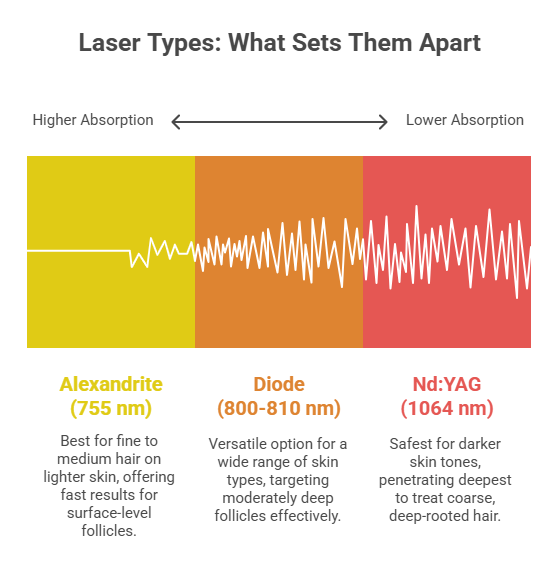
The equipment you choose affects safety margins, treatment speed and client comfort. It also matters during licensing visits, because inspectors often look for CE or FDA certification, maintenance records and a clear match between device capability and your treatment protocols.- 3 in 1 machines (Alexandrite 755, Diode 808, Nd:YAG 1064): One platform to treat all skin types, from very light to very dark, with wavelength options suited to different depths and melanin levels.
- Cooling capacity: Better comfort and fewer side effects during higher fluence passes.
- Low running cost: Helps keep session margins healthy without compromising treatment quality.
- Nu TriLaze Plus: 3 in 1 with HD detection, a built in skin analyser, interchangeable tips for detailed work and very low running cost. FDA approved.
- Nu eRays Plus: 3 in 1 with enhanced handpiece control, fast treatments and reliable cooling for comfort.
- Nu TriLaze Lite: Portable, compact and cost efficient, designed for smaller spaces or multi room use, with full 3 in 1 capability.
How lasers differ from IPL, and why that matters for training
| Technology | Typical Use | Operator Focus | Expected Sessions |
|---|---|---|---|
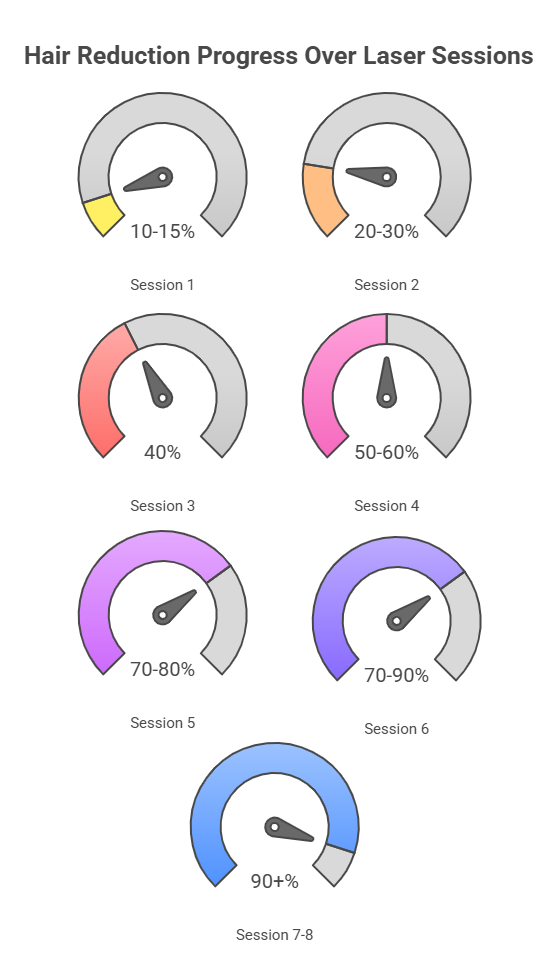
| Medical grade laser | Targeted wavelength for hair reduction on specific skin types | Parameter selection by skin type, hair depth and cooling | 6 to 8 |
| IPL | Broad spectrum light for hair reduction and photo rejuvenation | Filter choice, lower fluences and careful skin cooling | 8 to 12 |
International rules at a glance
Use the tabs below to check the current high level picture in key markets. This section is not legal advice. Regulations move, and some regions add local rules on top. Always verify with the relevant authority before you start trading.European Union context
The EU has expanded device oversight to certain products without a medical purpose, including laser and IPL systems used for hair reduction. Device conformity follows EU MDR and IEC or EN 60825 safety standards. Who is allowed to operate the device is still decided nationally, so training and licensing requirements continue to vary. Documents that inspectors or insurers commonly want to see include training certificates, Core of Knowledge, LPA or equivalent safety oversight, consent and patch test forms, device service logs and adverse incident records.
Source: EU MDR non medical purpose products initiative.
Germany
- Qualifications: NiSV requires formal Fachkunde for anyone using lasers or IPL on people for non medical cosmetic use. Some higher risk uses remain physician only. Hair removal is permitted for non physicians with NiSV training.
- Licensing: No separate clinic licence exists purely for laser hair removal. Operators must still meet NiSV duties covering risk assessment, documentation, signage and laser safety management.
- Insurance: Business and professional liability with explicit laser cover is generally expected.
- Sources: BMUV NiSV FAQ, NiSV full text, BfS statement, Hiscox, Allianz
France
- Qualifications: Decree 2024 470 and the 2025 training order open laser and IPL hair removal to aesthetics professionals who complete the new certified curriculum.
- Licensing: Treatment may be offered in beauty establishments if the operator holds the certificate. Healthcare rules still apply where services are delivered as healthcare.
- Insurance: Professional civil liability is standard for centres and is often required by landlords or chains.
- Source: Ginestié overview
Italy
- Qualifications: The estetista framework allows photo epilation, including laser and IPL, for trained beauticians. Doctors continue to manage medical indications.
- Licensing: Operate as an authorised estetista business. Medical clinic licensing is only required where the service is provided as healthcare.
- Insurance: Public or treatment liability for estetica, plus product cover.
- Reference: Contextual reference
Spain
- Qualifications: Many regions treat laser and IPL hair removal as a sanitary activity requiring recognised staff and training.
- Licensing: Expect regional health centre authorisation with equipment and hygiene controls. Check the rules for Madrid, Catalonia and your own Comunidad.
- Insurance: Medical malpractice where doctor led, otherwise public or treatment liability.
- Background: Comparative note
Netherlands
- Qualifications: Laser hair removal is not a reserved medical act. It is commonly performed by degree trained skin therapists and trained beauticians working to sector standards.
- Licensing: Standard business registration usually applies unless the service is run as healthcare.
- Insurance: Health insurers often reimburse only when a registered skin therapist treats, which creates a practical benchmark for quality.
- Sources: RIVM report, Zilveren Kruis policy, Blend policy
Belgium
- Qualifications: Practice by trained beauticians does occur, although medical bodies have warned against delegating medical acts to non physicians.
- Licensing: Beauty establishment rules by default, clinic licensing where treatment is provided as healthcare.
- Insurance: Public or treatment liability with explicit laser cover is generally expected.
Sweden
- Qualifications: Not covered by the 2021 law on aesthetic surgery or injections. Class 3B and 4 lasers must still comply with radiation safety authority provisions.
- Licensing: No central licence exists purely for laser hair removal. If you operate as healthcare, healthcare registration and patient insurance rules apply.
- Insurance: Public or treatment liability for salons, and patient injury insurance for healthcare providers.
- Context: SSM laser guidance, EU non medical purpose products, Commentary
Denmark
- Qualifications: Laser hair removal is a listed cosmetic treatment that must be performed by a registered doctor or an authorised assistant registered with the Danish Patient Safety Authority after mandatory training and supervision.
- Licensing: Registration with the Authority is required for both the clinic and practitioners.
- Insurance: Professional liability aligned with healthcare requirements.
- Background: Context article, Example context
Finland
- Qualifications: Use of class 4 lasers for beauty services generally requires a private healthcare licence. Class 3B is also tightly controlled. Oversight sits with the radiation safety authority.
- Licensing: Private healthcare provider licensing is usually needed where class 4 lasers are used.
- Insurance: Healthcare provider liability, plus public or treatment liability where applicable.
- Source: STUK guidance
Poland
- Qualifications: There is no explicit nationwide rule reserving laser hair removal to physicians. Procedures are widely offered by cosmetology clinics. Compliance with general health and safety and device standards still matters, and insurers typically expect recognised training.
- Licensing: Standard business licensing applies unless the service is delivered as a medical service.
- Insurance: Public or treatment liability, with higher limits where the service is marketed as medical.
Austria
- Qualifications: Commonly delivered within the cosmetician trade. Provinces and the chamber emphasise laser safety officer training and hygiene rules. Medical indications remain within physician scope.
- Licensing: Operate under the regulated Kosmetik trade, or under healthcare licensing if the service is offered as a medical treatment.
- Insurance: Public or treatment liability, plus equipment cover, are sensible protections.
- Sources: WKO trade guidance, AUVA safety guide, Laser safety officer training
Ireland
- Qualifications and Licensing: A new clinic licensing regime is being developed. Until it is fully in force, laser hair removal generally operates without a dedicated clinic licence and instead sits under general safety and consumer law.
- Insurance: Strong public or treatment liability is essential, while doctor led clinics also need medical malpractice cover.
- Sources: Policy overview, News coverage
Portugal
- Qualifications: There is no single national operator licence created specifically for laser hair removal. Devices may fall under EU MDR and INFARMED oversight, while many services are offered in aesthetic centres.
- Licensing: If run as a health clinic, seek ERS health unit authorisation. Otherwise follow general business and safety rules.
- Insurance: Public or treatment liability is standard.
- Context: Set up guide, EU MDR context
Greece
- Qualifications: Beauty parlours are notified economic activities. Healthcare acts remain reserved to doctors. Check local public health rules for class 3B and 4 lasers.
- Licensing: EUGO notification and premises compliance, or healthcare licensing where the service is run as a medical practice.
- Insurance: Public or treatment liability is customary.
- Source: EUGO guidance
Czechia
- Qualifications: Ministry guidance aligns with EN 16844 for aesthetic medicine. Stronger lasers and IPL are restricted to qualified medical practitioners, while lower risk devices may be used in beauty settings subject to safety rules.
- Licensing: Register as healthcare where required, otherwise operate as a cosmetic trade and comply with non ionising radiation safety rules.
- Insurance: Public or treatment liability in salons, or malpractice cover in clinics.
- Sources: Ministry statement, BusinessInfo guidance
Romania
- Qualifications: Beauty services must follow the 2024 hygiene rules for beauty, tattoo and piercing salons. Medical indications remain for doctors.
- Licensing: Local health authority hygiene compliance plus business registration.
- Insurance: Public or treatment liability is standard.
- Source: CMS expert guide
Hungary
- Qualifications and Licensing: There is no single national operator licence created specifically for cosmetic lasers. Recognised laser training is still widely expected. The service is commonly offered in beauty clinics, but local authority guidance should be checked.
- Insurance: Public or treatment liability with explicit laser cover is advisable.
- Example: Clinic example
Canada
Federal baseline
- Devices and safety: Health Canada regulates devices and publishes a laser hair removal safety guide calling for an LSO, SOPs, eyewear, signage and logs.
- Operators: Provinces and municipalities set practice rules and infection prevention requirements for Personal Service Settings.
- Insurance: Commercial general liability, professional or treatment liability and often equipment cover.
- Sources: Health Canada LHR safety guide, Practical baseline
Ontario, British Columbia, Alberta, Québec, Manitoba
- Ontario: Workplace laser safety sits under OHSA, alongside Personal Service Settings infection control rules enforced by public health units. Sources: OHSA laser safety, PSS IPAC guide
- British Columbia: Personal Service Establishment guidance applies, together with reference to Health Canada laser safety. Source: BC PSE guidelines
- Alberta: Registration applies for radiation equipment in class 3B and 4, alongside OHS controls for non ionising radiation exposure. Sources: Radiation equipment registration, OHS Code Part 20
- Québec: Offered by estheticians and electrologists, with vocational training routes in place. Source: Québec trade profile
- Manitoba: Included within Personal Service Facility guidance with opening and inspection requirements. Source: PSF guideline
United States
The FDA regulates devices, while individual states decide who may operate them and under what supervision. The rules vary widely.Selected states
- California: Physicians, or PAs or RNs under physician supervision. MAs and estheticians may not perform laser hair removal. Source: MBC FAQ
- Texas: Facility licensing plus a Certified Laser Hair Removal Professional framework with physician oversight. Sources: TDLR FAQ, HB 449 analysis
- Florida: Licensed electrologists with board approved laser training and protocols. Sources: Florida Health electrolysis, Rule 64B8 56.002
- Arizona: Certified Cosmetic Laser Technicians after didactic and practical hours, supervised by a health professional. Sources: R9 7 1439, ARS 32 3233, AZDHS laser tech rules
- New York: No state licence yet for laser hair removal. Bills to license technicians are still moving. Sources: NY DOS guidance, Board for Medicine memo, S6231 bill
- New Jersey: Physician centred and historically strict on delegation. Sources: NJAC 13:35 6.14, BME minutes
- Washington: The Master Esthetician licence covers laser hair reduction within defined rules. Sources: DOL laser rules, DOH med spa guidance
- Oregon: Certified Advanced Estheticians may perform non ablative laser hair reduction under a collaborative agreement. Sources: HLO board, Division rules, Legislative materials
- Nevada: Advanced Estheticians may perform non ablative laser hair removal with esthetic medical devices. Sources: NAC 644A Sec. 9, NAC 644A Sec. 14
- Illinois: Treated as medical. A physician must examine first and may delegate with documentation and supervision. Sources: IDFPR med spa memo, Rules notice
- Massachusetts: Practised within electrology under defined pathways. Sources: Policy 24 01, 240 CMR 9.05
- Rhode Island: Electrologists and specified medical professionals may perform laser hair removal, with supervision rules for newer electrologists. Source: RI statute
UAE
Dubai, DHCC, Abu Dhabi and federal picture
- Dubai Health Authority: Laser hair removal is delivered in DHA licensed health facilities. A physician sets the treatment plan. Operators hold a separate DHA hair laser licence and recognised training. Dermatology and plastics supervise within scope. Nurses or beauty therapists may be licensed as laser hair technicians for hair reduction only. Sources: Laser and IPL services standard, Non surgical cosmetic standards 2024
- Dubai Healthcare City: Laser therapists or technicians practise under on site supervision by a dermatologist or plastic surgeon. Specific training routes apply. Sources: Allied health licensure guidance, Non surgical cosmetic standards
- Abu Dhabi DoH: Laser hair removal is classed as a non surgical cosmetic procedure in licensed facilities. Physician assessment is mandatory. Titles include Laser Hair Reduction Technician and Aesthetician within scope and privilege rules. Source: DoH NSCP standards
- Federal standard: Ministerial Decision 262 of 2024 sets shared expectations around consent, hygiene, privileges and workforce allocation. Source: MOHAP Decision 262 2024
- Insurance: Medical malpractice for professionals and clinics, plus public liability and equipment cover. Source: DHA standards
Safety documentation that protects you
Three sets of documents usually keep regulators, insurers and clients comfortable.- Client safety pack: Consultation and medical questionnaire covering contraindications such as isotretinoin use, pregnancy and photosensitising medicines. Consent form, Fitzpatrick skin typing, patch test record, before and after photos and aftercare sheets.
- Operational safety pack: Local Rules, eyewear selection sheet, SOPs by body area, incident report template, cleaning logs, maintenance logs with water change schedule, service reports and handpiece shot counters.
- Training and competence pack: Certificates for Level 3 and 4, Core of Knowledge, manufacturer training, LPA engagement letter, annual refreshers and toolbox talks for new staff.
Results expectations and client conversations
Clients usually want clear numbers. Give them realistic session ranges and explain why some people need more treatments than others. That kind of clarity helps reduce complaints and refund disputes.
Five factors often shape results:
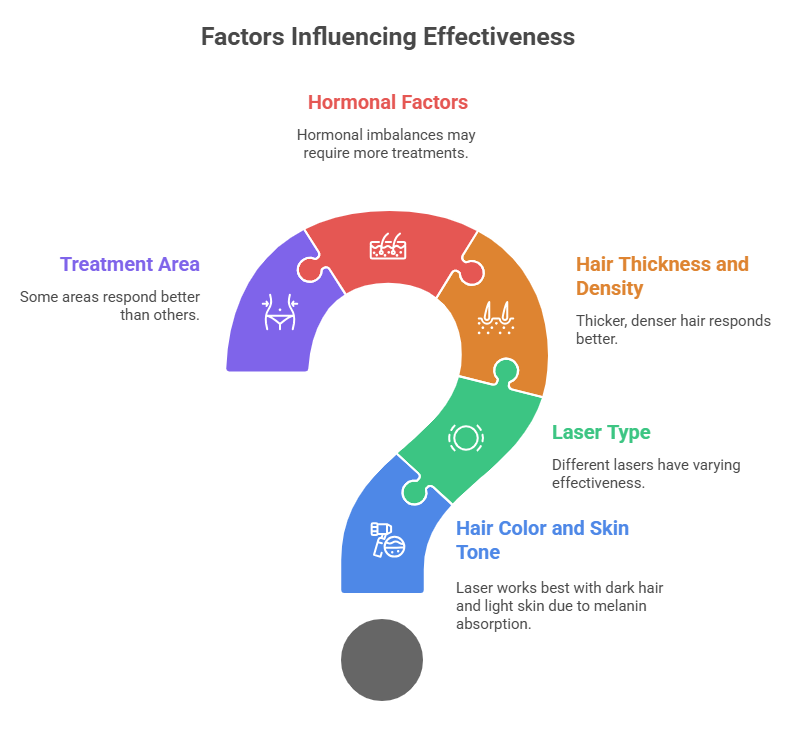
- Hormonal status: PCOS or endocrine shifts can mean more sessions or maintenance top ups.
- Hair thickness and density: Coarse, dark hair tends to respond faster than vellus hair.
- Wavelength choice: Alexandrite suits finer hair on lighter skin, Nd:YAG is better for deeper follicles on darker skin and Diode works well across many cases.
- Skin type and colour: Melanin competes for energy, so safer deeper wavelengths and good cooling matter even more on darker skin types.
- Body area: Underarms and bikini areas often clear quickly, while hormone sensitive areas usually need more patience.
Why clinics work with the British Institute of Lasers
- Machines designed for safety and speed: 3 in 1 wavelength flexibility across all skin types, strong cooling and practical handpiece control.
- Free training and certification: Covers Core of Knowledge essentials, skin typing and day to day operation. You receive certification that supports insurance.
- Documents that make inspections easier: We provide SOPs, maintenance guidance and can introduce an LPA who already knows our platforms.
- Rapid support and low running cost: A 24 hour swap guarantee if you ever need it, and operating costs that help keep margins healthy.
Starter pack: templates you can adapt
Here is a practical set of documents to build. Keep printed copies in a clinic binder and digital versions in your practice management system.- Client paperwork: Consultation form, medical history and contraindications, Fitzpatrick skin type chart, consent, patch test record, treatment record, photo consent and aftercare.
- Clinic safety: Local Rules signed by staff, eyewear matrix, daily start up checklist, emergency stop test record, cleaning checklist and incident report form.
- Device records: Commissioning report, handpiece shot counts, water change log, fault log, service reports and calibration records where applicable.
- Staff files: CVs, qualification certificates, Core of Knowledge, manufacturer training certificate, annual refresher evidence and LPS appointment letter.
- Insurance and compliance: Policy schedule, council licence, LPA engagement letter, waste contract and PAT testing certificates.
Useful extras, if you offer more than hair removal
- Tattoo removal: If you plan to add tattoo removal, our Nu Tatouage Plus offers high pulse energy and low running cost. Read our explainer: How tattoos are removed using lasers.
- Spares and safety: Stock flash lamps, laser rods and safety goggles to minimise downtime.
Final reminders before you open your doors
- Patch test every new area, every new client: Record fluence, pulse width, repetition rate, cooling and the immediate skin response.
- Photo documentation protects you: Front, side and close up images taken under consistent lighting help guard against unrealistic expectations.
- Insurance notifications matter: Tell your insurer when you add new body areas, higher fluences or a new device. Keep them updated after any incident.
- Keep Local Rules visible: Train new staff on the emergency stop, eyewear requirements and controlled area entry.
- Market with clarity: Avoid medical claims if you are not a healthcare provider. Focus on long term hair reduction, comfort and strong safety protocols.