The latest laser hair removal systems bring together three established wavelengths with sharper control, stronger cooling and built in safety tools, helping clinics treat faster while keeping skin calmer across a broader range of skin tones and hair…
The latest laser hair removal systems bring together three established wavelengths with sharper control, stronger cooling and built in safety tools, helping clinics treat faster while keeping skin calmer across a broader range of skin tones and hair types.
What “newest” really means in 2025
Progress now comes from how a system delivers energy, not from chasing one miracle wavelength. Current platforms combine Alexandrite, Diode and Nd:YAG in a single unit, then add adaptive software, live skin reading and high duty cycle power. Developments such as AI led skin assessment and stronger cooling are highlighted by Future Market Insights, and those are the features many clinics are actively looking for as demand continues to climb.
01. Core upgrades that define the latest wave
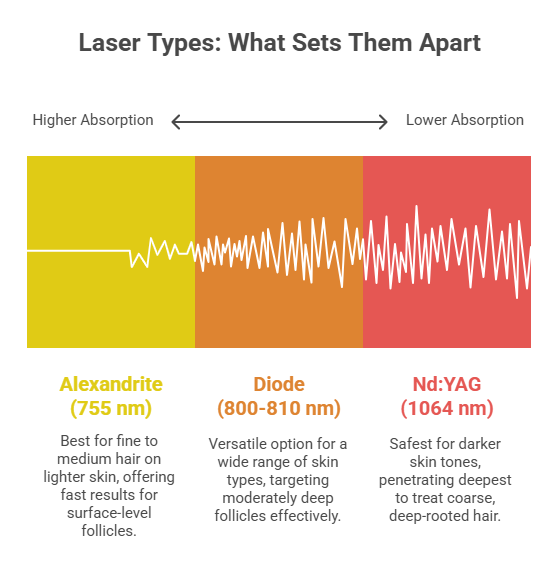
Tri wavelength delivery: 755 nm Alexandrite for fine to medium hair on lighter skin, 808 nm Diode as the flexible workhorse, 1064 nm Nd:YAG for deeper follicles and richer melanin skin types.
Smarter energy control: steadier fluence at higher repetition rates, with pulse widths matched to hair calibre and treatment depth.
Skin analysis on board: scanners and analysers can suggest settings based on Fitzpatrick type, hair colour and density, then save profiles for later visits.
Advanced cooling: contact cooling at the sapphire tip, plus stronger thermal management, helps keep the epidermis comfortable while heat stays focused on the follicle.
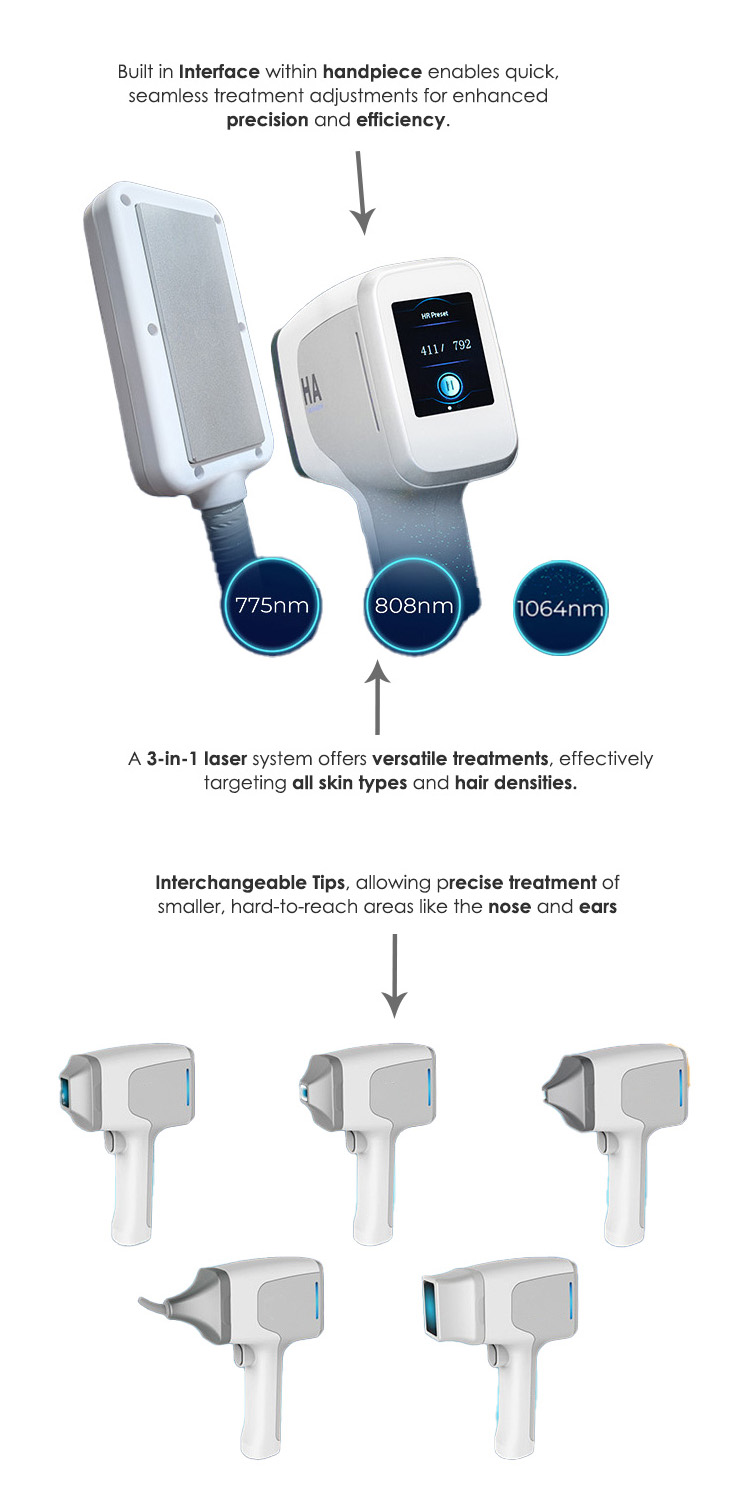
Handpiece interface: quick parameter changes without stepping away from the treatment area, which keeps workflow moving and helps reduce operator error.
Safety guardians: continuous contact sensing, shot counters, interlocks and wavelength matched eyewear protocols built into training and daily use.
How it translates into everyday results
New generation systems can move faster on larger areas, feel gentler on sensitive skin and open treatment up to darker tones with more confidence. Diode still holds the biggest clinical share, at roughly forty percent according to Grand View Research, though much of the current progress comes from multi wavelength platforms delivering stable energy at speed.
Capability
Previous generation
Newest generation
Wavelength access
Single wavelength device
Three wavelengths in one platform
Parameter setting
Manual and experience led
Skin analyser assisted presets with manual override
Cooling comfort
Basic cooling
High efficiency contact cooling during continuous shots
Workflow control
Settings only on the main screen
Controls also available on the handpiece screen
Speed on large areas
Moderate repetition
Higher repetition with steadier fluence
Newest technology, applied: our three in one systems
At the British Institute of Lasers, these newer features are available in practical systems with training and support included.
Nu TriLaze Plus: combines three wavelengths with a built in skin analyser and HD detection for more personalised settings. Interchangeable tips also help with smaller treatment areas. See Nu TriLaze Plus.
Nu eRays Plus: gives operators handpiece control for frequency, pulse width and intensity while they work, backed by FDA approved safety. Explore Nu eRays Plus.
Nu TriLaze Lite: offers compact three in one power with SuperCool technology and low running costs, which suits mobile teams or multi room clinics. Details at Nu TriLaze Lite.
Safety and certification: look for FDA approved status, wavelength matched goggles and Core of Knowledge training. Our Laser Protection Advisor service helps clinics stay compliant.
Running cost: ask about cost per shot, expected shot life, consumables and maintenance cycles. A lower treatment cost helps protect margin.
Support: check for rapid swap guarantees, live technical help and lifetime training. Lost clinic time can cost more than the parts bill.
Fit to clientele: make sure you have access to all three wavelengths if you treat across the full Fitzpatrick scale, plus small tips for noses and ears and larger tips for legs and backs.
Where the tech is heading next
You can expect tighter energy stability at high speed, smarter presets trained on larger data sets and further gains in cooling plate design and treatment comfort. Guidance published in 2025 already points to more precise targeting with less stray thermal spread, as noted by Helen Cleland. The market is moving that way because clinics want systems that treat more skin tones well, work quickly and stay comfortable through busy diaries.
Right now, the strongest systems pair three wavelength hardware with intelligent control, steady cooling and practical clinic details such as handpiece controls and sensible cost per shot. If you want a hands on tour, book a demo. If you would rather speak first, request details and our team will talk you through settings, training and finance options.
Majid holds a PhD in organic chemistry and has been working with laser systems for decades. His career began in the mid-1990s, when he started researching and developing laser-based technologies for medical and cosmetic applications. Over the years, he has combined scientific expertise with practical engineering to design machines that are effective, durable, and straightforward to use in real clinic settings. As director of the British Institute of Lasers, Majid continues to focus on producing equipment that meets professional standards while remaining accessible to businesses of all sizes.
Laser Hair RemovalLaser Technology & Equipment
From the Knowledge Hub
Continue planning your laser service.
Explore more guidance on professional equipment, clinic planning, training and practical business decisions.