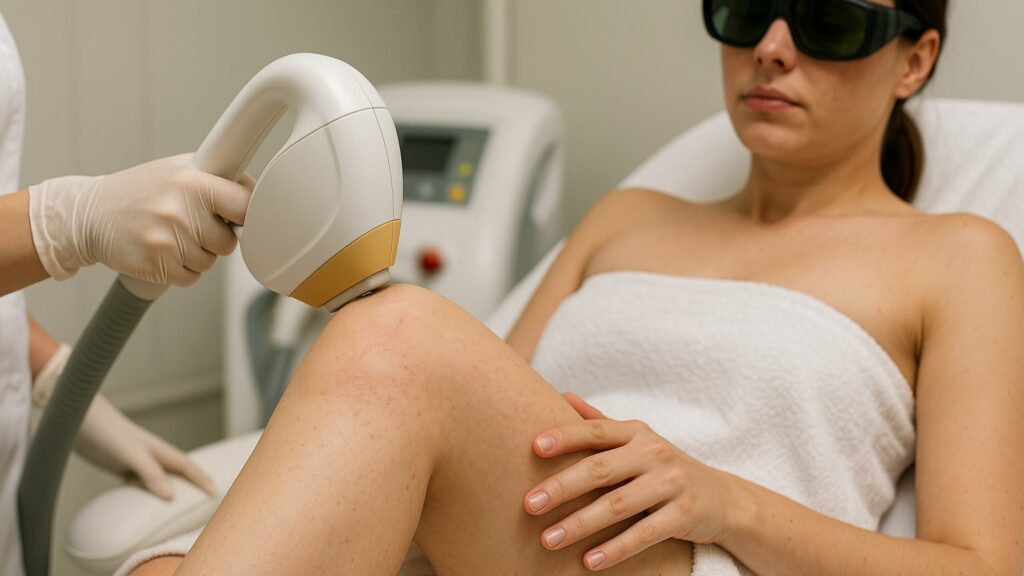
IPL hair removal uses intense pulsed light to heat hair follicles and reduce regrowth. It is widely available, relatively budget friendly and familiar to many home users. For clinics, it is useful in some settings, though professional laser…
By Dr Majid ZarandouzPublished 28 February 2017Updated 8 May 20264 min read
In this guide
IPL hair removal uses intense pulsed light to heat hair follicles and reduce regrowth. It is widely available, relatively budget friendly and familiar to many home users. For clinics, it is useful in some settings, though professional laser systems usually deliver stronger, steadier outcomes with fewer sessions.
What IPL hair removal actually is
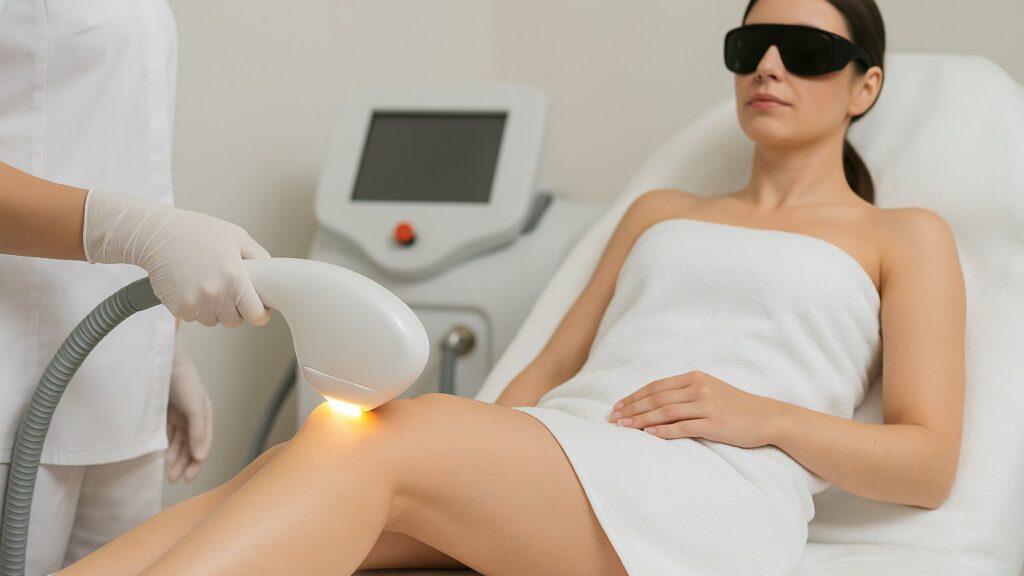
IPL stands for intense pulsed light. The handset emits a bright flash across a broad range of wavelengths. Filters are then used to bias that light toward melanin in the hair shaft. Melanin absorbs the light, converts it to heat, and growth cells are disrupted. It is the same core principle that lasers use, called selective photothermolysis, described clearly by the Mayo Clinic.
Source: Broad spectrum light, shaped by filters.
Target: Melanin in the hair, especially dark hair.
Effect: Heat weakens the follicle, regrowth becomes slower and finer.
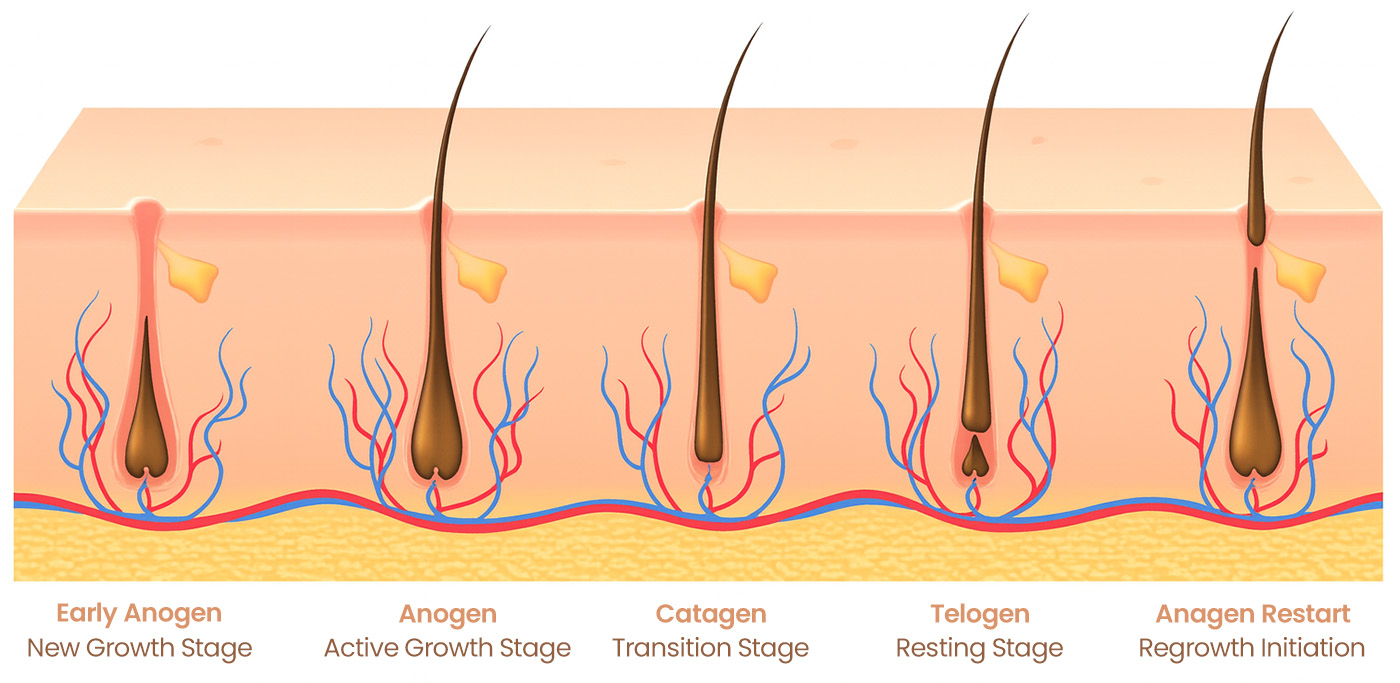
Course: Multiple sessions needed because only hairs in active growth respond well.
IPL versus laser hair removal
Both aim for long term reduction. The difference sits in the light itself. A laser uses one precise wavelength that hits melanin at a very specific depth. IPL spreads energy across a wider band. That broader spread can feel gentler, yet it can also be less efficient. In clinic settings, this gap turns into extra sessions, longer appointments, and sometimes patchier clearance.
Aspect
IPL
Professional laser
Light type
Broad spectrum, filtered
Single wavelength, focused
Typical course
Eight to twelve sessions
Six to eight sessions
Skin tone range
Best on lighter tones
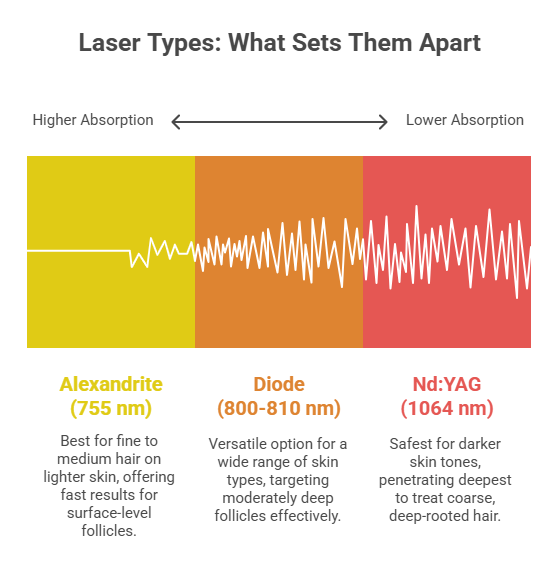
All tones with 755, 808 and 1064 nm
Precision
Moderate
High, repeatable
IPL is not as effective as true laser for most clients, especially across a wide range of skin tones. Clinics that want consistency and speed typically choose three in one laser systems. You can compare use cases in our guide to IPL versus laser hair removal, and see performance detail in how effective is laser hair removal.
Who benefits most from IPL
Lighter skin with dark hair: Higher contrast improves absorption and warms the follicle more reliably.
Large body areas: The broad flash can feel efficient for arms and legs on suitable skin.
Maintenance: Useful between professional laser courses to tidy regrowth.
Budget led choices: Home devices can soften regrowth when expectations are modest.
Then again, very light blond or grey hair contains little melanin, so response is limited. Darker skin tones carry more epidermal melanin, which raises the risk of unwanted pigment change. A professional Nd YAG laser at 1064 nanometres is the safer option in those cases.
Safety, comfort and aftercare
Expect temporary redness, a warm sensation, and mild swelling that usually settles within a couple of days. Cooling, careful energy selection, and spacing appointments four to six weeks apart help keep skin calm. In England a licensing scheme for non surgical cosmetic procedures is being introduced, which covers laser and IPL. Details are set out on the GOV.UK website. If you are a clinic owner, make sure treatment protocols, training, and insurance are lined up before launch.
A quick look at home IPL
Home IPL devices can soften regrowth, especially on lighter skin with dark hair. They require commitment, frequent top ups, and realistic goals. Good lighting, clean skin, and slow, deliberate passes improve outcomes. If results plateau, or if skin tone is deeper, professional laser is the sensible next step.
Why many clinics pick laser instead
Client demand is strong across the UK. Laser hair removal was the most popular treatment in twenty twenty four according to Rare Consulting. For that level of interest, teams want dependable clearance, shorter sessions, and service for every skin type. That is where three wavelengths in one device shine.
Nu TriLaze Plus: Three in one platform with built in skin analyser and interchangeable tips. See Nu TriLaze Plus.
Nu eRays Plus: Handpiece controls, quick pulses, low running cost. See Nu eRays Plus.
Nu TriLaze Lite: Compact, portable, and wonderfully efficient. See Nu TriLaze Lite.
We feature laser hair removal systems that cover all skin types and tones, with free training and certification included. Explore the range here: laser hair removal machines.
Next steps for clinics
Book a live demo: Visit our Coventry showroom or book online: Book a Demo.
Request pricing: Specifications, finance and lead times: Request Details.
Questions about client selection, protocols or maintenance plans? Our team is happy to help, and our training covers Core of Knowledge, skin typing, operation, cleaning and routine care. That way your first week of treatments already feels smooth and confident.
Majid holds a PhD in organic chemistry and has been working with laser systems for decades. His career began in the mid-1990s, when he started researching and developing laser-based technologies for medical and cosmetic applications. Over the years, he has combined scientific expertise with practical engineering to design machines that are effective, durable, and straightforward to use in real clinic settings. As director of the British Institute of Lasers, Majid continues to focus on producing equipment that meets professional standards while remaining accessible to businesses of all sizes.
hair reductionipl basicslight therapy
From the Knowledge Hub
Continue planning your laser service.
Explore more guidance on professional equipment, clinic planning, training and practical business decisions.