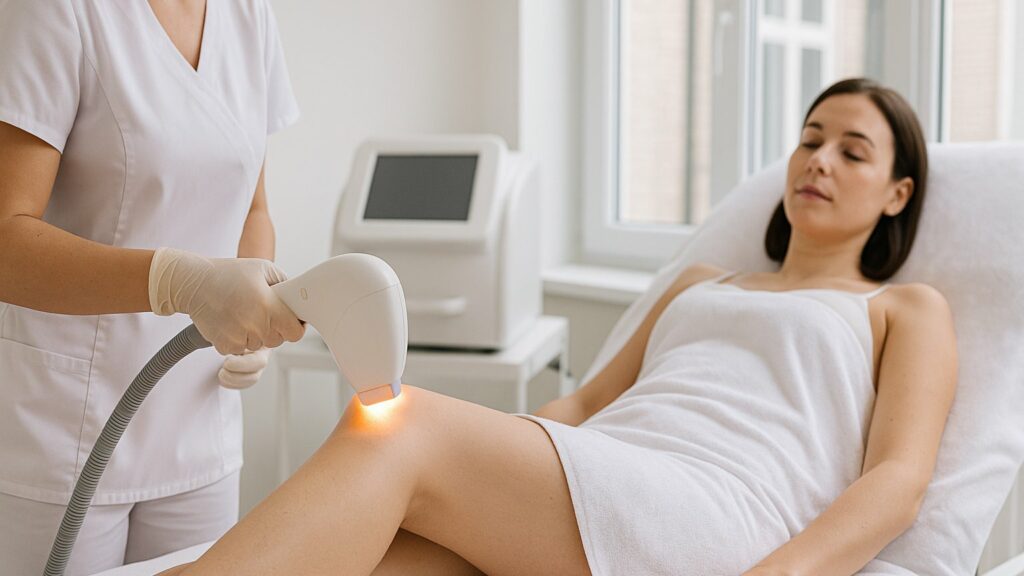

Laser hair removal can be safe and highly effective for Afro Caribbean skin, provided the clinic uses the right wavelength, sensible settings and proper cooling. Below is a practical guide for clients and clinics who want steady results without unnecessary risk.
Why darker skin needs a tailored plan
Darker skin needs a more careful approach because melanin sits in both the skin and the hair. If too much heat is pulled into the surface of the skin, the risk of irritation or pigment change rises. That is why clinics usually favour wavelengths that travel deeper and are absorbed less by epidermal melanin. This is selective photothermolysis, where light is directed at the follicle while limiting heat spread into surrounding tissue. For a plain language overview of the science, see the Mayo Clinic page.Best wavelengths for Fitzpatrick IV to VI
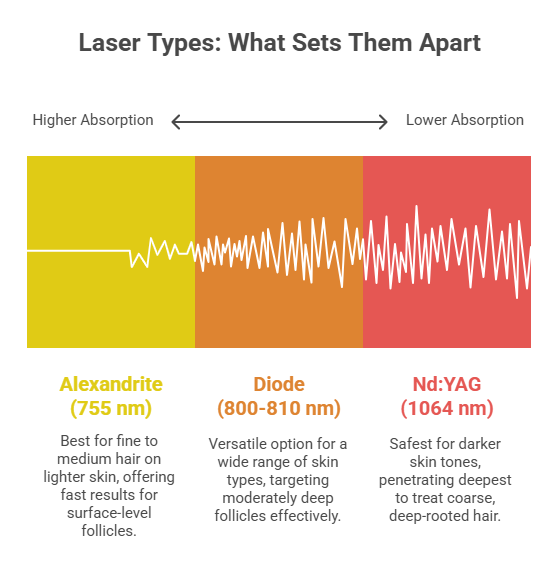
Nd:YAG at 1064 nanometres is usually the best option for Afro Caribbean skin. It reaches deeper into the follicle and is absorbed less by surface melanin. Diode around 808 to 810 nanometres can also work well on types III to V when paired with longer pulse widths and strong cooling. Alexandrite at 755 nanometres tends to suit lighter skin tones because the skin absorbs it more readily.| Wavelength | Good for | Typical use | Comfort and safety notes |
|---|---|---|---|
| 1064 nm Nd:YAG | Fitzpatrick IV to VI | Coarse facial or body hair, beard lines, bikini | Lower epidermal absorption, deeper reach, works best with robust cooling |
| 808 to 810 nm Diode | Fitzpatrick III to V | Large body zones where speed matters | Use longer pulse widths and measured fluence to keep treatment comfortable |
| 755 nm Alexandrite | Fitzpatrick I to III | Fine to medium hair on lighter tones | Usually not preferred on deeper tones because skin absorption is higher |
01. Parameter tweaks that protect skin
- Longer pulse widths: these reduce intense surface heating while still delivering useful energy to the follicle.
- Conservative fluence: start carefully after a patch test, then increase only when the skin response is clear and controlled.
- Strong cooling: chilled tips, contact gel or cold air can make a huge difference to comfort and surface protection. Mild redness or slight swelling is common and usually settles within two to three days, as noted on Wikipedia.
- Spot sizing: larger spot sizes can improve depth, but only if the fluence stays clinically useful.
Results timeline: what to expect
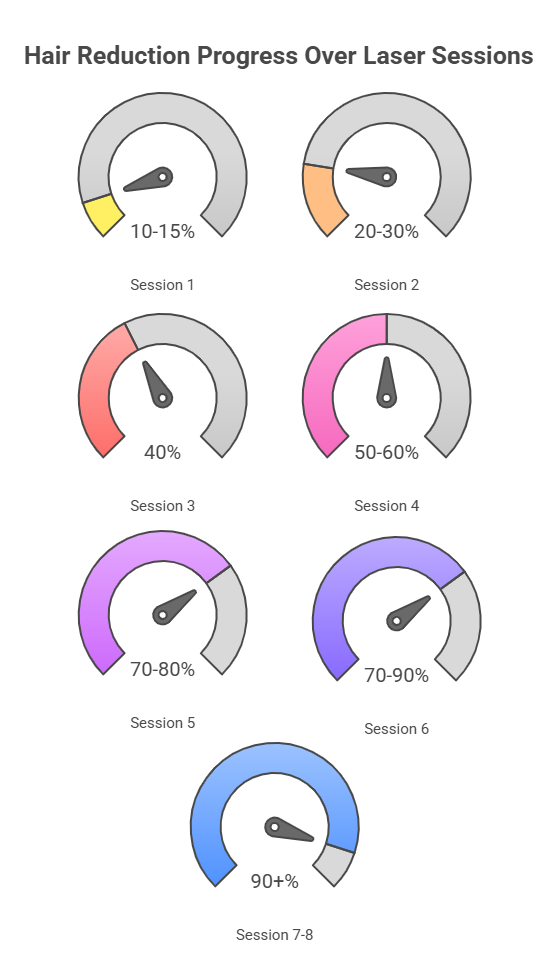
Most clients need six to eight sessions. The face is usually treated every four to six weeks, while body areas are more often spaced six to eight weeks apart. Coarse, curly hair often responds well once the settings are adjusted properly. By the third session, regrowth often starts slowing down and feels softer. By sessions four and five, density usually drops further and patchy clearance becomes more noticeable. Hormonally active areas may still need maintenance top ups to keep results tidy.02. Pre care and aftercare that matter
- Two weeks before: avoid sun exposure and sunbeds. Let fake tan fade fully. Patch test first time clients and anyone returning after a holiday.
- Twenty four hours before: shave the area carefully. Do not wax or thread during a treatment course because the follicle needs to stay in place.
- On the day: arrive with clean, dry skin and no oils, fragrance or active skincare on the treatment area.
- After: cool the skin if needed, avoid heat and friction for forty eight hours, then use SPF on exposed areas for at least a week.
Razor bumps and ingrowns
Curly hair often comes with pseudofolliculitis barbae, especially along the beard line and bikini area. Laser can make a real difference here. As hair density drops and regrowth becomes finer, fewer hairs curl back into the skin. That often means fewer bumps, less inflammation and a slower build up of post inflammatory marks.The machines that make this simpler
Three in one platforms give clinics more control because they can match the wavelength to the client rather than forcing every treatment through one system. Our systems combine Nd:YAG, Diode and Alexandrite with integrated cooling and practical controls, which helps clinics treat a wider mix of skin tones with more confidence.- Nu TriLaze Plus: 1064, 808, 755 with a built in skin analyser and HD detection for more personalised settings. FDA approved. See Nu TriLaze Plus.
- Nu eRays Plus: adjustable handpiece settings and dependable cooling, which clients often appreciate on more sensitive areas. Explore Nu eRays Plus.
- Nu TriLaze Lite: compact, easy to move and low in running cost, which suits busy clinics working across several rooms. View Nu TriLaze Lite.
03. Safety and compliance in England
- Licensing: England is moving towards licensing for non surgical cosmetic procedures. Carrying out treatment without a licence will become an offence, according to GOV.UK.
- Training and LPA: every machine purchase includes free training and certification to support insurance requirements. Need help with governance too. Our Laser Protection Advisor service is available.
- Next steps: if you want to see a system in person or virtually, book a demo or request details for finance and ROI packs.
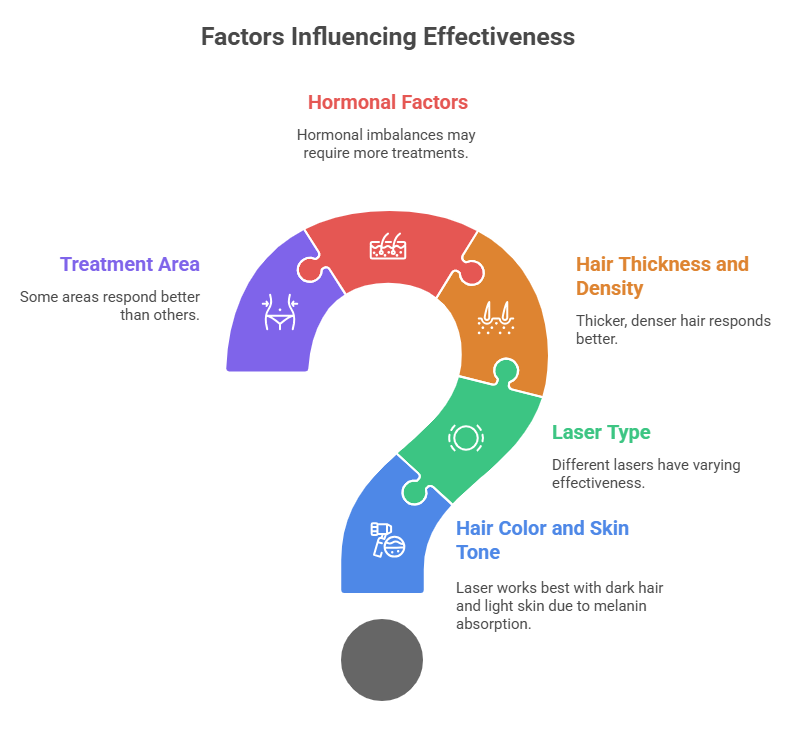
Quick checklist for clients and clinics
- Wavelength choice: prioritise Nd:YAG 1064 for Fitzpatrick IV to VI, with Diode used carefully where it suits the skin and hair profile.
- Patch tests: always carry them out before a course, and repeat them after holidays or any visible shift in skin tone.
- No active tan: treatment margins get tighter when the skin is tanned, so it is safer to wait and retest.
- Session spacing: four to six weeks for the face, six to eight weeks for the body, then maintenance as needed.
- Comfort aids: cooling is a core part of safe treatment on deeper skin tones, not an optional extra.
04. Key facts, in one place
- It is suitable: Afro Caribbean skin can be treated safely when wavelength, settings and cooling are chosen properly.
- Strong first choice: Nd:YAG 1064 is widely preferred because it reaches deeper and is absorbed less by skin melanin.
- Course length: most clients need six to eight sessions, followed by occasional top ups.
- Best bonus: fewer ingrowns and less razor bump activity as hair density drops.
- The right kit: three in one platforms with cooling and adjustable controls help clinics stay consistent and efficient.