

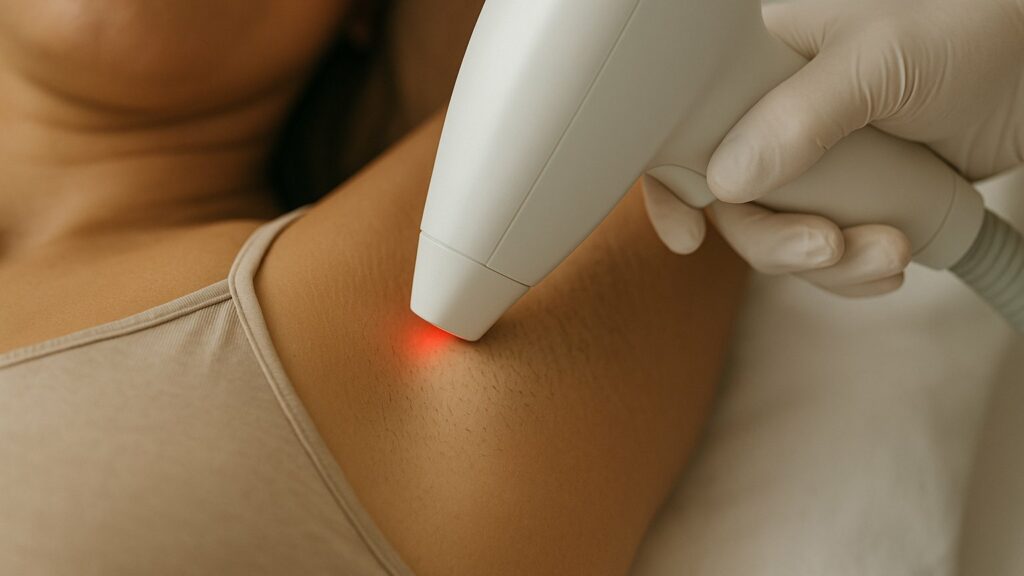
Laser hair removal can be very effective for long term hair reduction when the wavelength, settings and treatment plan are properly matched to the client, leaving skin smoother and regrowth noticeably slower after a short run of sessions. The strongest results usually come from clinic grade systems, steady spacing and sensible expectations.
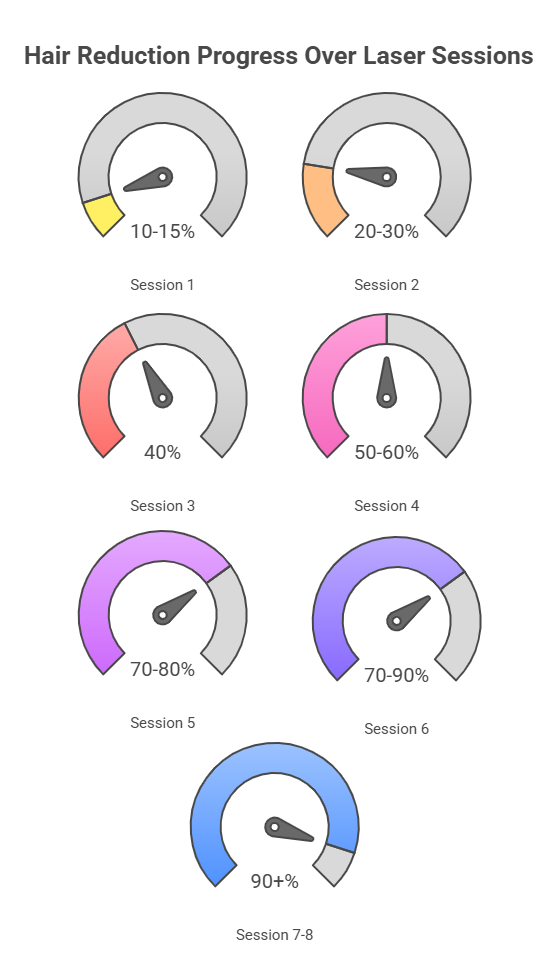
What “effective” looks like in real life
Lasers target melanin in the hair shaft, turn light into heat and disrupt the parts of the follicle responsible for regrowth. Because hair grows in cycles, only hairs in the active phase respond at each visit, so one session never tells the full story. Most clients notice reduced density, slower regrowth and a softer feel as the course goes on. A helpful overview of the method and common after effects appears on Wikipedia.01. Results by stage
| Milestone | What most clients notice | Why it happens |
|---|---|---|
| After 1 to 2 sessions | Some shedding, slight slowing | The first treatments reach only a portion of follicles in anagen |
| After 3 to 4 sessions | Patchier regrowth, softer texture | More of the hair cycle has now been treated |
| After 6 sessions | Clear reduction, much less daily stubble | Most active follicles have been exposed to treatment at least once |
| Maintenance | Occasional top ups keep things tidy | These catch late cycling or hormone responsive hairs |
How many sessions for strong effectiveness
Most areas need six to eight sessions. Facial areas and hormonally sensitive zones often need a little more. Clinics usually space visits four to six weeks apart for the face and six to eight weeks apart for the body. That timing matters because it gives a new wave of active follicles time to appear, so each session has more to work on. Demand has stayed strong in Britain, with laser hair removal ranking high for treatment interest in 2024 according to Rare Consulting.What drives better or weaker outcomes
- Hair and skin contrast: darker, coarser hair on lighter skin tends to respond more quickly. Very fair, grey or white hair carries less target pigment, so the response is usually weaker.
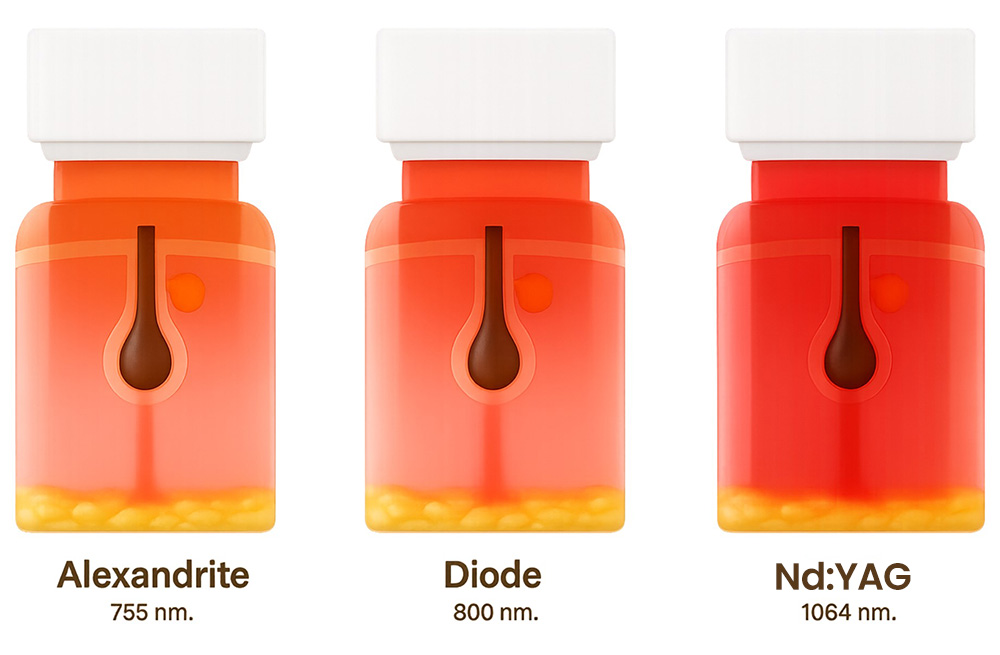
- Wavelength choice: Alexandrite 755, Diode 808 and Nd:YAG 1064 behave differently in the skin. Matching the wavelength to the client improves both safety and results.
- Hormones: PCOS, pregnancy, perimenopause or certain medicines can trigger new growth or shift the cycle. That usually changes maintenance timing rather than cancelling out the treatment itself.
- Device and cooling: stable energy delivery and strong cooling make it easier to use effective settings with less discomfort and more consistent progress.
- Consistency: sticking to the treatment schedule and shaving between visits really does affect the end result.
02. Area by area effectiveness
| Area | Typical sessions | Client feedback trend |
|---|---|---|
| Underarms | 6 to 8 | Fast visible change, with daily stubble dropping quite early |
| Bikini | 6 to 8 | Usually strong reduction, especially with modern cooling systems |
| Legs | 6 to 8 | Widespread thinning and longer gaps between tidy ups |
| Face | 6 to 10 | Clear reduction, though maintenance often depends on hormones |
| Back or chest | 6 to 10 | Density tends to fall steadily, with top ups helping keep shape and neatness |
The tech that consistently delivers
Three wavelength platforms give clinics the flexibility to treat a wide range of skin tones safely and effectively, then refine the settings when an area is stubborn or uneven. That is why many providers choose our systems:- Nu TriLaze Plus: Alexandrite, Diode and Nd:YAG in one platform, with a built in skin analyser and HD detection to help tailor settings. Nu TriLaze Plus
- Nu eRays Plus: detailed handpiece control and strong cooling for comfortable, efficient treatment. Nu eRays Plus
- Nu TriLaze Lite: compact, flexible and economical to run, making it a practical choice for multi room clinics or mobile work. Nu TriLaze Lite
03. Make your results even better
- Shave between visits: avoid waxing or epilating during the course, because the root needs to stay in place for the laser to target it.
- Be careful with sun exposure: avoid tanning for two weeks before and after treatment and use SPF on exposed skin.
- Be open at consultation: mention medicines, hormone history and any recent skin changes so settings can be adjusted properly.
- Ask about wavelength choice: darker skin tones often respond best with Nd:YAG 1064 because it offers a safer route to steady improvement.