
A hair removal laser machine or tattoo removal laser machine can appear perfectly normal while its performance is beginning to change. It may still switch on, pass its start-up checks and complete appointments. Yet cooling can become less effective, energy delivery can become less consistent and small signs of wear can go unnoticed.
Regular servicing gives a clinic a chance to find those changes before they develop into a larger fault. It also helps the practitioner understand whether the machine is operating as intended, rather than judging its condition only by whether it powers up.
Performance problems do not always arrive suddenly
A complete breakdown is obvious. Gradual deterioration is harder to spot.
Filters collect debris. Cooling systems work less efficiently when water quality, flow or ventilation is poor. Connections can loosen through repeated movement. Handpieces and cables are handled throughout the working day, then cleaned and stored before the next client. None of this automatically means a machine is unreliable. Professional equipment simply needs planned care.
The first sign may be a slightly warmer handpiece, an unusual noise, slower cooling or an error that disappears after restarting. A practitioner may also notice that familiar settings no longer feel or behave quite as expected. These details should be recorded and investigated rather than accepted as part of an ageing machine.
A machine can switch on and still need attentionReliable operation depends on the condition of the cooling system, electrical components, handpiece, connections, software and safety controls, not just the display.
Servicing is different from routine maintenance
Daily and weekly care remains important. Practitioners may need to clean approved surfaces, inspect the handpiece and cable, check ventilation, monitor water levels and complete water changes according to their training and the manufacturer's instructions.
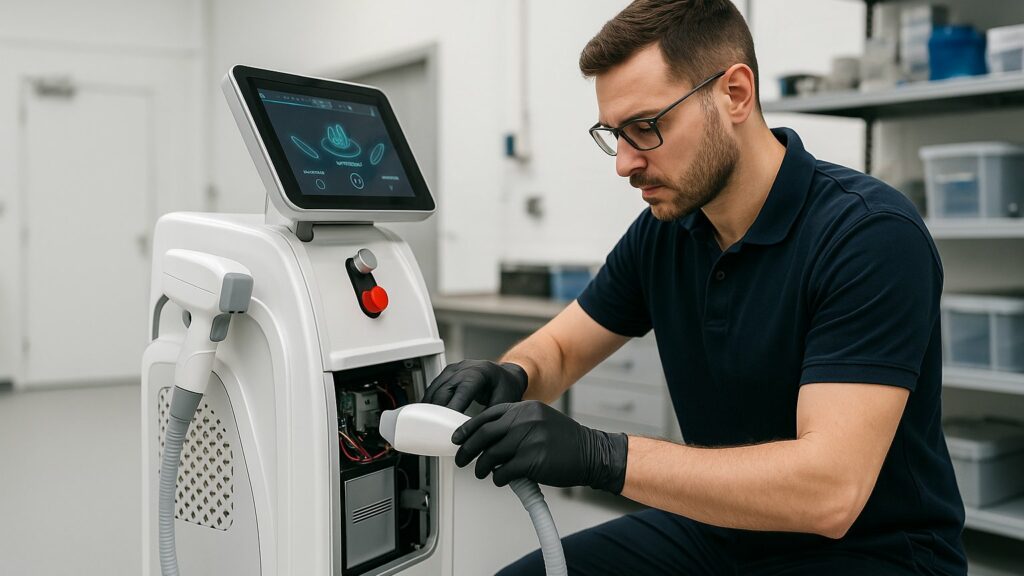
Formal servicing goes further. A suitably qualified engineer can inspect internal and safety-critical components that should not be opened or adjusted by the clinic.
A professional service may include
- Cooling-system checks: Reviewing water circulation, temperature control, filters, ventilation and signs of leakage.
- Handpiece inspection: Checking the condition of the treatment window, cable, connections, controls and cooling surface.
- Output testing: Confirming that the machine is operating within the manufacturer's expected performance range.
- Safety checks: Inspecting electrical components, warning systems, emergency controls and visible damage.
- Diagnostic review: Examining software, counters, stored errors and any unusual behaviour reported by the clinic.
The precise work will depend on the machine and its manufacturer. Clinics should avoid unapproved fluids, replacement parts or improvised repairs. A quick fix can create a more expensive problem and may affect warranty, insurance or future service support.
Consistent treatment depends on predictable equipment
Laser settings are selected according to the client, treatment area, skin assessment, hair or ink characteristics and the machine being used. The practitioner needs confidence that the equipment is responding predictably to those selections.
Servicing cannot guarantee a particular treatment result. It can help identify whether the machine is performing within the manufacturer's expected parameters. That matters for energy delivery, cooling, client comfort and accurate treatment records.
If performance appears to have changed, increasing the settings is not a sensible substitute for inspection. The cause may be technical rather than clinical. Continuing without advice makes it harder to understand what the machine is delivering and may place unnecessary strain on the equipment.
Small faults are usually easier to manage early
A minor leak, damaged cable covering, restricted air vent or intermittent connection may look manageable during a busy week. Left alone, it can place additional strain on other parts of the system or lead to an appointment being stopped halfway through.
Planned servicing creates a controlled opportunity to identify wear. The clinic can arrange the work around its diary instead of waiting for the machine to choose an inconvenient day to fail.
Not every breakdown can be predicted. Components may still fail unexpectedly. Regular inspection reduces the chance that a visible or measurable problem remains unnoticed until it causes greater disruption.
Downtime costs more than the repair invoice
The financial impact of a breakdown extends beyond an engineer's bill. Appointments may need to be postponed, staff time is spent contacting clients and treatment courses can be interrupted. Finance, rent and wages continue while the clinic's treatment capacity is reduced.
Servicing should therefore be included in the ownership budget from the beginning. Buyers comparing the long-term cost of professional laser equipment should ask who carries out servicing, where replacement parts are held, how quickly technical support responds and what happens if the machine cannot be repaired on site.
Very cheap equipment can become expensive when service information is vague, parts are difficult to obtain or the machine must be shipped overseas for diagnosis. Clinics considering imported equipment should examine the servicing and support implications of buying laser machines from overseas before making a decision.
Document what has been checked and repaired
Keep a clear history for each machine. Record the service date, engineer or service provider, checks completed, parts replaced, faults found and any recommendations. Add reports of unusual behaviour between visits, even when the machine later appears normal.
These records help an engineer identify recurring patterns. They also support internal maintenance planning and may be useful when speaking with an insurer, local authority or Laser Protection Adviser.
A service record does not automatically prove that a clinic meets every legal, insurance or local-authority requirement. Missing or disorganised records do, however, make it harder to demonstrate that equipment has been managed responsibly.
How often should a laser machine be serviced?
There is no sensible universal interval for every machine. Follow the manufacturer's instructions and any requirements set by the service agreement, insurer, Laser Protection Adviser or local authority.
Usage also matters. A machine completing a full clinic diary experiences a different workload from one used a few times each week. The treatment-room environment, ventilation, transport between locations and history of previous faults may also justify earlier inspection.
Do not wait for the planned service date when the machine shows a warning sign. Stop using it and seek advice if there is leaking, a burning smell, repeated overheating, unusual noise, damaged cabling, unreliable cooling, persistent errors or a clear change in performance. Follow the supplier's shutdown guidance rather than continuing until the next available appointment gap.
Know who to contact before something goes wrong
Servicing is easier to manage when the clinic already has a clear support route. British Institute of Lasers includes lifetime UK-based support with its machines, covering areas such as troubleshooting, operational guidance, maintenance advice, water-change guidance and refresher help.
If a qualifying machine fault cannot be resolved on site, the 72-hour machine-swap guarantee means a replacement unit will be dispatched within 72 working hours while the original machine is repaired. This is designed to reduce extended disruption, although it does not promise uninterrupted operation or compensation for lost appointments.
Regular servicing should feel routine rather than becoming an emergency response. Build it into the clinic calendar, keep accurate records and act on small changes early. The machine sits at the centre of the treatment diary. Looking after it protects far more than the equipment itself.