
Becoming a laser hair removal technician involves more than learning how to move a handpiece across the skin. A competent practitioner must assess skin and hair, recognise contraindications, select suitable settings, carry out patch tests, document treatment properly and respond calmly if the skin reacts unexpectedly.
The UK does not have one national certificate that automatically gives a person permission to practise everywhere. Training expectations, insurance conditions and licensing arrangements can differ by nation, council and premises. The safest route is to confirm those requirements first, then build your qualifications and practical experience around what the relevant authorities will accept.
The route in briefCheck the rules where you intend to work, complete an accepted laser and light qualification, study the Core of Knowledge, undertake training on the exact hair removal laser machine you will use, gain supervised practical experience, then arrange the required insurance, safety documentation and licences before treating paying clients.
What does a laser hair removal technician actually do?
The visible part of the appointment is usually quite short. Much of the technician's responsibility sits around it. Before treatment, you need to take a relevant medical and medication history, assess the client's skin and hair, discuss realistic expectations, explain preparation and aftercare, and identify anything that may make treatment unsuitable or require postponement.
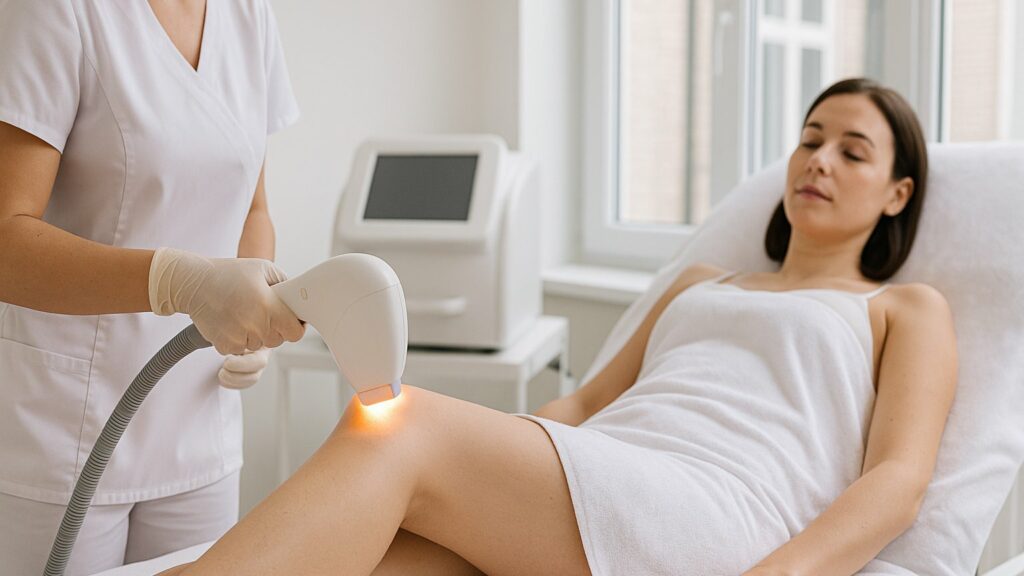
During the appointment, the technician controls the treatment area, checks protective eyewear, selects settings within an approved protocol and watches the skin continuously. Afterwards, you record the settings, response and advice given. Good client communication matters throughout. People may feel exposed, nervous or embarrassed, particularly during facial, intimate or hormonally influenced hair treatments.
A technician also needs to understand the limits of the treatment. Laser energy targets pigment within the hair, so grey and white hair generally respond poorly. Treating all skin types is possible with suitable professional equipment and informed setting selection, but every client still requires an individual consultation and patch test.
Choose training that your council and insurer will recognise
A Level 4 laser and intense pulsed light qualification is widely treated as the professional benchmark for hair removal work. Some local authorities explicitly request Level 4 or Level 5 study, Core of Knowledge training and evidence that each operator has been trained on the particular device in use.1 This does not make Level 4 a universal statutory minimum across the whole UK. It does make it a sensible starting point for anyone who wants broad acceptance from employers, councils and insurers.
| Your starting point | Likely route | What to verify first |
|---|---|---|
| Qualified beauty therapist | Progress from your existing anatomy, physiology and client-care knowledge into an accepted Level 4 laser and light course. | Whether your Level 3 qualification contains the prerequisite units required by the course, council and insurer. |
| Complete beginner | Build the required foundation first. Some providers offer combined pathways, while others require Level 3 beauty therapy or equivalent before Level 4. | Do not assume a short standalone certificate will provide insurable treatment competence. |
| Healthcare professional | Your clinical background may satisfy some entry requirements, but you still need laser safety, treatment and machine-specific competence. | Professional registration does not automatically satisfy every council licence or insurance policy. |
Complete the Core of Knowledge and machine-specific training
The Core of Knowledge covers the science and safety that sit beneath treatment technique. The MHRA guidance includes laser characteristics, the effects of optical radiation on the eyes and skin, risk assessment, hazard controls and safe working procedures within its recommended syllabus.2 It is an essential foundation, but it is not a complete practical treatment qualification by itself.
Machine-specific training then translates that knowledge into everyday operation. It should cover the interface, preset and manual controls, treatment-setting selection, Fitzpatrick skin typing, consultations, contraindications, patch testing, cleaning, routine maintenance, water changes, documentation and aftercare. Different machines can present settings and safety features in quite different ways, so experience on one device should not be treated as automatic competence on another.
Every British Institute of Lasers hair removal laser machine purchase includes free Core of Knowledge learning alongside bespoke machine training and certification. That training supports equipment competence, although the practitioner must still confirm any separate qualification, insurance and local licensing requirements that apply to them.
Spend time treating models under supervision
Online theory is useful for laser physics and safety, but it cannot show whether you can position a client, keep consistent contact, observe an immediate skin response or adjust your pace across a curved treatment area. Look for assessed practical work on several body areas and a range of suitable skin and hair presentations.
The following video shows laser hair removal in a professional treatment setting. Notice the technician's positioning, controlled handpiece movement and the amount of attention given to the treatment area rather than the speed of completing it.
Supervised practice should also include the less photogenic parts of the job: correcting incomplete consultation forms, declining unsuitable treatment, recording a patch test, cleaning the handpiece correctly and explaining why a client may need to delay treatment after tanning or a medication change.
Check licensing, registration and insurance before treating clients
Regulation is location-specific. In England, the government has acknowledged that the current framework is fragmented and has been developing a licensing scheme for non-surgical cosmetic procedures. Further regulation remains subject to consultation and parliamentary processes.3 Existing local rules still matter. GOV.UK advises businesses offering massage or other special treatments to contact their council about premises licensing, and many councils include laser and IPL within those schemes.4
Wales requires independent laser and IPL services to register with Healthcare Inspectorate Wales, with supporting material such as evidence of an appointed Laser Protection Adviser, Local Rules and approved treatment protocols.5 Scotland introduced new legislation in 2026 for the regulation and licensing of non-surgical procedures, while Northern Ireland's regulated service definitions include businesses providing cosmetic laser and IPL treatments.67
Wherever you are based, speak to the regulator or council for the exact premises before signing a lease. Ask an aesthetics insurer to confirm the qualifications it accepts and ensure laser hair removal is named within the treatment-risk cover. If you will employ anyone, separate employers' liability obligations may also apply.
The room is part of your competenceA Laser Protection Adviser can help with the risk assessment, Local Rules, controlled area, signage, window protection and suitable eyewear. HSE guidance makes clear that protective eyewear should follow the employer's risk assessment and is generally expected where higher-class lasers present accessible beam hazards.8 You can read more about Laser Protection Adviser support for clinics.
A sensible order for becoming treatment-ready
-
Decide where and how you want to work
An employed clinic role, a rented room and your own premises create different licensing, insurance and equipment responsibilities.
-
Contact the council, regulator and insurer
Get their qualification and premises requirements in writing before choosing a course.
-
Complete recognised theory and practical study
Build the appropriate foundation, Level 4 treatment competence and Core of Knowledge rather than relying on a brief attendance certificate.
-
Train on the exact machine
Learn its controls, protocols, cooling, maintenance and documentation, then retain the certificate and training syllabus.
-
Build supervised confidence
Practise consultations, patch tests and complete appointments across suitable treatment areas before working independently.
-
Put the trading safeguards in place
Arrange insurance, LPA support where required, Local Rules, consent forms, treatment records, maintenance logs and the relevant licence or registration.
The time required varies. An experienced beauty therapist may be able to complete the additional laser study and supervised practice relatively quickly. A beginner who first needs a beauty-therapy foundation should expect a longer route. Course duration matters less than whether the training produces competence that your employer, insurer and regulator will accept.
Frequently asked questions
Not usually for cosmetic laser hair removal, but you do need suitable treatment and safety training. The rules may differ for other laser procedures, regulated healthcare settings and particular parts of the UK, so confirm the position for the service you intend to provide.
Theory and Core of Knowledge learning can be delivered online, but treatment competence needs meaningful practical training and assessment. Check that the resulting qualification and practical format are accepted by your insurer and local licensing body.
No. Many people train using equipment provided by the course or employer. Before treating independently, you should be trained and authorised on the specific machine you will operate.
Keep a treatment log, review outcomes, refresh safety knowledge and seek guidance when a client falls outside your experience. Working in an established clinic can be a useful first step because it exposes you to consultations, record keeping and a wider range of client presentations.
For a deeper look at the paperwork behind independent practice, read the guide to qualifications, licences and insurance for laser hair removal. Practitioners planning to buy equipment can also review the full range of professional hair removal laser machines, but training and regulatory acceptance should be settled before a purchase decision is made.
Sources
- London Borough of Redbridge, special treatment licensing and operator training requirements
- MHRA, guidance on the safe use of lasers, intense light source systems and LEDs
- Department of Health and Social Care, consultation response on licensing non-surgical cosmetic procedures in England
- GOV.UK, massage and special treatment premises licensing
- Healthcare Inspectorate Wales, registering an independent laser or IPL service
- Non-surgical Procedures and Functions of Medical Reviewers (Scotland) Act 2026
- Regulation and Quality Improvement Authority, definitions of regulated services in Northern Ireland
- Health and Safety Executive, laser safety and protective eyewear guidance