How Much Does Laser Tattoo Removal Cost? Pricing Explained
Laser tattoo removal in the UK often starts at around £70 per session for a very small black tattoo and can rise beyond £300 for larger or more complex work. Most clients need a course of sessions rather…
By Dr Majid ZarandouzPublished 21 December 2019Updated 8 May 20266 min read
In this guide
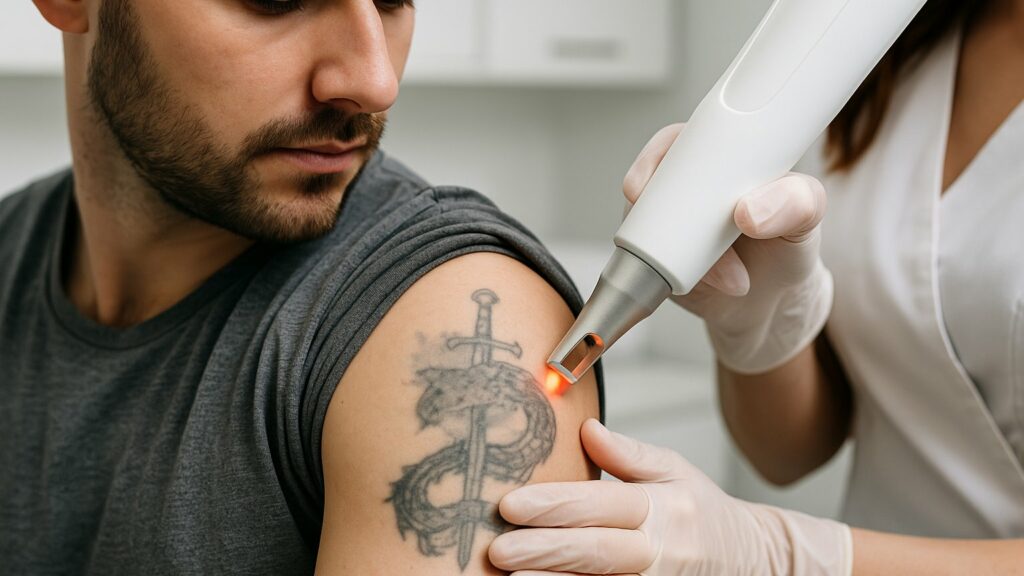
Laser tattoo removal in the UK often starts at around £70 per session for a very small black tattoo and can rise beyond £300 for larger or more complex work. Most clients need a course of sessions rather than one visit. The exact cost comes down to size, colour mix, ink density and the device being used. Here is a clearer pricing breakdown for clients and clinics, along with a few sensible ways to keep costs under control.
What actually sets the price
Size and coverage: more area means longer treatment time and more laser pulses.
Colour complexity: black usually responds quickest and tends to cost less. Reds, blues and greens often need different settings and extra sessions, which pushes the total up. See colour challenges on WebMD.
Ink density and layering: dense professional work, layered ink and cover ups usually take more effort than lighter amateur tattoos.
Sessions required: full removal often takes six to twelve sessions. Fading for a cover up usually takes fewer.
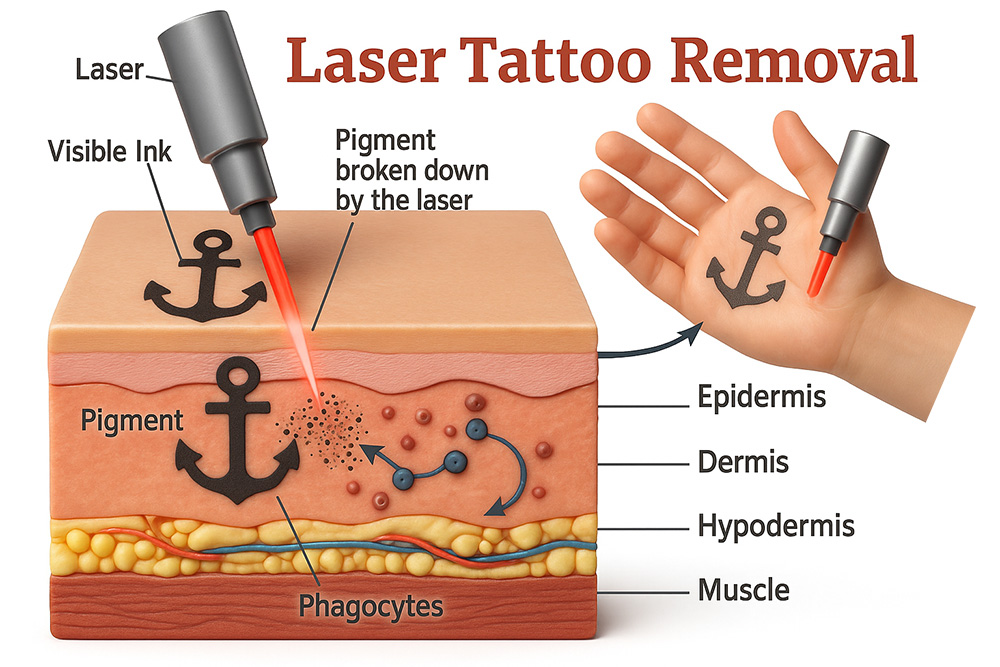
Technology and operator skill: clinics using a genuine Q switched Nd YAG with strong output and good cooling can often treat more efficiently and more safely, which usually means better value.
Side effects such as redness, swelling and occasional blistering are usually brief when aftercare is followed, as outlined by the NHS Bristol Laser Centre.
Typical UK prices by size
Guide prices for clinics using professional Q switched Nd YAG devices. Course discounts are common and usually bring the per session cost down.
Area or size
Per session
Course of 3
Course of 6
1 inch squared, black
£70 to £85
£195 to £230
£390 to £460
1 inch squared, multicolour
£95 to £110
£260 to £300
£520 to £600
2 inch squared, black
£90 to £105
£240 to £280
£480 to £560
2 inch squared, multicolour
£115 to £135
£315 to £360
£630 to £720
3 to 4 inch squared, black
£110 to £140
£300 to £380
£600 to £760
3 to 4 inch squared, multicolour
£135 to £165
£360 to £450
£720 to £900
5 inch squared, black
£140 to £170
£380 to £460
£760 to £920
5 inch squared, multicolour
£165 to £190
£450 to £520
£900 to £1,040
Eyebrow cosmetic tattoo
£85 to £110
£240 to £300
£480 to £600
Most clinics price by measured area rather than body part, so clear photos and accurate dimensions help you get a firmer quote.
01. What you are paying for, beyond laser time
Consultation and assessment: tattoo mapping, colour review, depth, medical history, photographs and a patch test.
Certified operators and devices: look for trained practitioners using a genuine Q switched Nd YAG with both 1064 nm and 532 nm. Our Nu Tatouage Plus uses high pulse energy and dual wavelengths for black and coloured inks.
Cooling and aftercare: proper cooling improves comfort and can reduce downtime. Aftercare guidance and follow up support are part of a professional service.
Course discounts: buying three or six sessions up front often cuts the per session rate by ten to twenty five percent.
How many sessions will you need
Design and colours: simple black linework usually clears fastest. Reds often respond well at 532 nm. Greens and blues can take longer.
Tattoo age and depth: older, already faded tattoos often respond more easily than newer, denser pigment.
Goal setting: full removal often takes six to twelve sessions. Fading for a cover up is often closer to three to six.
Spacing matters. Six to eight weeks is common, giving your immune system time to clear broken down pigment before the next treatment. That usually supports safer, steadier progress, which is also reflected in clinical reviews such as JAMA Dermatology.
Technology features that improve value
Feature
Why it helps pricing
Dual wavelength Q switched Nd YAG
Treats black ink and many common colours on one platform, which can reduce the need for extra corrective sessions
High pulse energy and stable beam
Breaks pigment efficiently, which can shorten appointments and in many cases reduce session count
Low running cost
Our Nu Tatouage Plus runs at less than one penny per forty shots, which can help clinics keep pricing competitive
Reliable support
Fast repair or swap support reduces disruption and helps clinics avoid repeat visits caused by downtime
02. Ways clients can trim spend
Choose qualified providers: insured, trained practitioners using modern Nd YAG systems. Cheap sessions can end up costing more if progress is slow or complications delay treatment.
Book courses: bundled sessions usually reduce the unit price and make it easier to stay on plan.
Follow aftercare: fewer skin issues usually means fewer delays between appointments, which helps the course stay on track.
Set the right goal: if you are planning a cover up, ask for a fading plan. It often costs less than complete removal.
The Nu Tatouage Plus combines high pulse energy with dual wavelengths and a very low treatment cost, giving clinics room to price fairly without squeezing margins. Handpiece or footswitch control, dual shot counters and durable components keep treatment flow steady. Add our Cryo 6 for better client comfort. Training is included to support insurance requirements and local compliance. Want to see it working? Book a demo or request details for finance options. Need help with governance? Our Laser Protection Advisor service is available.
03. Quick answers on pricing
What is the average total spend: many clients spend somewhere between about £450 and £1,600 across a full course, depending on tattoo size, colour mix and session count.
Why quotes differ: device quality, pulse energy and operator experience all affect session time and the number of visits needed.
Can every colour clear: not always. Yellows and whites can be stubborn, though skilled fading can still make room for a cleaner cover up.
Demand is still strong, with many UK providers adding tattoo removal to their treatment menu, as reported by sector sources such as VTCT reporting.
What to keep in mind on cost
Session pricing: around £70 to £300 or more per session, depending on size and colour, with bundle discounts often lowering the rate.
Total course: six to twelve sessions is common. Spacing gives the body time to clear pigment and supports safer progress.
Best value setup: dual wavelength Nd YAG, strong output, effective cooling and properly trained operators.
If you are pricing a new service or planning a treatment course, we can help with spec sheets, finance options and sample price lists. Request details or book a demo to see the Nu Tatouage Plus in action.
Majid holds a PhD in organic chemistry and has been working with laser systems for decades. His career began in the mid-1990s, when he started researching and developing laser-based technologies for medical and cosmetic applications. Over the years, he has combined scientific expertise with practical engineering to design machines that are effective, durable, and straightforward to use in real clinic settings. As director of the British Institute of Lasers, Majid continues to focus on producing equipment that meets professional standards while remaining accessible to businesses of all sizes.