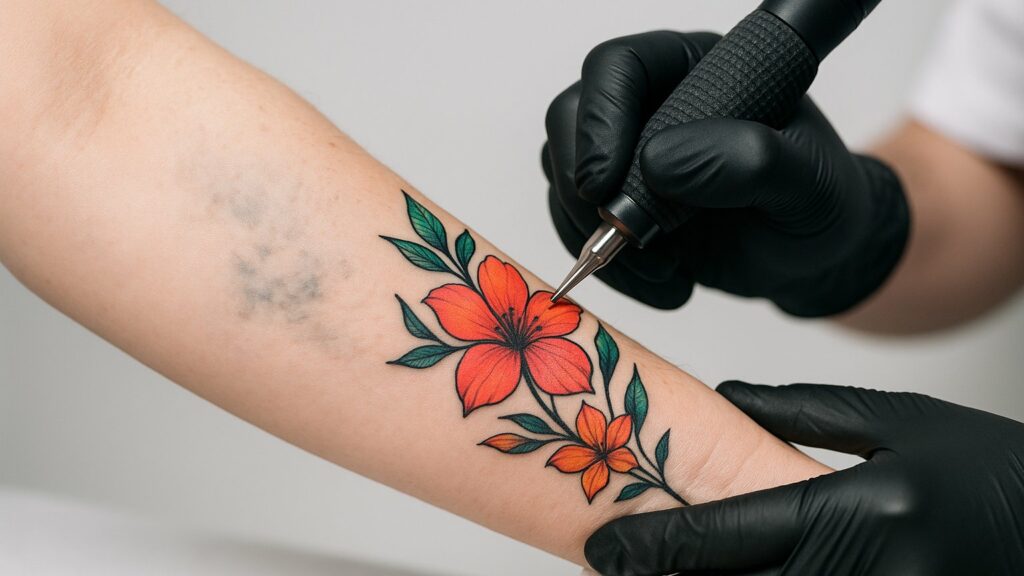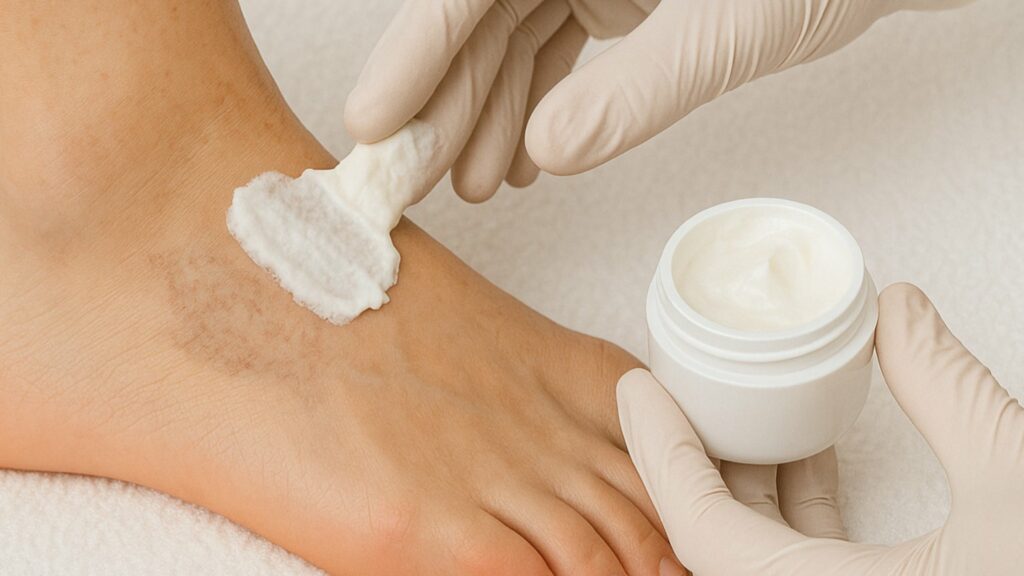

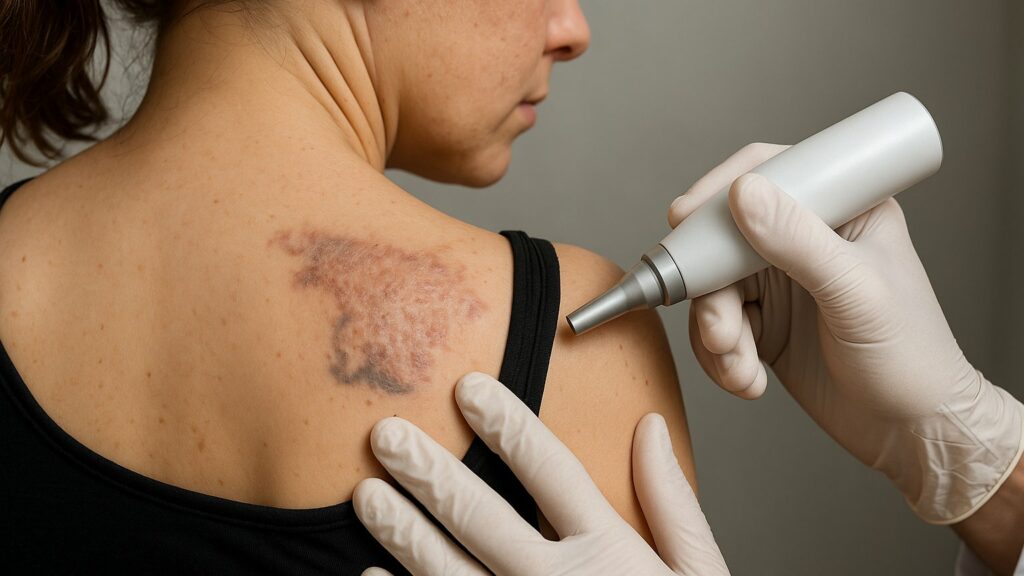
Laser tattoo removal does not usually leave a scar when the treatment is carried out correctly, the skin is assessed properly and the area is allowed to heal between sessions. Scarring is still possible, though. A burn, infection, unsuitable laser setting or repeated damage to healing skin can cause a lasting change in texture.
It is also easy to mistake normal healing or a temporary pigment change for a scar. Redness, swelling, frosting, small blisters and crusting can look dramatic during the first few days. Pale or darker patches may remain for much longer, yet neither automatically means that the skin has scarred.
The direct answer The risk of scarring from professional Q-switched laser treatment is considered low, but it is not zero. Careful treatment, realistic session spacing and good aftercare all matter. 1
Why modern tattoo removal should not normally scar the skin
Tattoo pigment sits within the dermis, surrounded by tissue that helps keep the ink particles in place. A tattoo removal laser sends very short pulses of energy into the pigment. The particles absorb that energy and break into smaller fragments, which the body's natural clearance processes can gradually remove.
The aim is selective treatment. Enough energy must reach the ink without causing unnecessary damage to the surrounding skin. Q-switched and picosecond systems achieve this through extremely brief pulses rather than by scraping away or cutting out tattooed tissue. You can read more about the process in our guide to how tattoos are removed using lasers.
The following video shows a dark tattoo being treated. The immediate pale frosting is a familiar short-term response to the laser pulse, not a scar forming.
Even with suitable equipment, treatment has to be adjusted to the tattoo and the person wearing it. Ink colour, density, depth, skin tone, location, previous treatments and the condition of the skin can all influence the response. A setting that is appropriate for a light, faded amateur tattoo may be too aggressive for dense professional ink or recently tanned skin.
What normal healing can look like
Some visible reaction is expected because the treatment creates a controlled response in the tattoo pigment. Leeds Teaching Hospitals describes frosting, redness, swelling and surrounding bruising after pigment laser treatment, with the initial colour changes usually settling within 10 to 14 days. Blistering or scabbing can occur less commonly. 2
| What you notice | What it may mean | What to do |
|---|---|---|
| White frosting immediately after treatment | A short-lived surface response caused by the laser pulse | Follow the cooling and aftercare instructions provided by the clinic |
| Redness, tenderness or swelling for a few days | A common inflammatory response | Protect the area and avoid friction, heat and unnecessary handling |
| Small blisters or light crusting | A recognised treatment reaction, although the clinic may want to review it | Do not pick, scratch or deliberately burst blisters |
| A pale or darker patch without a texture change | Hypopigmentation or hyperpigmentation rather than scarring | Keep the area protected from sun and ask the practitioner to assess it before another session |
| A persistent raised, sunken, tight or unusually shiny area | A possible textural scar | Arrange a clinical review rather than continuing treatment over it |
Healing varies, so a photograph taken two days after treatment cannot predict the final texture. Judge the area only after the immediate reaction has settled. Your practitioner should also review any unusual response before applying another laser pulse to the same skin.
The factors that increase the risk
Scarring usually follows excessive or prolonged injury rather than the intended tattoo fading process. DermNet lists scarring among the possible adverse effects of picosecond treatment and notes that side effects become more severe when excessive energy is used. 3
- Excessive energy or unsuitable settings. Too much energy can produce a deeper burn instead of a controlled pigment response. Skin tone, tattoo density and the wavelength being used must all be considered.
- Treatment over tanned or sunburnt skin. A tan increases the amount of melanin competing for the laser energy. North Bristol NHS Trust advises against treating a heavy tan because the treatment is less effective and the risk of scarring rises. 1
- Sessions placed too close together. The surface may look settled before deeper inflammation has fully resolved. North Bristol NHS Trust spaces tattoo treatments by at least eight weeks, allowing time for pigment clearance and skin recovery. 1
- Picking scabs or disturbing blisters. Removing protective tissue can reopen the area, delay healing and increase the chance of infection.
- Infection. Broken skin is vulnerable to bacteria. Increasing warmth, pain, spreading redness, discharge or feeling unwell should not be treated as routine healing.
- A personal tendency to form thick scars. People with a history of keloid or hypertrophic scars need a careful assessment. Keloids can develop after relatively minor skin injuries and may grow beyond the original injured area. 4
Tattoo removal can reveal a scar that was already there
Needles repeatedly enter the skin when a tattoo is applied. Heavy-handed tattooing, infection during the original healing period or previous attempts to alter the design can leave subtle scar tissue. Dense ink may hide that texture for years.
As laser treatment fades the pigment, the underlying skin becomes easier to see. A raised line, shiny patch or slight indentation may appear to have been caused by removal when it was present beneath the tattoo from the start. Clear photographs and a close examination before the first session help record the original condition of the skin.
Cover-ups add another complication. Several layers of ink can make treatment slower and less predictable, while old scar tissue may react differently from untreated skin. This is one reason a good consultation should examine texture as well as colour.
Pale or dark marks are not always scars
Hypopigmentation means the treated area has become lighter. Hyperpigmentation means it has become darker. Both can follow inflammation, especially where the skin contains more melanin or has recently been exposed to the sun. North Bristol NHS Trust notes that these colour changes usually return towards normal, although they can take a long time. 1
A pigment change affects colour. A scar changes the skin's structure. The distinction matters because the next step may be different. Continuing treatment through active pigment disturbance can make the problem harder to settle, so the practitioner may recommend a longer pause, stricter sun protection or a medical opinion.
A useful test Look at the area in side lighting as well as straight on. If the surface remains level and supple but the colour has changed, pigmentation is more likely. A raised, indented, tight or glossy texture deserves closer assessment.
What safer treatment looks like in practice
Risk reduction begins before the first pulse. The practitioner should take a medical and skin history, ask about previous scarring, examine the tattoo closely and explain what can realistically be achieved. A patch test may be appropriate, particularly where the response is uncertain. The clinic should also be able to explain its training, insurance, local requirements and treatment protocols. Our separate guide covers the usual qualifications, licences and insurance considerations for tattoo removal.
During a course, the area should be reviewed rather than treated from habit. Settings may need to change as the tattoo becomes lighter. Sessions should be postponed if the skin is tanned, irritated, infected or still recovering. Complete clearance cannot be guaranteed, and pushing harder to chase the final traces of ink may create more risk than benefit. The guide to tattoo removal effectiveness and fading explains why some colours and ink formulations respond differently.
After treatment, use the instructions supplied by the practitioner because dressings and skincare advice can vary with the response. In general, avoid picking, rubbing and unprotected sun exposure. Keep the area clean as directed, and contact the clinic if healing starts moving backwards rather than forwards.
Do not wait for the next appointment if the skin is worsening
Increasing pain, spreading redness, marked heat, pus, an unpleasant smell, fever or rapidly worsening swelling can indicate infection or a significant burn. Leeds Teaching Hospitals advises that secondary bacterial infection may present with spreading redness and pain around broken skin. 2
Contact the treating clinic promptly and seek medical advice where symptoms are severe or progressing. A persistent raised or sunken area should also be assessed before further laser treatment. Early review gives the skin the best chance to heal without repeated injury.
Frequently asked questions
It is possible, although uncommon. Tell the practitioner if you have previously formed keloids after piercings, surgery, acne, burns or minor injuries. A history of abnormal scarring may change whether treatment is advisable and how cautiously it is approached.
No. Small blisters can occur after tattoo removal and often heal without scarring. They should still be protected and monitored. Large, very painful or worsening blisters need prompt advice from the clinic.
Often, yes, once the skin has fully healed and the removal course has ended. Persistent redness, pigment instability or texture change should be assessed first. Our article on tattooing over a treated area explains the timing considerations.
No. Some tattoos clear very well, while others leave residual pigment, a faint outline or visible texture from the original tattooing. A responsible practitioner should discuss likely fading rather than promising complete removal.
Sources
- North Bristol NHS Trust, Bristol Laser Centre: tattoos and laser treatment :contentReference[oaicite:0]{index=0}
- Leeds Teaching Hospitals NHS Trust: laser treatment risks and aftercare :contentReference[oaicite:1]{index=1}
- DermNet: picosecond laser treatment and possible side effects :contentReference[oaicite:2]{index=2}
- DermNet: keloid and hypertrophic scars :contentReference[oaicite:3]{index=3}