


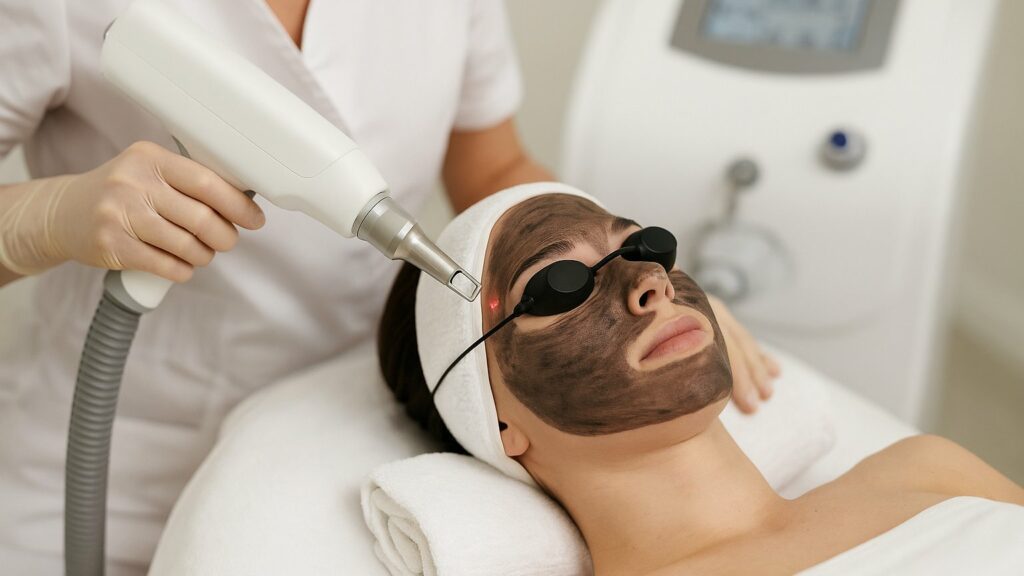
Black Doll laser treatment, also called a carbon laser peel or Hollywood peel, combines a dark carbon lotion with short pulses from a Q-switched Nd:YAG laser. It is mainly offered for oily skin, congested pores, mild acne and a temporarily brighter appearance.
It is a low-downtime cosmetic procedure, not deep resurfacing. Some people notice fresher-looking skin after one appointment, but claims about permanent pore closure, scar removal or major wrinkle correction go beyond the available evidence.
What is a Black Doll laser treatment?
A thin carbon suspension is spread across cleansed skin and left for several minutes. Fine particles sit on the surface and within superficial pores. A 1064 nm Q-switched Nd:YAG laser is then passed over the area, disrupting the carbon and attached surface oil, loose corneocytes and debris.
Published explanations suggest that heat around follicles and sebaceous structures may reduce sebum activity and influence acne-related inflammation. A 2022 retrospective study reported improvement after three monthly sessions, but included only 32 patients and no untreated comparison group. 1
Which benefits are realistic?
The most defensible benefit is a short-term improvement in surface appearance. Removing carbon and attached debris can leave the face looking cleaner and less shiny, particularly on oily skin.
Reasonable expectations
- A fresher or brighter appearance after treatment.
- Temporary reduction in surface oil and congestion.
- Improvement in the appearance of enlarged pores.
- Possible support for mild comedonal or inflammatory acne.
- Minimal interruption to normal daily activity.
Claims to treat cautiously
- Permanent pore shrinkage.
- Removal of deep acne scars.
- Major tightening or lifting after one session.
- Permanent control of acne or oil production.
- "Detoxification" of the skin.
A 2012 controlled study of a dual-mode 1064 nm Nd:YAG protocol with topical carbon reported clinical and histological improvement in acne vulgaris. 2 Later reports also describe pore and texture improvements, but studies are small and protocols differ. A carbon peel should not replace medical care when acne is severe, painful, scarring or resistant.
What does the treatment feel like?
Most people describe warmth, light snapping or faint prickling as the laser passes over the carbon. Treatment often takes 20 to 30 minutes, although consultation and aftercare add time.
Temporary redness is the most frequently reported reaction. In the 32-patient study, six people developed short-lived erythema and no major adverse events were reported. 1 Mild tightness, tenderness, dryness or itching may also appear for a day or two. These effects should gradually settle rather than intensify.
Contact the clinic promptly if you develop blistering, marked swelling, increasing pain, weeping, crusting, signs of infection or a persistent change in skin colour. These are not the intended cosmetic response.
Can a carbon laser peel cause pigmentation or burns?
Any laser treatment can cause an unwanted reaction if the skin is unsuitable, recently tanned, incorrectly assessed or treated with inappropriate settings. Nd:YAG side effects are usually minor, but recognised risks include redness, swelling, itching, blistering and darker or lighter pigmentation. 3
The 1064 nm wavelength penetrates relatively deeply and is less strongly absorbed by epidermal melanin than shorter visible wavelengths, making it useful across a broad range of skin tones. Careful settings still matter. Melanin-rich skin can develop post-inflammatory hyperpigmentation, while excessive energy can cause burns or hypopigmentation.
Protective eyewear is essential. Q-switched pulses can cause serious eye injury when appropriate laser safety controls are missing, particularly during treatment near the eyelids. 4
Who should postpone or avoid treatment?
A consultation should cover skin history, current products, medicines, previous laser reactions, scarring tendency and recent sun exposure. The practitioner should inspect the skin rather than rely on a form.
- Active infection or broken skin: cold sores, infected acne lesions, dermatitis flares, cuts and open areas may need to settle first.
- Recent tanning: real or artificial tan changes the amount of pigment competing for laser energy. NHS laser guidance advises avoiding treatment on tanned skin because the risk of colour change and other side effects increases. 5
- Photosensitising medicines or strong actives: disclose antibiotics, retinoids, exfoliating acids and all prescription treatment. Do not stop a prescribed medicine without speaking to the prescriber.
- Pregnancy or breastfeeding: many cosmetic clinics defer elective laser procedures because evidence is limited and treatment is not medically necessary.
- Unexplained pigmentation or changing lesions: cosmetic laser treatment should not be used to disguise a mark that requires medical assessment.
A patch test may be appropriate for reactive skin, darker skin tones, unfamiliar carbon products or a history of pigment changes. It allows the response to be observed before full treatment.
How should you care for your skin afterwards?
For the first day or two, favour bland products and a restrained routine. Use a gentle cleanser, fragrance-free moisturiser and broad-spectrum sunscreen. Avoid scrubs, retinoids, strong acids, picking and very hot showers until the skin feels normal. Heavy exercise, saunas and steam rooms can add heat and make redness more noticeable immediately after treatment.
Sun protection matters throughout a course. UV exposure can worsen irritation-related pigmentation and obscure whether the skin has returned to its usual colour. Written aftercare should reflect your skin type and treatment settings.
A sensible way to judge the treatment
Look for a cleaner surface, less oiliness and gradual improvement in mild congestion rather than a dramatic overnight transformation. Photographs taken in the same lighting are more useful than memory. If several sessions produce no meaningful change, or acne continues to scar, review the plan with a qualified skin professional rather than continuing indefinitely.
What should you ask before booking?
Ask which laser and wavelength will be used, who will perform the treatment, how your skin type affects the settings and whether the practitioner has experience with skin like yours. They should explain eye protection, expected reactions, patch testing, aftercare and the limits of the evidence without promising that pores will disappear or acne will be cured.
It is also reasonable to ask what happens if your skin reacts unexpectedly. Clear clinical records, treatment parameters, photographs and a route for follow-up matter more than glossy language. Readers comparing the safety principles behind different laser procedures may also find the guide to laser treatment safety across different skin types useful, even though the treatment goal and settings are different.
Black Doll laser treatment can suit selected people seeking low downtime and modest improvement in oiliness, congestion and texture. It works best with measured expectations, proper assessment and a practitioner willing to postpone unsuitable treatment.
Sources
- Medicina, Carbon Peeling Laser Treatment to Improve Skin Texture, Pores and Acne Lesions: A Retrospective Study
- Journal of the American Academy of Dermatology, randomized controlled study of carbon-assisted dual-mode 1064 nm Nd:YAG treatment for acne vulgaris
- DermNet, Nd:YAG laser treatment and recognised side effects
- Dermatology Practical & Conceptual, review of ocular and periocular complications from dermatologic laser treatment
- North Bristol NHS Trust, laser treatment questions including tanning and sun exposure