
Laser hair removal can be very safe across all skin types when the wavelength, settings and cooling are chosen properly by a trained practitioner. What matters most is how the treatment is matched to your melanin level, then supported with sensible protocols. Below is a clear, skin type by skin type guide, along with how British Institute of Lasers systems help keep treatments controlled and comfortable.
Safety in plain English
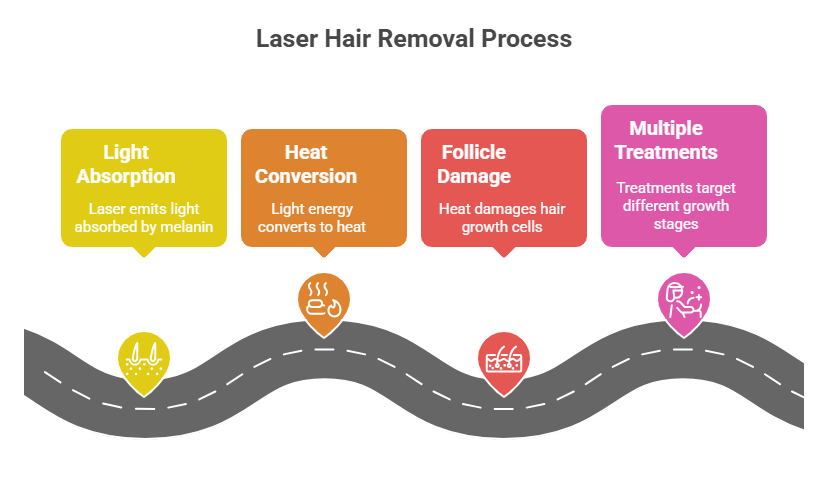
Laser light is drawn to pigment inside the hair. The heat then disrupts the follicle’s ability to grow new hair. On lighter skin with dark hair, the contrast is stronger which gives a wider safety margin. On darker skin, the laser has to bypass the skin’s melanin and focus on the hair instead. That is why wavelength choice and cooling matter so much.- Common, short lived effects: pinkness, warmth and tiny bumps around the follicles. These usually settle within two to three days, as noted on Wikipedia.
- Less common risks: temporary darkening or lightening, mild crusting, or a superficial burn if the settings are too aggressive. Patch testing and proper cooling help reduce these risks.
- Why clinics are safer: trained operators assess skin type, carry out patch tests and usually begin cautiously. See the procedure overview from the Mayo Clinic.
Match the laser to your skin type
Different wavelengths behave differently around pigment. Alexandrite is strongly absorbed by melanin and tends to suit lighter skin. Nd:YAG goes deeper and is absorbed less by surface melanin which makes it more suitable for darker tones. Diode sits between the two and works well across a broad range when adjusted carefully.| Wavelength | Best fit on Fitzpatrick scale | Safety notes |
|---|---|---|
| Alexandrite 755 nm | Types I to III | Highly effective for fair to light olive skin with dark hair. Use lower energy and strong cooling for type III. |
| Diode 808 to 810 nm | Types II to V | Flexible with good depth. Pulse width and fluence need adjusting for higher skin types. Cooling is especially important for IV to V. |
| Nd:YAG 1064 nm | Types IV to VI | Lowest melanin absorption and the deepest reach. Usually the safest option for darker skin and coarse hair when settings are correct. |
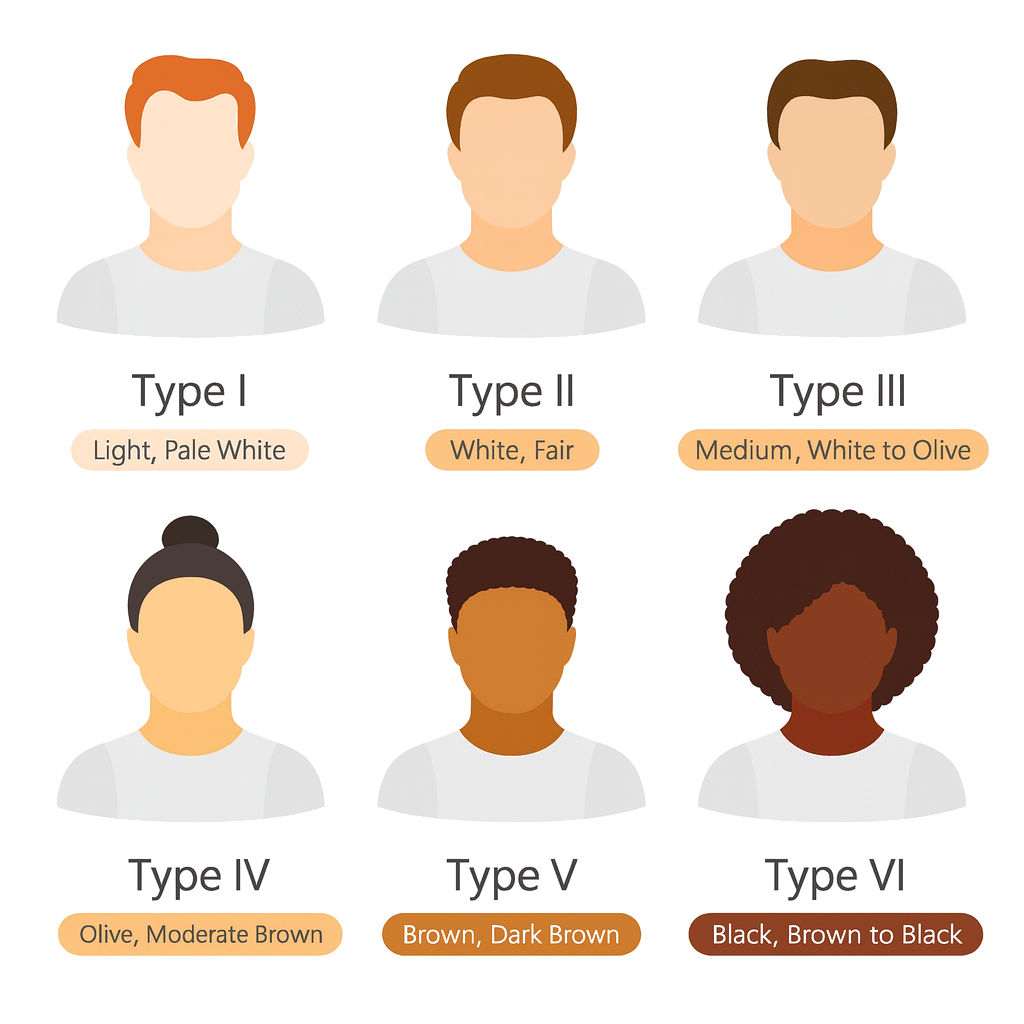
Fitzpatrick skin type describes how your skin responds to sun exposure. Your practitioner should confirm your type and carry out a patch test before full treatment.
01. Quick Fitzpatrick guide
- Types I to II: usually respond well to Alexandrite or Diode. Dark hair often clears quickly.
- Type III: often suits Diode or carefully adjusted Alexandrite, with reliable cooling.
- Type IV: Diode or Nd:YAG is usually preferred. Longer pulse widths are often more comfortable.
- Types V to VI: Nd:YAG is usually the safer first option. You may need a few more sessions, though skin comfort is typically better.
Built in safeguards from British Institute of Lasers
Our professional systems combine three wavelengths on one platform, which allows safer personalisation for skin types I to VI. All three of our laser hair systems are designed to treat the full spectrum of skin tones, from very fair to very deep.- Nu TriLaze Plus: a three in one platform with a built in skin analyser and HD detection to support setting selection for each client. FDA approved. See the product page: Nu TriLaze Plus.
- Nu eRays Plus: quick control from the handpiece, steady cooling and very low running costs. FDA approved. Details here: Nu eRays Plus.
- Nu TriLaze Lite: compact, portable and gentle, with SuperCool technology that helps treatments feel easier. Explore: Nu TriLaze Lite.
Training and support that protect clients
Every machine includes free training with certification, safety protocols and maintenance guidance. You also receive a certificate that helps with insurance and local authority requirements. There is a 24 hour swap guarantee if a unit cannot be repaired on site, so your clinic can keep appointments moving.Pre care and aftercare that reduce risk
- Patch test: this should always be done before a full course begins. It shows how the skin responds and helps fine tune fluence and pulse width.
- No active tan: avoid sun and sunbeds for two weeks before and after treatment. Self tan should be fully faded.
- Shave only: shave 24 hours beforehand. Do not wax or epilate between sessions because the root needs to remain in place.
- Cooling and SPF: use cold packs or built in cooling during treatment, then SPF 50 afterwards for at least a week.
- Hold actives: pause retinoids, strong acids and exfoliants for three days before and after treatment on the area.
02. When to wait or seek clearance
- Photosensitising medicines: some antibiotics and acne treatments can increase light sensitivity. Medical clearance is sensible first.
- Pregnancy or breastfeeding: treatment is usually postponed.
- Active skin conditions: open wounds, infections, severe eczema or psoriasis in the area should settle before treatment.
- Recent procedures: chemical peels, microneedling and recent sun exposure need extra spacing. Your practitioner should advise on timing.
Clinic standards and UK rules
England is moving towards a licensing scheme for non surgical cosmetic procedures, including laser hair removal. Carrying out treatment without a licence will become a criminal offence, according to GOV.UK. Many clinics also appoint a Laser Protection Adviser and a Laser Protection Supervisor to keep practice standards tight. If you need help with safety documentation, we provide an LPA service. Our training covers Core of Knowledge, skin typing, hazards and operating procedures. You can book at our Coventry site or online. Want to see the machines first? Book a demo. Prefer a call and finance details? Use Request details.A note on IPL versus laser
Lasers use a single, focused wavelength, which makes it easier to tailor treatment to different skin tones. IPL uses broad spectrum light, so it is less selective. For safer treatment across all Fitzpatrick types, clinics usually favour medical grade lasers with proper cooling. If you are weighing both options, this write up may help: IPL vs. Laser Hair Removal.03. Extra reading and next steps
- Comfort tips: see How painful is laser hair removal for practical ways to make sessions easier.
- Darker skin guide: our piece on Afro-Caribbean skin covers setting choices and wavelength selection.
- Effectiveness: results and expected timelines are explained here: How effective is laser hair removal.