


Laser hair removal is common in UK clinics, yet the same old myths still cloud expectations. Here are five claims that keep doing the rounds, explained with straightforward facts from treatment practice and laser physics. Where it helps, we have linked to deeper reads and useful next steps for clinics.
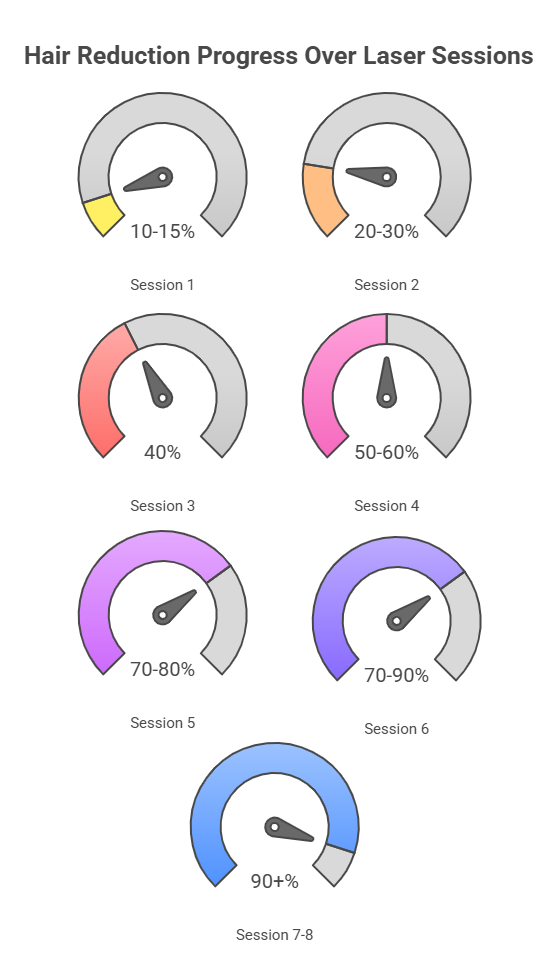
 We map out common milestones in two pieces: after three sessions and after six sessions.
Curious about where each fits. See our comparison of IPL versus laser.
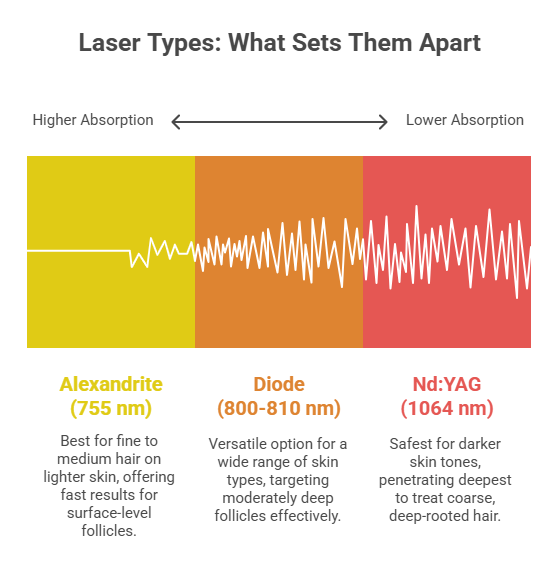 Different wavelengths bring different strengths. Pick the right one, use good cooling and space sessions around the hair cycle. Once clients understand that, the myths tend to lose their grip.
The five myths that keep circling
01. Laser works only on light skin
- The myth: Darker complexions cannot have laser safely.
- The reality: Darker skin can absolutely be treated, provided the wavelength, settings and cooling are chosen properly. Nd YAG at one thousand and sixty four nanometres reaches deeper and interacts less with epidermal melanin. That is why many modern three in one systems pair Nd YAG with Alexandrite and diode.
02. One session clears everything
- The myth: You walk in hairy and walk out smooth forever.
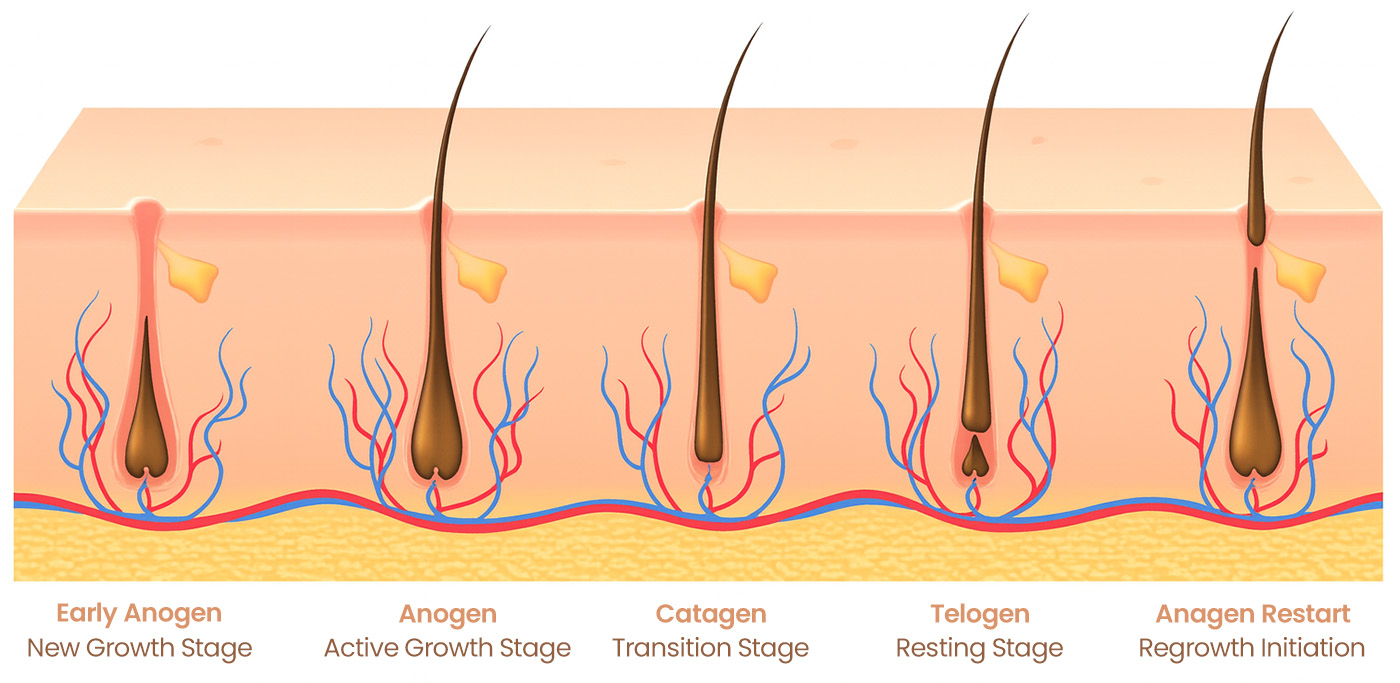
- The reality: Results build over a course, not a single appointment. Hair grows in stages, and follicles in active growth respond best to light based treatment, whether that is laser or IPL. Most courses run for six to eight laser sessions, usually spaced four to six weeks apart. Some areas then benefit from occasional maintenance.
We map out common milestones in two pieces: after three sessions and after six sessions.
03. Laser is too painful to tolerate
- The myth: The heat is unbearable and unsafe.
- The reality: Most clients describe it as a quick elastic snap or brief flick of heat, not prolonged pain. Good cooling, sensible pulse settings and steady technique keep discomfort short lived. Mild redness or tiny bumps are common and usually settle within a couple of days, in line with Mayo Clinic guidance. More serious effects are uncommon with trained practitioners, as noted here: rare events.
Comfort tip: Skip caffeine before the appointment, shave neatly the night before and use a bland moisturiser afterwards.
04. Results are permanent removal for life
- The myth: Once done, hair never returns.
- The reality: Clinics should talk about permanent reduction, not a promise of hair never returning. Most clients get long stretches of noticeably less, finer regrowth. Hormones and genetics can still trigger new hairs later, so top up sessions are a normal part of long term maintenance. We explain durability here: how long results last.
05. IPL is the same as laser
- The myth: Results match, so just pick the cheapest option.
- The reality: Laser and IPL work differently, and the results are not usually equal. Laser delivers a single wavelength with tighter targeting of melanin. IPL emits a broader band of light shaped by filters, which spreads energy more widely. Studies and reviews generally report stronger reduction from diode and Alexandrite systems after several months than from IPL, as summarised here: reduction rates.
| Aspect | IPL | Professional laser |
|---|---|---|
| Light source | Broad spectrum, filtered | Single wavelength, focused |
| Typical course | Eight to twelve sessions | Six to eight sessions |
| Skin tone coverage | Best on lighter tones | All tones with 755, 808 and 1064 |
Safety, training and the UK landscape
England is moving towards a licensing framework for non surgical cosmetic procedures, including laser hair removal. Details appear on the GOV.UK website. Sensible regulation helps keep treatment standards clearer and client trust stronger. Every British Institute of Lasers machine includes free training and certification options, plus rapid UK support. Our programme covers Core of Knowledge, device operation and maintenance, skin typing and safety. Staff get up to speed faster, and insurers can see that proper training is in place.Choosing devices that silence myths
Clinics need dependable reduction across mixed skin tones, quick appointments and calmer skin afterwards. Three wavelengths in one platform give you more room to treat well. Our FDA approved systems cover skin types I to VI with strong cooling and low running costs:- Nu TriLaze Plus: Three in one with a built in skin analyser and interchangeable tips for intricate zones. Nu TriLaze Plus.
- Nu eRays Plus: Handpiece controls, quick pulses and a durable build. Nu eRays Plus.
- Nu TriLaze Lite: Compact, easy to move and efficient in smaller clinic spaces. Nu TriLaze Lite.
Final myth check, in one picture
Different wavelengths bring different strengths. Pick the right one, use good cooling and space sessions around the hair cycle. Once clients understand that, the myths tend to lose their grip.