



Three sessions of laser hair removal are usually enough to show whether the treatment is working. You may notice slower regrowth, clearer patches and finer hairs, with less need to shave between appointments.
The area is unlikely to be completely hair-free. Three sessions have treated several groups of actively growing hairs, but other follicles will become suitable for treatment later in the course.
A realistic expectation Session three is a progress point, not a finishing line. Noticeable reduction is possible, but the pace depends on your hair, skin, hormones, treatment area and appointment schedule.
What may change across the first three sessions?
| Stage | What you may notice |
|---|---|
| After session one | Treated hairs may shed over several days or weeks. Early changes can be subtle. |
| After session two | Regrowth may become slower or less even, with small areas responding more quickly. |
| After session three | Hair may look patchier, feel finer and take longer to return after shaving. |
Hair does not disappear immediately after each appointment. Treated hairs are gradually released from the follicles, so they can appear to be growing before they shed. Mayo Clinic advises that most people need several treatments for clear results, commonly four to eight, with sessions arranged several weeks apart. 1
The visual guide below shows how reduction may build across a course. Its session figures are illustrative and should not be treated as a guaranteed result.
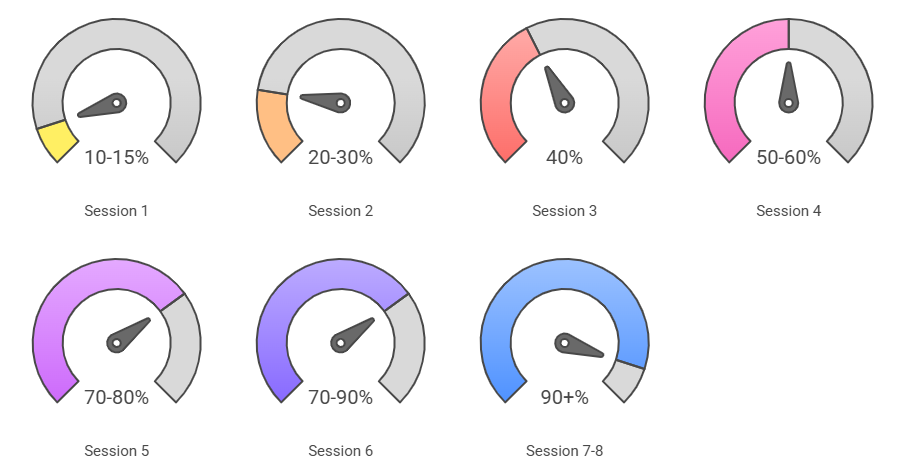
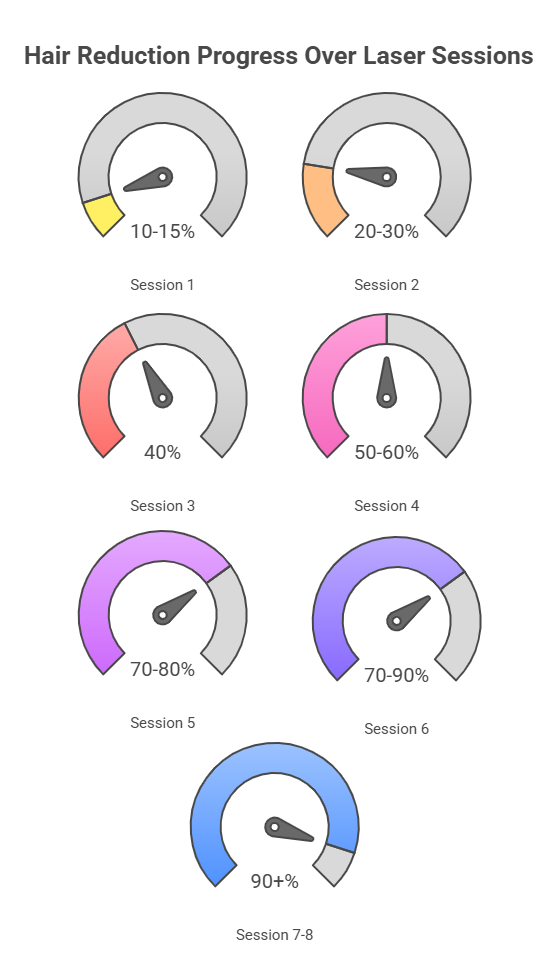
Five signs that the treatment is taking effect
- Longer gaps between shaves: Hair may take noticeably longer to become visible.
- Patchy regrowth: Some sections may remain clearer while untreated growth cycles appear elsewhere.
- Finer hairs: Remaining growth may feel softer and less coarse.
- Reduced density: Fewer hairs may return across the treatment area.
- Easier maintenance: Shaving may become quicker, with less obvious stubble.
Results vary considerably. The American Academy of Dermatology notes that hair colour, hair thickness, skin colour, treatment area and the type of laser used can all affect the response. It also states that many patients need between two and six treatments, although individual plans can extend beyond this range. 2
Why your progress may be faster or slower
- Hair pigment: Dark, coarse hair usually provides a clearer target. Grey and white hair generally respond poorly because they contain little pigment.
- Body area: Underarms, legs, the face, chest and back can follow different growth patterns.
- Hormonal activity: Polycystic ovary syndrome, menopause and other hormonal changes can encourage continuing or new growth.
- Session spacing: Appointments need to allow another group of hairs to enter active growth.
- Treatment settings: Wavelength, energy and pulse duration must be selected for the client's skin, hair and previous response.
When should progress be reviewed?
Ask your practitioner to reassess the course if there is almost no change after three properly spaced sessions. The review should consider:
- Whether the hair contains enough pigment to respond
- Whether the appointment intervals are suitable
- Whether the settings have been adjusted safely
- Whether medication or hormonal factors may be influencing growth
- Whether the remaining hair is suitable for further treatment
How to avoid disrupting the course
- Shave rather than wax or pluck. The follicle needs to retain a hair target for the laser.
- Attend at the recommended intervals. Very short or prolonged gaps can affect progress.
- Avoid tanning and report sun exposure. Changes in skin colour may alter the safe treatment settings.
- Follow the aftercare advice. Protect treated skin from direct sunlight and use the recommended sun protection.
- Report unusual reactions. Redness and swelling can occur, but blistering, persistent pain or lasting colour changes need professional advice.
Mild redness and swelling often settle quickly. AAD guidance recommends avoiding direct sunlight and tanning equipment after treatment and following the practitioner's aftercare instructions. 2
Three sessions can deliver an encouraging reduction, but most clients should expect the course to continue. Your practitioner should use this stage to compare photographs, review regrowth and plan the next appointments. For the later stages, read whether six laser hair removal sessions may be enough and how long the results can last.