No, IPL hair removal is not permanent hair removal. It is best described as permanent reduction. Most people see softer regrowth and much longer gaps between shaving, though some hair usually returns with time. Results tend to last…
No, IPL hair removal is not permanent hair removal. It is best described as permanent reduction. Most people see softer regrowth and much longer gaps between shaving, though some hair usually returns with time. Results tend to last longer when the device, skin tone and hair colour are a strong match.
How IPL reduces hair
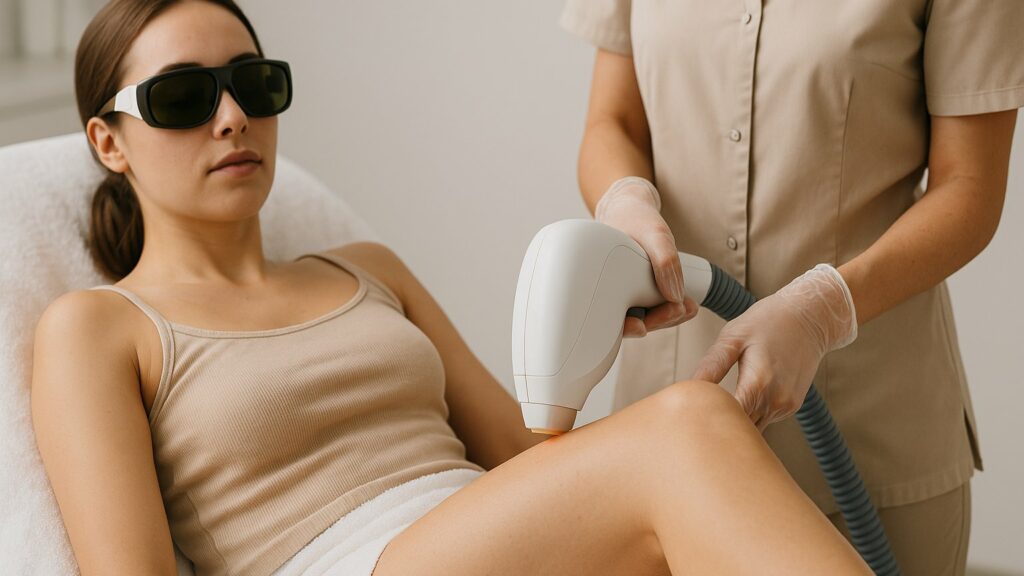
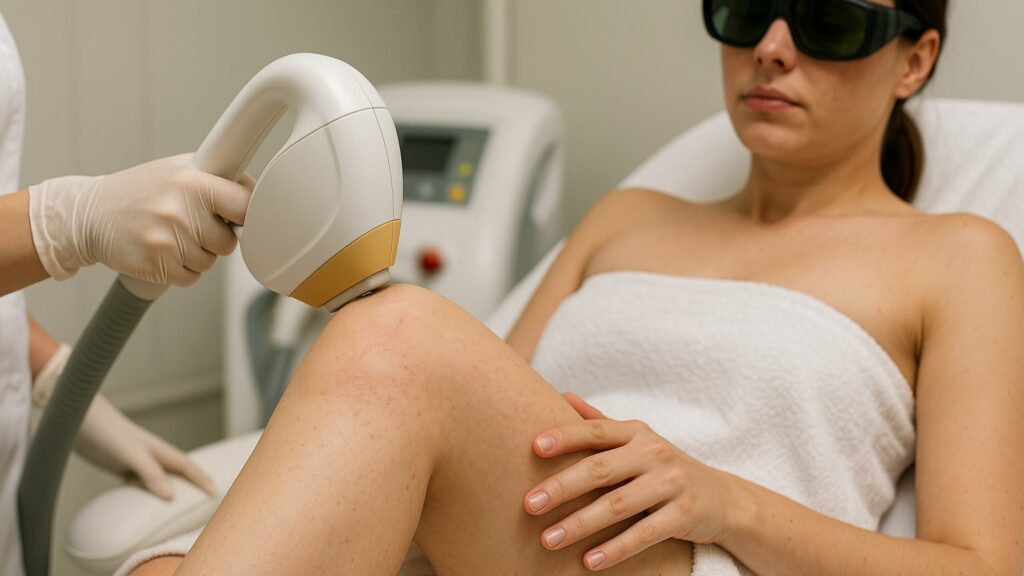
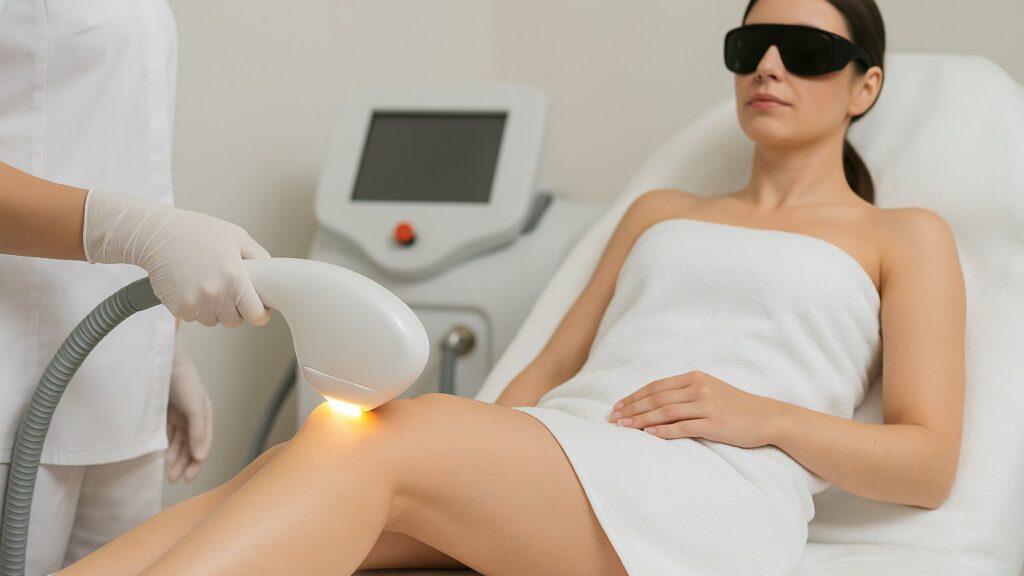
IPL stands for intense pulsed light. It uses filtered flashes of broad spectrum light that travel into the hair shaft. Melanin absorbs that light and converts it into heat. The heat then disrupts the follicle cells responsible for growth. This same principle, selective photothermolysis, sits behind both IPL and laser treatment.
Target: Dark pigment inside the hair.
Effect: Slows regrowth so hair often comes back finer and lighter.
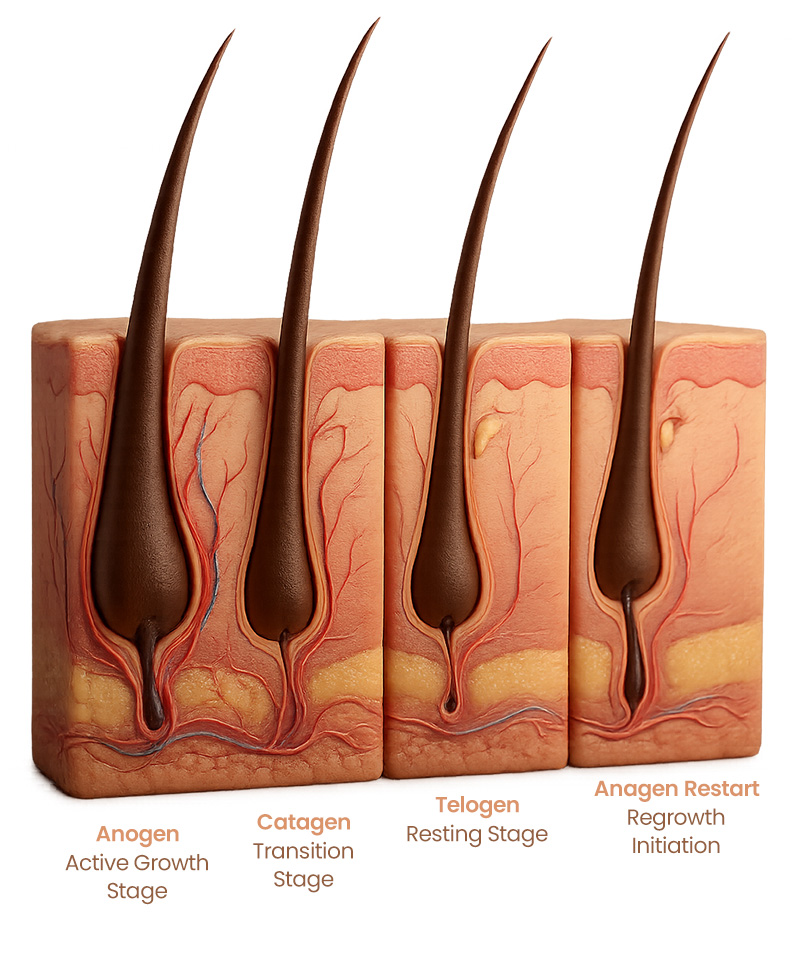
Timing: Works best when hairs are in the active growth phase.
So, is it permanent
01. Long term reduction, not full removal
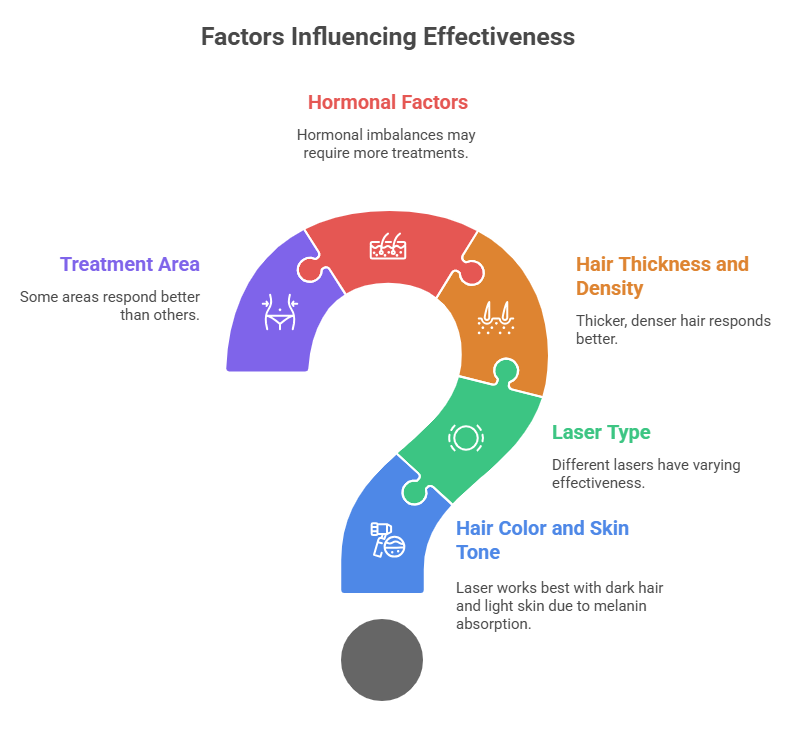
IPL can deliver lasting reduction. Some areas stay clear for months and sometimes longer, then need occasional top up sessions. Hormones, treatment area and hair thickness all affect how long the result holds. Underarms and bikini lines often respond well. Hormonal areas, especially the face, can be slower and less predictable.
02. Expectations by session
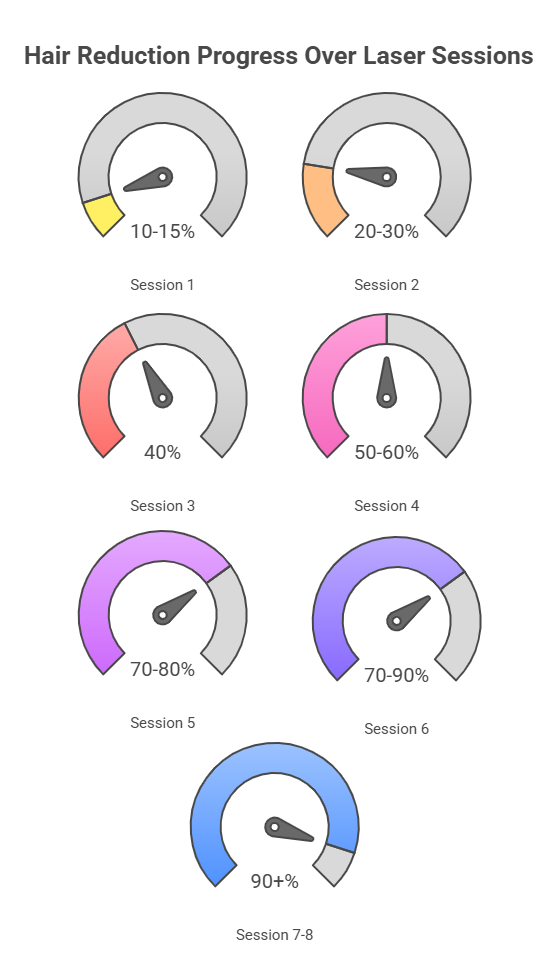
Most people need a full course followed by maintenance. A typical plan runs for eight to twelve sessions, usually spaced four to six weeks apart. Midway through the course, hair often starts shedding and patchy clearance becomes noticeable. A visual guide helps clients understand what that progress can look like.
What affects how long results last
Hair and skin contrast: Dark hair on lighter skin tends to absorb more energy and respond better. Very blonde, red or grey hair has less melanin, so results are usually limited.
Hormones: PCOS, thyroid issues and different life stages can trigger fresh growth. Maintenance sessions often help in those cases.
Body area: Underarms and bikini areas often clear faster than forearms or the face.
Device quality and cooling: Stable output and reliable cooling usually give steadier results and a calmer treatment experience.
Operator technique: Overlap, fluence and pulse timing can make a real difference to the final result.
Spacing: Keeping to the treatment schedule helps catch fresh anagen hairs and improves momentum.
IPL versus laser for permanence
Both technologies use light to heat melanin. The difference is how precisely that energy is delivered. Professional lasers work with a single focused wavelength. IPL spreads energy across a broader range. That wider spread can feel gentler, though it usually means less concentrated energy at the follicle. In practice, many clinics see faster clearance and longer lasting reduction with professional lasers, especially across a broader range of skin tones.
Aspect
IPL
Professional laser
Typical course
Eight to twelve sessions
Usually six to eight sessions
Skin tone range
Often best on lighter skin tones
Broader treatment range with 755, 808 and 1064 nanometres
Six month result
Usually needs more regular maintenance
Often holds reduction for longer after a full course
Maintenance
More frequent top ups
Less frequent top ups
IPL usually does not match a true laser for long term hair reduction. You tend to see that difference in total sessions, consistency across skin tones and the time between top ups. For a plain English comparison, see IPL versus laser hair removal, and for durability after a full course, read how long laser results last.
Is home IPL different
Home devices are convenient and more budget friendly, though they operate at gentler energy levels. That usually means more regular top ups are needed to keep results going. If progress levels off, or if your skin tone is deeper, a professional laser course is often the better next step. Interest in laser treatments across the UK has grown sharply, with clinics seeing strong demand from clients who want longer lasting results.
Thinking of offering treatments in clinic
England is moving towards a licensing scheme for non surgical cosmetic procedures, including IPL and laser, though the framework is still being developed. You can read the current government position on the GOV.UK website. Training, Core of Knowledge and device certification still matter for insurance and local compliance.
We feature laser hair removal systems for all skin tones, with free training and certification, plus rapid UK support. Explore our laser hair removal machines, or go direct to Nu TriLaze Plus, Nu eRays Plus, and Nu TriLaze Lite. Want to try them first? Book a Demo. For specifications, finance and lead times, visit Request Details.
Majid holds a PhD in organic chemistry and has been working with laser systems for decades. His career began in the mid-1990s, when he started researching and developing laser-based technologies for medical and cosmetic applications. Over the years, he has combined scientific expertise with practical engineering to design machines that are effective, durable, and straightforward to use in real clinic settings. As director of the British Institute of Lasers, Majid continues to focus on producing equipment that meets professional standards while remaining accessible to businesses of all sizes.
client adviceipl resultspermanence
From the Knowledge Hub
Continue planning your laser service.
Explore more guidance on professional equipment, clinic planning, training and practical business decisions.