

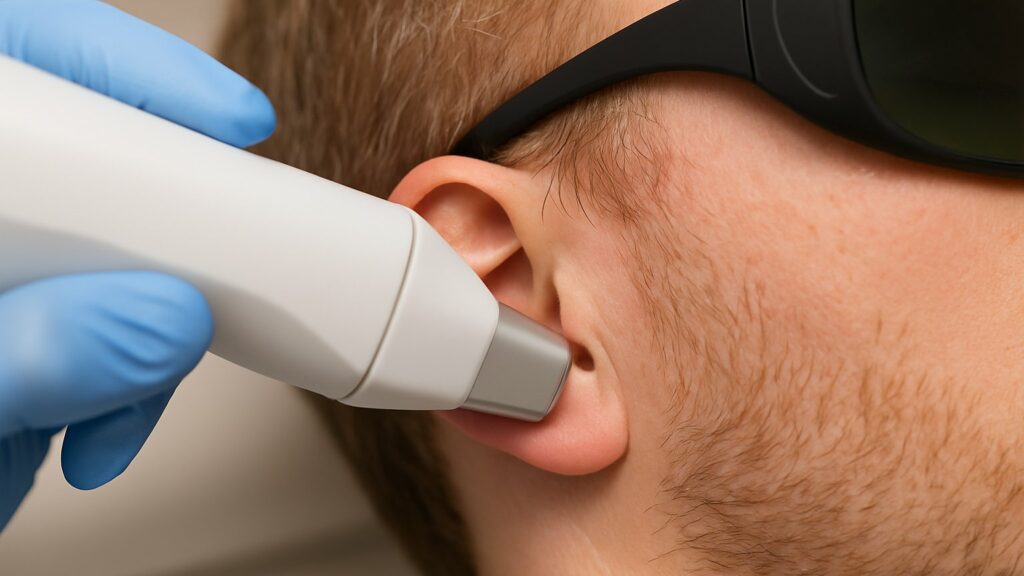
Ear hair can be sorted in minutes with modern laser treatment, leaving neater edges and much longer gaps between regrowth. If trimming every week is starting to feel tedious, a short laser course gives you a cleaner, more discreet option that lasts far longer.
What counts as ear hair, and what is treated
- Treatable zones: the outer ear only, including the helix, anti helix, tragus, lobule, and the rim just outside the canal. Clinics treat visible hairs sitting on the surface.
- Not treated: inside the ear canal or on the eardrum. That area stays off limits for safety.
- Protection and control: goggles for both client and practitioner are essential, and many clinics use a soft barrier at the canal entrance for extra clarity and comfort.
- Regulation in England: a licensing scheme for non surgical cosmetic procedures is being introduced, per GOV.UK. If you are opening a service, our Laser Protection Advisor support can help with compliance.
01. Your options side by side
| Method | Pros | Cons | Best for |
|---|---|---|---|
| Trimming or scissors | Fast, cheap, no downtime | Frequent upkeep, uneven edges | Quick tidy ups |
| Waxing | Smooth finish, lasts longer than trimming | Sharp sting, irritation risk, regrowth needed between visits | Occasional grooming |
| Depilatory creams | Easy at home, low cost | Risk of chemical irritation, strong smell, patch test needed | Short term smoothing |
| Laser hair removal | Long lasting reduction, crisp edges, fewer ingrowns | Several sessions needed, clinic visit required | Sustained neatness |
Why laser suits the ear area
- Precision on small curves: modern handpieces have compact tips that can work around awkward rims safely and neatly.
- Fewer ingrowns and bumps: by targeting the growth cells, laser helps cut down coarse regrowth that leads to prickling and irritation.
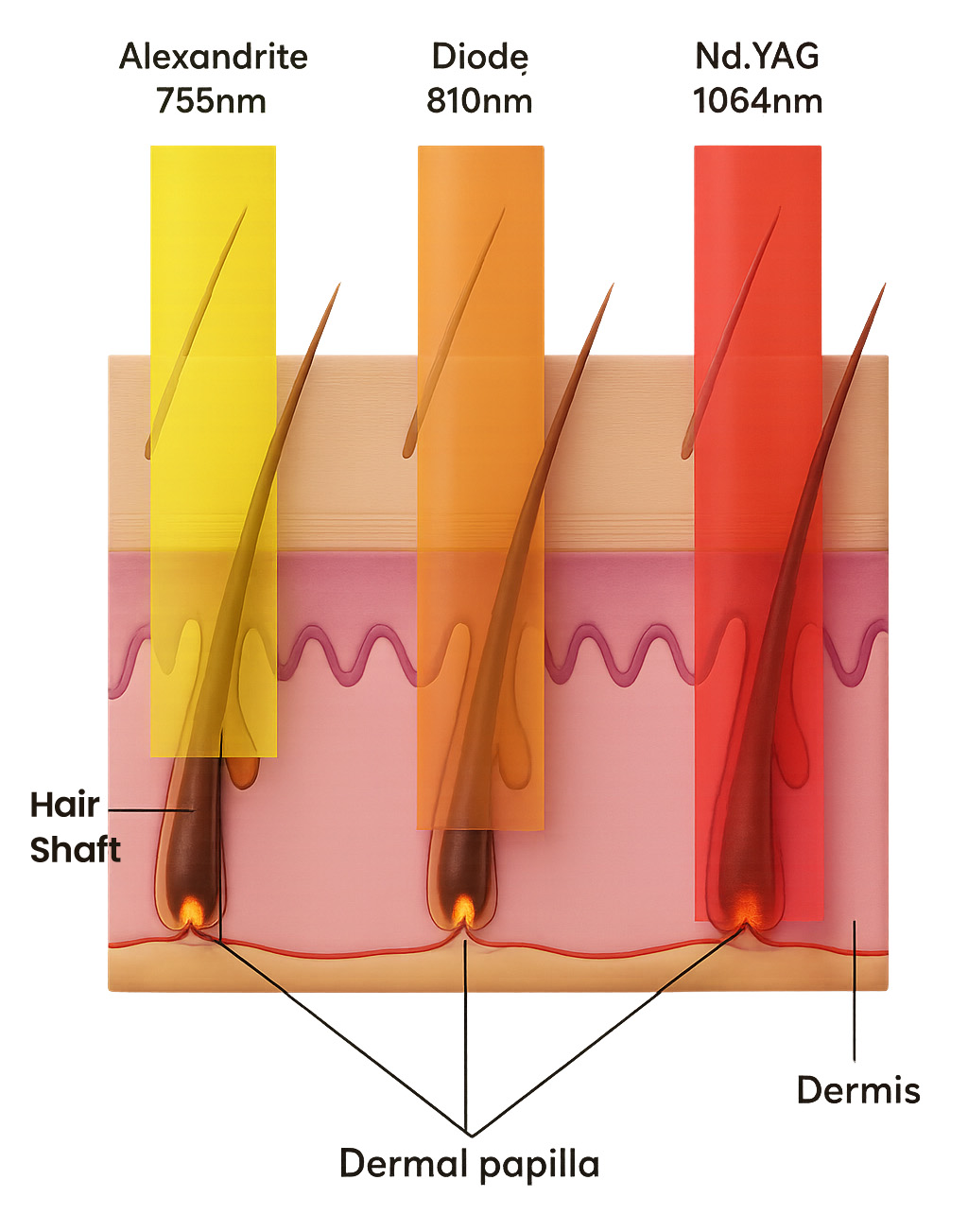
- All skin tones covered: with the right wavelength and cooling, types I through VI can be treated. Nd YAG at 1064 nanometres is usually preferred for deeper tones.
- Short sessions: both ears are often finished in ten minutes or less.
- Typical effects: mild pinkness or warmth for a short time. Common mild effects are listed on Wikipedia.
How a session works, and typical pricing
- Consult and test: your practitioner checks skin type, hair colour and density, then carries out a small patch test to set safe energy levels.
- Preparation: hairs are shaved flush to the skin. No waxing or epilating during a course, because the root needs to stay in place.
- Treatment: short light pulses are passed across the ear rim and lobule with cooling. It feels like a quick snap and then it is gone.
- Time and count: most people need around six sessions, spaced four to six weeks apart. Occasional top ups help keep things neat long term.
02. Pre care and aftercare that matter
- Before: avoid sun and sunbeds for two weeks and let self tan fade. Shave the area the day before. Arrive with clean skin and no fragrance.
- Between sessions: shave only. Do not pluck or wax, because that removes the root the laser needs to target.
- After: cool the area if needed, keep it clean and dry for twenty four hours, avoid hot showers and intense exercise for a day, and use SPF if the area will be exposed.
The kit that makes ear work easy
Clinics usually get the strongest ear results with three wavelength platforms and small, accurate tips that follow the ear’s curves closely. Our systems combine Alexandrite, Diode and Nd YAG in one unit, so each client can be matched to settings that suit their skin and hair properly.- Nu TriLaze Plus: three in one with a built in skin analyser, HD detection, and interchangeable tips for detail areas like the ear. See Nu TriLaze Plus.
- Nu eRays Plus: precise handpiece controls and strong cooling for quick, comfortable passes. Explore Nu eRays Plus.
- Nu TriLaze Lite: compact and easy to move, with very low running costs, which makes it useful for multi room setups. View Nu TriLaze Lite.
03. For clinic owners: quick setup and compliance
- Training included: free online or face to face training with certification, which helps with insurance and council checks.
- Rapid support: if a unit cannot be fixed on site, we send a replacement quickly so your diary does not stall.
- Next steps: book a demo in Coventry or virtually, or request details for finance and ROI packs.
Key takeaways
- Best suited area: the visible outer ear, where tidy edges matter most. The canal is not treated.
- Why choose laser: accurate, quick, and long lasting hair reduction with fewer ingrowns than trimming or waxing.
- Safety and comfort: proper wavelength selection and cooling keep sessions brief and manageable. For a plain language overview of the science, see the Mayo Clinic page.