
Choose the right wavelength
1064 nm is the core route for black and darker inks. 532 nm gives an additional option for selected red and warmer pigments. Consultation and patch testing decide the plan.
Precision in every detail

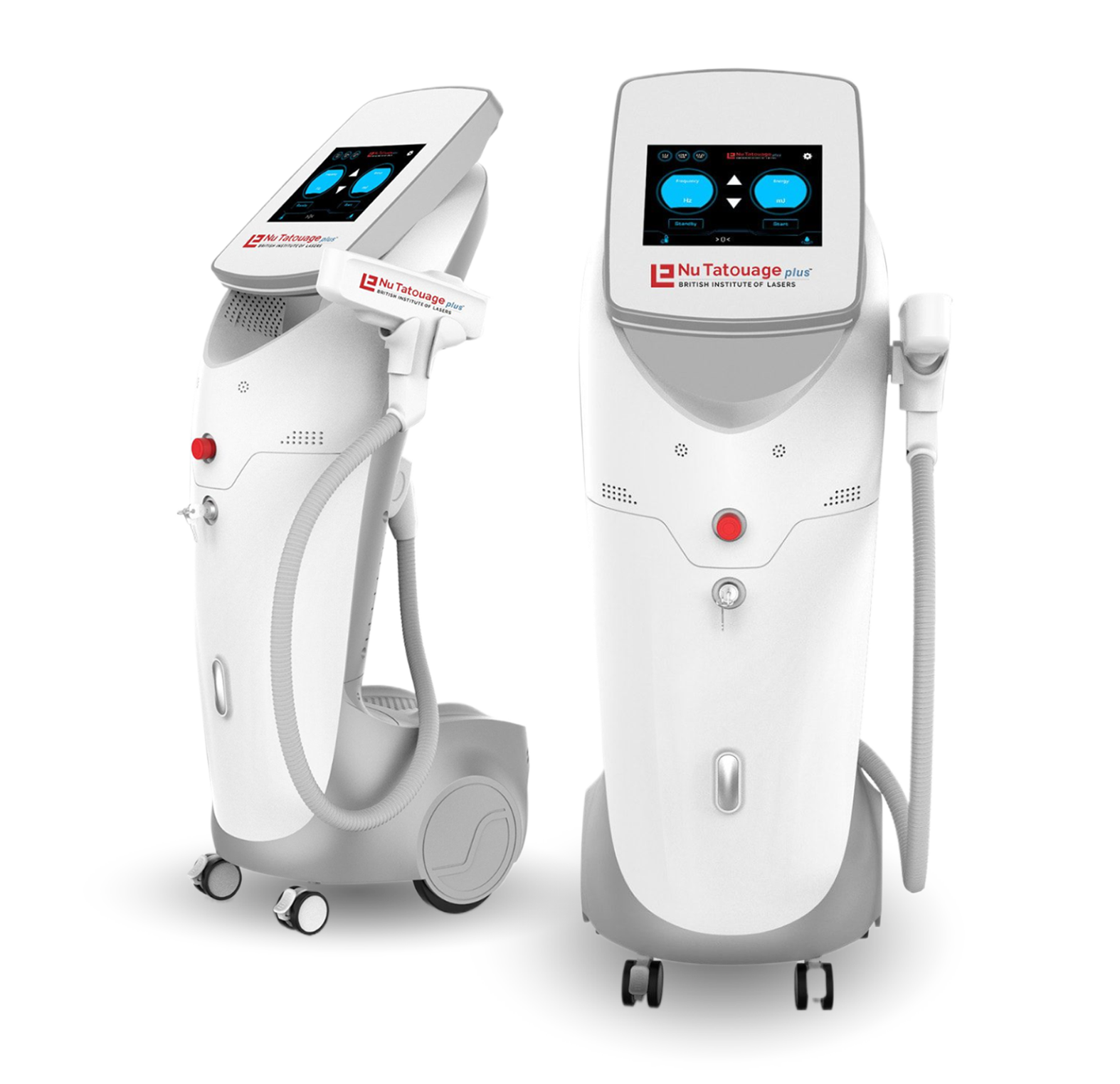
A dual-rod Q-switched Nd:YAG tattoo removal platform for clinics that want strong coverage for black, dark and selected warm pigments without stepping into the cost profile of a premium pico system. Built around 1064 nm and 532 nm wavelengths, clear treatment controls, included training and UK-based support.
Finance is subject to status and lender approval. Ask for a current written quotation.
A practical conversation about building demand around the new service, from a blank-page launch to improving an existing clinic's website and inquiry flow.
The Nu Tatouage Plus is built around short Q-switched pulses. The goal is to target suitable tattoo pigment while keeping treatment parameters realistic for the skin type, ink color and tattoo history in front of you.
1064 nm is the core route for black and darker inks. 532 nm gives an additional option for selected red and warmer pigments. Consultation and patch testing decide the plan.
The Q-switched pulse delivers energy quickly into the pigment. Suitable ink particles absorb that energy and fragment into smaller pieces.
Over the following weeks, the body clears the fragmented pigment gradually. Spacing, aftercare and client factors all affect the visible outcome.
A tattoo removal clinic rarely sees one neat pigment type. This visual guide shows why the two wavelengths matter and where their practical limits begin.
The deeper-penetrating wavelength and the backbone of most tattoo removal workloads. It is commonly selected for black, gray and darker pigment, with settings chosen around skin type, density, location and client history.
Illustrative guide only. Wavelength choice, pulse energy, spot size and treatment spacing should always follow consultation, patch testing, training, insurance requirements and local rules.
The value is not only in the wavelengths. It is in how the machine supports everyday clinic use, careful consultation and predictable ownership.
Two laser rods support stronger pulses for dense pigment work, while keeping the system focused on common commercial tattoo removal cases.
The 8.4 inch color display keeps treatment settings visible without turning normal setup into a complicated menu exercise.
Operators can work in the rhythm that suits the treatment area, posture and room setup.
The first-year guarantee covers 1 million shots, providing a clear written ownership benchmark alongside the wider warranty and support terms.
Online or face-to-face training supports safe operation, treatment planning, patch testing and correct documentation.
Lifetime support, free shipping and 72-hour swap protection help reduce operational disruption if a covered issue appears.
The 1064 nm wavelength is widely used for black and darker inks. The 532 nm wavelength adds a practical route for selected red and warmer pigments. Some green, yellow, white and pale colors remain harder with any two-wavelength Q-switched platform, so honest consultation remains important.
Use cautious figures to understand how client volume and treatment pricing can sit against an indicative finance figure. This is a planning tool, not a profit promise.
Adjust the sliders to see a simple monthly estimate. Real performance depends on inquiry volume, pricing, staff time, rent, insurance, tax, marketing and the suitability of each client.
This deliberately ignores wider costs so it does not imply profit. Use it as a starting point, then build your own forecast using your local prices, diary capacity and marketing plan.
Real treatment progress examples are presented as separate videos so buyers can inspect each one without a fast carousel hiding the detail.
Review the change in ink density while remembering that pigment, depth, tattoo age, immune response and treatment spacing all matter.
Tattoo removal should be assessed as a course rather than judged from one appointment. Some clients seek full removal while others want cover-up fading.
Skin type, aftercare, tattoo layering and original ink formulation all affect the pace and extent of fading.
Results are not guaranteed. Every tattoo responds differently and complete clearance is not possible in every case. Consultations should explain likely limitations before a treatment course begins. Read more about tattoo removal effectiveness.
The feedback includes strong praise and constructive comments, giving prospective buyers a more balanced view of ownership.
We had been referring tattoo removal inquiries elsewhere for nearly two years, so bringing the service into our own clinic was a big step. The Nu Tatouage Plus has been dependable and surprisingly straightforward to operate. The handpiece is comfortable to hold and the adjustable settings give us good control when moving between smaller tattoos and larger areas.
I am highly impressed with Nu Tatouage Plus' efficiency and cooling system. The only minor issue I have encountered is that the treatment parameters on the display could be brighter for easier readability.
We love our tattoo removal machine so much that we have given her a name, Tatiana! Tatiana has been a great asset to the business, and we have been able to start working on skin pigmentation issues too. She does way more than our old machine.
The Nu Tatouage Plus allows me to remove my client's tattoos quickly and easily. It is also great for making age spots disappear, and some of my older clients want this service too.
I would just like to say how impressed I am with the Nu Tatouage Plus machine. After taking the comprehensive training course, I tried the machine before opening it up to paying clients. The results were brilliant, with a large amount of fading after the first session.
Having used the Nu Tatouage for many years, upgrading to the Nu Tatouage Plus felt like a big step up. With two lasers it is much more powerful, and therefore quicker, than its predecessor, which means I can treat more clients during the day.
Bespoke training and separate Core of Knowledge learning are included. Your insurer and state or local regulator may require additional qualifications or documentation, and a machine purchase also provides access to discounted Laser Protection Adviser services for safety planning.
Complete structured online learning or attend practical face-to-face tuition. The suitable route depends on experience, location and team size.
Content covers laser science, skin and tattoo assessment, contraindications, patch testing, parameter selection, cleaning and maintenance.
A Certificate of Training and separate Core of Knowledge learning are included. Confirm your full qualification pathway with your insurer and council before taking bookings.
Answers focused on treatment limits, ownership costs, qualifications and practical risks a cautious clinic owner should resolve before purchasing.
The Q-switched pulse delivers energy into the tattoo pigment over a very short period. Suitable ink particles absorb that energy and fragment into smaller pieces. The body then clears those fragments gradually over the weeks following treatment.
The 1064 nm wavelength is generally used for black and darker pigments. The 532 nm wavelength provides another route for selected red and warmer colors. Treatment should always be based on a consultation, patch test and an operator who is trained to select appropriate parameters.
No responsible supplier should promise that. Black and dark inks usually offer the clearest match for 1064 nm. Selected red and warmer pigments may respond to 532 nm. Green, yellow, white, pale blue and mixed proprietary pigments can be harder and may require different wavelengths or technology.
The practical value of the Nu Tatouage Plus is that it covers a substantial share of normal clinic inquiries without carrying the capital cost of a premium multi-wavelength pico platform. Difficult colors should be identified during consultation so the client receives realistic advice.
A course of around 6 to 8 sessions is a useful planning range for many tattoos, but it is not a guarantee. Amateur tattoos may respond differently from dense professional work. Layered cover-ups, scar tissue, ink color, depth, location, immune response and treatment spacing all affect the outcome.
Some clients want complete removal. Others only need enough fading for a tattoo artist to produce a cleaner cover-up. Those are different endpoints and should be priced and explained accordingly.
Pico platforms use shorter pulse durations and can provide valuable options for selected difficult pigments, depending on the wavelengths and handpieces supplied. They also sit at a much higher purchase level and can carry more expensive servicing and component exposure.
The Nu Tatouage Plus is aimed at clinics whose main workload involves common black, dark and selected warm pigments. It gives them a stronger dual-rod Q-switched system with controlled ownership costs. Clinics expecting a high volume of difficult color cases should compare both technology routes before deciding.
A specific public per-shot running-cost figure is not used for this machine. The commercial picture should instead be assessed from the current quotation, routine maintenance requirements, any cooling used, practitioner time, consultation, patch testing, protective eyewear, premises, insurance and marketing.
The first-year guarantee covers 1 million shots. Ask for the current written warranty, maintenance and replacement terms so the ownership model can be compared on the same basis as the finance figure.
Prices vary with the laser technology, pulse energy, wavelengths, included training, warranty, support and finance agreement. The Nu Tatouage Plus is currently shown with finance from $58.59 per week, subject to status, affordability checks and lender approval.
Compare the full quotation and ownership terms rather than judging a machine from the weekly figure alone. Our professional laser machine cost guide explains the wider pricing factors that apply when comparing clinic equipment.
The British Institute of Lasers sells machines and does not offer short-term rentals. Finance is available subject to status, which can spread the cost while supporting ownership under the terms of the agreement.
Check the total payable, early settlement terms, support arrangements and what happens at the end of any finance agreement before proceeding. The same contract checks are covered in our guide to renting or financing a professional laser machine.
An all-in-one machine can make sense where both services are central to the clinic plan and each treatment function has suitable wavelengths, training, maintenance and support. A longer feature list is not automatically a better purchase.
Our guide to all-in-one hair and tattoo removal machines explains what to compare before combining the two services in one platform.
That depends on local pricing and how many suitable clients the clinic can attract. An illustrative package might involve six appointments priced individually or sold as a course. Revenue should never be treated as profit because staff time, premises, insurance, lead generation and tax still need to be covered.
A sensible forecast starts with your existing inquiry volume. Model a cautious case, not a best-case launch. The calculator on this page can help with early planning, then we can discuss the numbers in more detail.
The package includes the Nu Tatouage Plus machine, relevant handpieces, free shipping, included training and ongoing UK support. Finance options can be discussed with the team and are subject to status and approval.
Ask for the current quotation so you can confirm exactly what is included, which warranty terms apply and whether any optional accessories are recommended for your treatment room.
No compulsory annual servicing plan is presented as part of the standard ownership message. Clinics should still keep maintenance, cleaning, room safety checks and documentation up to date.
If your insurer, state or local regulator or Laser Protection Adviser requires a particular maintenance schedule, follow that requirement.
Yes. Training is included online or face to face at our Coventry premises. It covers machine operation, treatment planning, client assessment, contraindications, patch testing, parameter selection, safety and basic maintenance.
The included training helps you operate the device, but your insurer and state or local regulator may require additional qualifications, Core of Knowledge evidence or local documentation before you treat paying clients.
There is no single US-wide certificate that automatically gives permission to practice. Requirements can depend on your nation, state or local regulator, premises, insurer, training route and the treatments you intend to offer. Level 5 tattoo removal education is widely treated as a practical benchmark, alongside Core of Knowledge learning, supervised competence and training on the exact machine.
Confirm the accepted qualification, treatment-risk insurance, public liability cover, room safety, local licensing and any Laser Protection Adviser documentation before treating paying clients. Read our guide to qualifications, licenses and insurance for laser tattoo removal, then obtain written confirmation from your insurer and the authority responsible for your clinic.
Only advertise treatments that sit within your competence, insurance and local requirements. Technical capability alone is not enough. If you plan to offer pigmentation or carbon peel treatments, confirm the treatment scope with your insurer and make sure operators are trained for the specific protocol.
Cooling can support client comfort and may be requested as part of a careful treatment setup, especially when treating larger areas. Many clinics pair tattoo removal with chilled air cooling such as the Cryo 6.
Cooling does not replace correct settings, consultation, patch testing, aftercare and proper training. It is an additional tool within the treatment plan.
These guides answer the questions that sit alongside the machine specification: how the treatment works, what realistic fading looks like, how pricing is structured and what must be confirmed before treating clients.
Understand pigment fragmentation, wavelength selection and the role of the body in gradual fading between appointments.
Read the treatment guideReview the variables that affect clearance, partial fading and the likely course length.
Pricing explainedSee how area, ink, course length and clinic pricing shape the client quotation.
Compliance planningCheck the training, insurance, local rules and safety documents needed before launch.
Ready to take the next step?
Bring your commercial questions, finance requirements and training concerns. We will walk through treatment scope, running costs, support, warranty terms and what your clinic needs before going live.
Choose your next step
Our team responds with practical information rather than a pressured sales call.
Our site uses cookies. By using this site, you agree to the Privacy Policy and Terms of Use.